Kyiv strikes a Russian shadow-fleet tanker and three Stavropol oil depots
Ukraine's security service hit a sanctioned Russian oil tanker in the Black Sea and three fuel depots in Stavropol Krai, widening its campaign against the export infrastructure that finances Moscow's war.
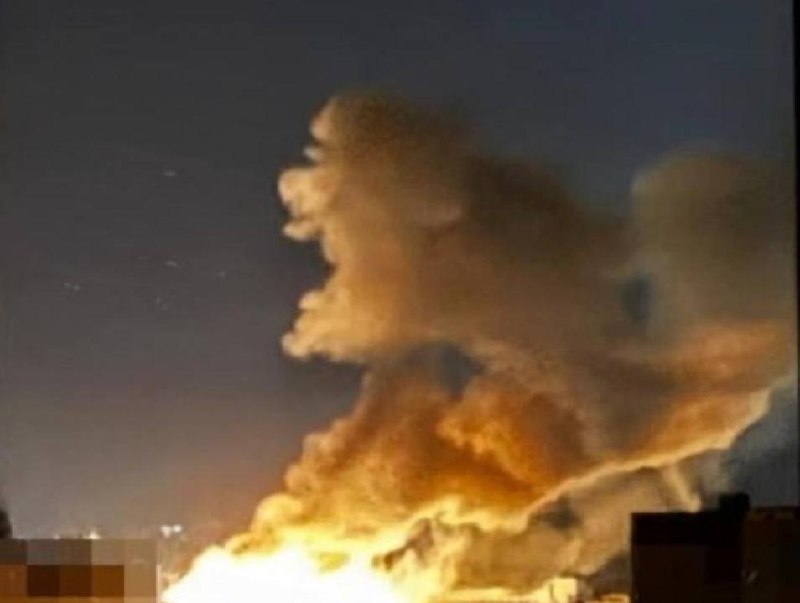
On the morning of 19 July 2026, Ukraine's Security Service (SBU) hit two pieces of Russia's wartime logistics at once: a tanker of the so-called shadow fleet in the Black Sea, and three oil depots in Stavropol Krai, several hundred kilometres inside Russian territory. The combined strike, reported by military correspondent Yuriy Butusov's channel on Telegram at 10:46 UTC, signals that Kyiv is no longer treating the export infrastructure that funds Moscow's war as beyond reach.
What is changing is not just the geography of the strikes, but the kind of target. Shadow-fleet tankers are how sanctioned Russian crude still reaches buyers in Turkey, India, and other price-cap tolerant destinations; knocking one out, even temporarily, raises the cost of doing business in a market Moscow has carefully built to evade G7 enforcement. The Stavropol depots sit further up the same chain, feeding refineries and rail load-outs that move product south. Hit the ship, hit the storage, and the discount that makes sanctioned oil work begins to widen.
What was struck, and where
According to ButusovPlus on Telegram, the strike package had two parts. The first was the Avero, a tanker the channel describes as part of Russia's shadow fleet. Tankers of this class operate outside the mainstream insurance and flag-state system, routinely change names and registries, and turn off Automatic Identification System transponders in shipping lanes to evade Western maritime enforcement. The second was a set of three oil depots in Stavropol Territory, a southern Russian region that borders the Caspian and serves as a transit hub for crude moving toward Novorossiysk and other Black Sea export terminals. The SBU's role in both strikes is consistent with the service's expanding mandate to attack the financial seams of the invasion.
Why the shadow fleet matters now
Russia's shadow fleet is not a metaphor. It is the practical workaround that lets the Kremlin sell crude after the G7 oil-price cap took full effect, and after successive rounds of EU and UK sanctions on Russian shipping. Independent trackers count several hundred such vessels, a figure that has grown steadily since 2023 as older compliant tonnage is rolled off and replaced. Their owners sit behind chains of shell companies in jurisdictions from the UAE to Hong Kong; their insurance, where it exists, comes from non-Western providers. Each successful Ukrainian strike on a vessel raises the war-risk premium for the rest. That is not a small effect: in earlier operations against Russian port infrastructure and tankers in 2024 and 2025, freight differentials for shadow-fleet voyages widened measurably after strikes, and several owners quietly rotated old hulls out of service.
The Avero strike, if confirmed at the level ButusovPlus describes, lands in this same competitive space. The aim is not to sink the shadow fleet in one operation. It is to raise the marginal cost of every sanctioned barrel, so that the discount Russia must offer already-stressed buyers of sanctioned crude creeps wider.
The Stavropol piece, and the corridor it sits in
Stavropol sits north of the Caucasus and east of the Black Sea. Its pipeline and rail links move crude toward the Novorossiysk-CPC terminal complex on the Black Sea coast, the single largest Russian export chokepoint for oil into the Mediterranean and onward to Asia. Striking storage in Stavropol does not close that corridor, but it tightens it. Storage buffers absorb seasonal swings in production and shipping. When that buffer shrinks, the system becomes more brittle to follow-on strikes, weather, or maintenance outages. Three depots hit at once is not a knockout blow, but it is a deliberate kneecap.
The geographic pairing is the most striking element of the operation. Kyiv has spent the past year pushing the strike envelope deeper into Russia, from Belgorod oblast air bases and military-industrial sites in Tatarstan to refining hubs further east. Adding tankers in the Black Sea and storage in Stavropol connects two threads: the export system that turns Russian crude into state revenue, and the transport system that moves it to market. The same logic that drew earlier strikes to the Kerch Bridge, to Tuapse, and to Slavyansk-na-Kubani now reaches shadow-fleet ships at sea.
What remains contested
The sources available are limited to a single Telegram channel with close ties to Ukraine's defence and security establishment. Independent visual confirmation of the Avero hit, including satellite imagery or AIS gap records, has not appeared in the public sources reviewed at the time of writing. Russian-side commentary on the operation was not surfaced in the thread context and cannot be assessed here. Casualty figures, damage assessments, and the operational tempo of follow-on strikes are not specified in the available reporting. What is verifiable is the trendline the operation fits inside: a sustained Ukrainian campaign against the shipping, storage, and refining infrastructure that converts Russian subsoil into the money that funds the invasion.
The stake for Moscow, and for buyers
If the past eighteen months are a guide, the effect of a single strike is shorter-lived than either side admits. Russia has rebuilt and rerouted around previous attacks. But the cumulative pressure is real, and the incidence is uneven. Shadow-fleet insurers, shipowners, charterers, and the brokers who move sanctioned crude through non-Western ports all watch the war-risk premium, and each successful Ukrainian operation tightens it. For ordinary buyers of Russian crude in price-cap-tolerant jurisdictions, the discount Russia must offer has begun to look less like a competitive edge and more like a structural subsidy. Watch August loading programmes out of Novorossiysk and CPC; that is where the next round of this campaign will show up in the price tape.
This article relied on a single Telegram channel with direct access to the Ukrainian security establishment; claims of damage should be read alongside forthcoming satellite confirmation rather than as standalone fact.
Wire provenance
This editorial synthesis draws on the following public wire/social posts:
- https://t.me/butusov_plus