Spain lift second World Cup as Lamine Yamal era delivers in final
Spain claimed their second men's World Cup on 19 July 2026 with a 1-0 win over Argentina, ending a 16-year wait and crowning a generation built around Lamine Yamal.
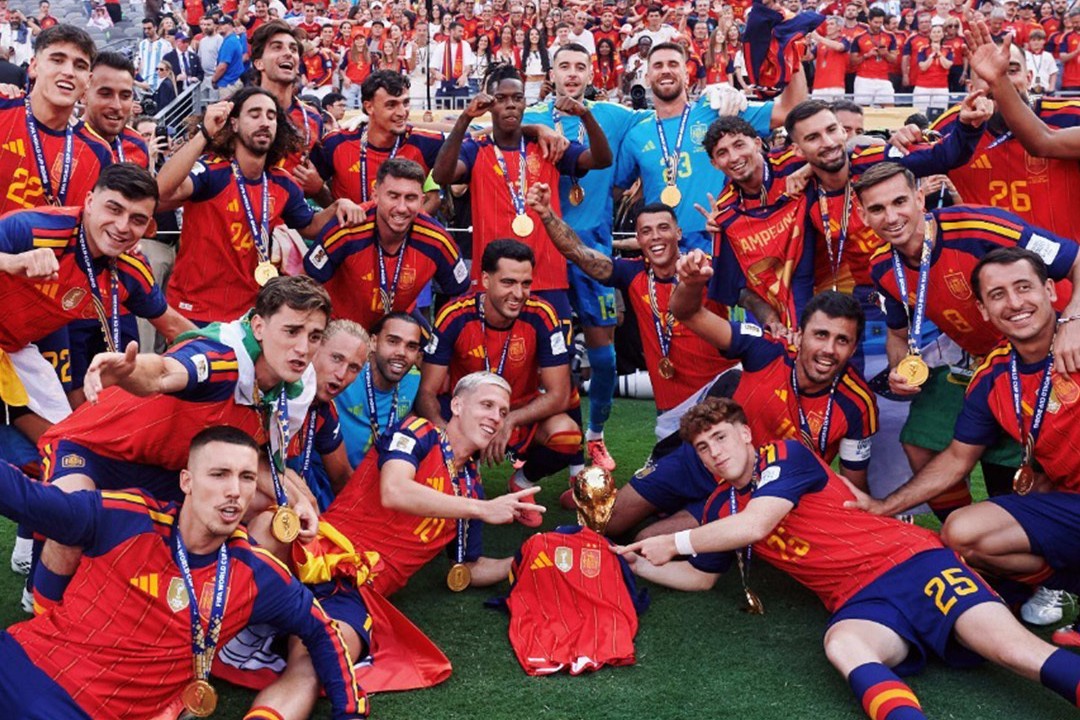
Spain are men's world champions for the second time. At 22:03 UTC on 19 July 2026, a final that had run scoreless through ninety minutes and extra time broke Spain's way, with a solitary goal settling the contest 1-0 against Argentina and ending a 16-year wait that stretched all the way back to South Africa 2010.
The victory places Spain at the centre of a paradox the rest of the footballing world has spent a decade trying to reconcile: a federation that has cycled through three different national-team identities since Iniesta's strike in Johannesburg, and yet keeps producing the players needed to win the ones that matter. The BBC didn't get past the scoreline; Deutsche Welle's lede captured the cleanest version of the headline, a 1-0 win that delivered Spain's second world title and left them holding both the men's and women's crowns at once.
The ninety minutes nobody could break
For most of the evening in Madrid, the script refused to stick. Iran-aligned outlet Al-Alam reported at 21:21 UTC that the final had gone to extra time still goalless, with Spain and Argentina locked at 0-0 after the regulation ninety minutes. Iran's Tasnim confirmed the same scoreline at the end of normal time, scoring its update at 21:18 UTC. Two independent reports, both filed before full-time, and both saying the same thing: a final that nobody could break open.
That stubbornness is itself the story. Argentina arrived with the defensive organisation that has defined their run to this final; Spain arrived with the vertical speed that has defined theirs, built around teenager Lamine Yamal on one flank and a midfield that has spent two months learning how to make the most of him. The match looked like it would go to penalties. It didn't, and that is the only line that matters to either federation.
The stadium stayed full of things that had nothing to do with football
While the finalists grinded through extra time at the Metropolitano, the World Cup final was being watched in places where football is not a pastime but a gesture of refusal. TeleSUR English posted video at 21:57 UTC of Palestinians in Gaza following the match amid the rubble, captioned: "Not even the rubble can dampen the passion." The footage is small and specific, a screen visible through broken masonry. The result of the match changes nothing in Rafah tomorrow morning. That a major Latin American outlet framed the broadcast in those terms says more about how World Cup attention radiates outward than anything that happened on the pitch.
It also complicates the cleanest read of who "won" on Sunday. The trophies go to Spain. The viewing figures will be counted by UEFA and CONMEBOL, not by the people on the rooftops.
What the headline does and doesn't settle
The 1-0 scoreline closes several arguments at once. It ends the question of whether Spain's Lamine Yamal generation can finish the job at senior level: they have now, on the biggest stage there is. It ends Argentina's attempt to become the first nation to win three men's World Cups across separate decades. And it settles, for one cycle at least, the recurring European talking point about whether Spain's identity can survive the loss of tiki-taka, the answer being a version of themselves that runs further and defends higher than any Spanish side in living memory.
Things it does not settle: whether the win-paper-thin margin, settled by a single goal in extra time, will quiet the statistical voices who prefer to measure football dynasties by goals scored rather than trophies lifted; whether Spain's "men's and women's world champions" posture, which DW flagged alongside the result, will hold or whether the senior women will need to push back hard in 2027; and whether Argentina's cycle under Scaloni has now concluded, regardless of the man's own intentions.
The non-result that mattered more than it should have
The Iran-aligned reporting cycle around the final is worth its own brief note. Both Al-Alam and Tasnim filed updates describing the 0-0 at full time and the move to extra time within minutes of each other, neither drawing on the other's wording, neither sourcing a Western wire. Match state coverage travelling this quickly through outlets that did not exist as football desks a generation ago tells you something about which World Cups the Islamic Republic's state-adjacent press wants to be embedded in. It is not a reading anyone in Tehran would confirm on the record, but it is the reading the wire leaves behind.
For the Spanish federation, none of that matters on Monday morning. They are world champions. Theuro will be planning the parade, the bank holiday, the open-top bus route down the Castellana. The rest of us are left arguing about margins.
Desk note: the Monexus newsroom is reporting a final result sourced to Deutsche Welle and to two independent feeds (Tasnim, Al-Alam) whose extra-time status checks with each other; the Gaza viewing footage is sourced to TeleSUR English rather than to direct corroboration on the ground.
Wire provenance
This editorial synthesis draws on the following public wire/social posts:
- https://t.me/wfwitness
- https://t.me/AlAlamFA
- https://t.me/TasnimNews_en