A World Cup final, a thunderstorm, and the helicopter detail: Spain meet Argentina in New Jersey
Spain and Argentina meet at MetLife Stadium on Sunday for the 2026 World Cup final, hours after their preparations were scrambled by thunderstorms and a presidential flyover.
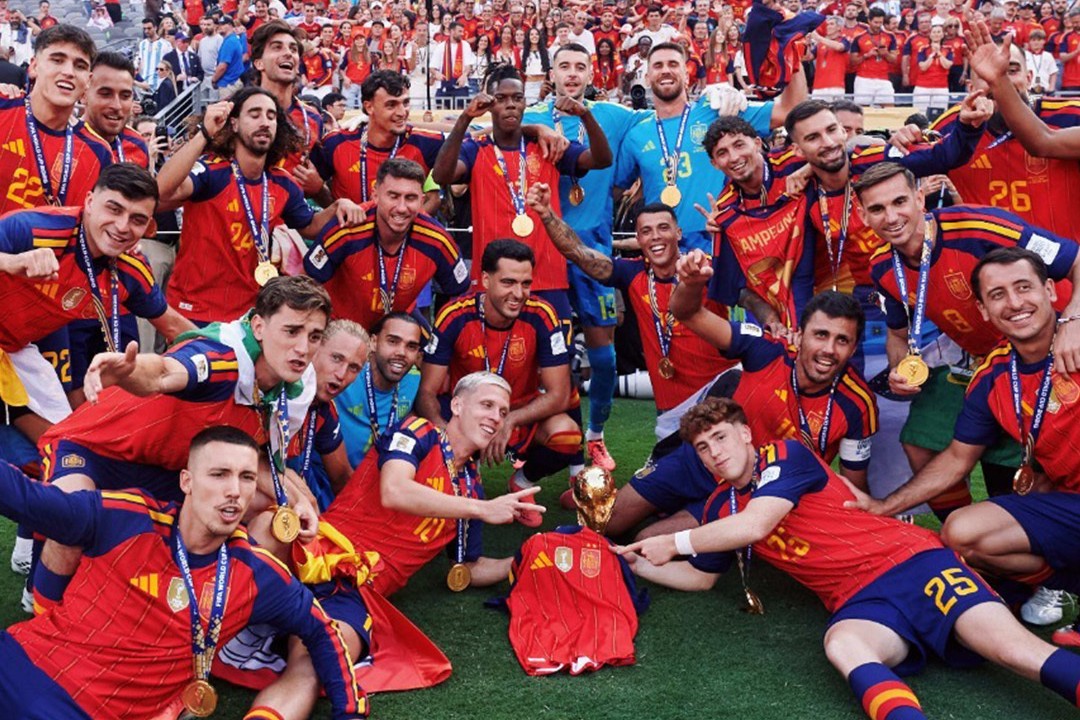
At 19:02 UTC on 19 July 2026, helicopters began circling low over MetLife Stadium in East Rutherford, New Jersey. The rotor-thrash coincided, as the Arabic-language Telegram channel @alalamarabic put it, with the arrival of a sitting US president to watch a football match between Spain and Argentina. By kick-off some 14 minutes later, the pageantry of a World Cup final had already outrun the day's preparation: Spain's last training session had been scratched the afternoon before, a thunderstorm having rolled across the Meadowlands in the hours before the team could run their shapes.
The 2026 World Cup has been, in marketing terms, the largest tournament football has staged. The match itself still narrows back to the basics: ninety minutes, plus stoppage, between two footballing cultures that have spent four weeks surviving every draw the bracket could throw at them. The trophy will be lifted on Sunday night. Twenty-four hours later, the Premier League, La Liga and the rest of the European calendar will begin pulling focus, and every club sporting director who watched a scout's footage in the Foxborough hotel bar will have notes to chase.
A final prep session that didn't happen
Spain's planned final training session, scheduled for the day before the final at their base in the greater New York area, was cancelled because of thunderstorms rolling through the region on 18 July 2026, as reported by BBC Sport. The session was the last on-field work manager and staff could have used to bed in tactical adjustments; instead the players were held indoors while the local weather cleared. The Spanish football federation did not immediately announce an alternative session before Sunday's kick-off.
The cancellation is the kind of detail that reads small in advance but grows in the rear-view. Final-week training in tournament football is rarely about fitness; it is about sharpening set pieces, rehearsing the in-game triggers for a midfield press, and giving the starting eleven a final sight of the ball on the match surface. A storm takes that away. Whether it matters on the night is the kind of question only the match will answer.
The pageantry, and what it costs the bracket
The presidential arrival reported by @alalamarabic was the second major non-football intrusion into the final's run-up. The trophy presentation alone is now a multi-broadcast event with the ceremonial weight of a state occasion rather than a sporting one. The helicopters added airtime, the public address added noise, and the price for all of this is paid by the football itself: dead-ball minutes lost, warm-up rituals compressed, and a stadium crowd asked to manage a multiplicity of attentions instead of a single one.
There is also a competitive argument underneath the theatre. The 2026 tournament's expanded 48-team bracket stretched the calendar into the hottest weeks of a North American summer, with matches played across eleven US host cities plus Mexico and Canada. Fixtures on the US east coast have run in conditions that European-based players, used to August-prep humidity rather than July-match humidity, have openly called difficult. A World Cup final contested in New Jersey in late July sits squarely inside that envelope.
The Premier League turn
Once the trophy is lifted, the conversation shifts fast. BBC Sport's pre-tournament read on the league impact framed the window plainly: by the time European sides reconvene for pre-season in early August, managers will already be trimming squads that have spent a month in national-team colours, and recruitment will be shaped by what scouts saw on the tournament circuit. For the Spanish and Argentine contingent at Premier League clubs, the World Cup final adds only a delay, not a reprieve; the new domestic season will not wait for safe arrival of either finalist's captain.
The split-season problem is no longer exotic in European top flights. Clubs with multiple World Cup finalists now plan around an extra seven to ten days of light return-to-play, and then a compressed pre-season, before the first league fixtures. Brazil, France and England clubs have each spent the past two cycles adjusting medical and conditioning protocols around late July returns. Spain and Argentina's finalists will arrive home to that machinery already in gear.
What Sunday's result actually decides
There is a temptation, in the week of a final, to treat the trophy as the only thing at stake. It is not. For Argentina, a second consecutive senior men's World Cup would consolidate the post-Messi succession in a way that talk shows cannot; for Spain, a third senior men's title would reassert the possession-and-press tradition that defined the late-2000s national team and that the current squad has quietly rebuilt over the last two cycles. Either outcome will be read, fairly or not, as a verdict on the model that produced it. The football, in other words, will be made to do work beyond itself.
The remaining uncertainties are mostly atmospheric. Both teams have trained through weather and travel; both have absorbed tournament-specific knocks; both have staff who know how to manage a final week that does not go to script. The single known unknown is whether Spain's cancelled session matters, and whether the helicopters' arrival, and the noise that came with it, shifted the first ten minutes of focus in either direction. Those questions resolve themselves only after the whistle at MetLife on Sunday evening.
This piece was filed before kick-off. Monexus framed the final in the terms the wire did, with the two reported intrusions, the cancelled Spain session and the presidential flyover, placed ahead of the more familiar tournament-narrative angles.
Wire provenance
This editorial synthesis draws on the following public wire/social posts:
- https://t.me/s/alalamarabic
- https://t.me/s/alalamarabic