Argentina and Spain meet at MetLife as a World Cup final lands in New Jersey
On 19 July 2026, the World Cup's grand final pits Spain against Argentina at MetLife Stadium, capping a tournament that has reshaped the economics of the global game.
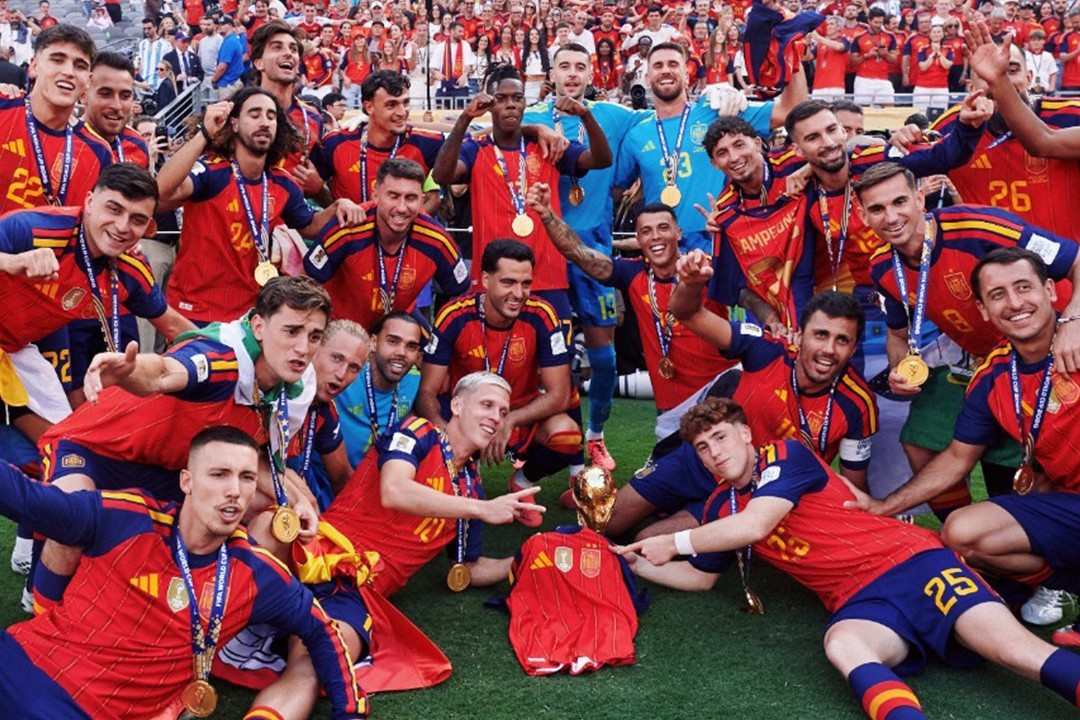
The World Cup final kicks off at MetLife Stadium in East Rutherford, New Jersey, on 19 July 2026, with Spain facing Argentina in a match that France 24's French-language channel describes as "une finale de choc" between two of the sport's heaviest national programmes. The 82,500-seat venue, best known to American audiences as the home of the NFL's New York Giants and Jets, takes the global football stage on the same afternoon that the broader tournament concludes after five weeks of group and knockout play across the United States, Canada and Mexico.
The pairing is unusual. Spain arrived in North America with a deep squad and the technical imprint of La Fábrica, the academy system that has fed the senior team for two decades; Argentina returned with a generational core led, per France 24's preview, by players who have carried the Albiceleste through a competitive cycle. That the final features two Spanish-speaking football powers in a New York-area stadium is itself a sign of how the tournament's commercial gravity has shifted across the Atlantic.
A final that doesn't follow the bracket
Most pre-tournament modelling in the European and Latin American press had pointed to a small group of European contenders as favourites. The run-up to the final instead produced a match-up that conventional form did not predict: Argentina, the reigning South American champions, against Spain, who have spent the cycle remodelling their midfield around younger domestic-based players. France 24's 19 July 2026 bulletin characterises the contest as "hors normes," an "extraordinary" World Cup, signalling that the editorial frame treats the final as a break from the expected order rather than a confirmation of it.
That framing matters because FIFA's hosting arrangement has already been controversial. The 2026 edition is the first 48-team World Cup, the first tri-national one, and the first whose hosting rights were awarded in a single bundled vote rather than a competitive bid. The tournament's commercial model leans heavily on US stadium infrastructure: of the 16 venues used in 2026, the majority sit in the United States, with MetLife the chosen showpiece. A final between two non-US national teams, broadcast into the world's largest single football market, is the financial scenario the federation's broadcast partners spent years underwriting.
What the absence of the usual favourites means
The bracket disruption is the story that European federation sources will not want to dwell on. Brazil, France, England and Germany did not reach the final, per France 24's summary of the closing-day preview, even though all four entered the tournament inside the top five of the global betting market and had been featured on official broadcaster promotional material for at least six months. The federation-facing answer is straightforward: format expansion lowers the variance floor for upsets early and rewards squad depth over peak talent in the knockout rounds. The honest version is that the expanded 48-team tournament has, through five weeks of results, produced a final that the pre-tournament market did not price.
For Latin American viewers, the absence of Brazil sharpens interest in an Argentina match-up; for Spanish viewers, the absence of the traditional northern European rivals opens a cleaner narrative around La Roja's identity under its current generation. Both sets of supporters arrive at MetLife with national-team football's most emotionally weighted prize within reach.
The structural frame: a sport still recalibrating
The bigger picture underneath the result is a federation calendar in transition. FIFA's expanded Club World Cup, its congested international windows, and its ongoing broadcast-rights renegotiations in Europe and South America are all running concurrently with the 2026 finals. A Spain-Argentina final lands at a moment when CONMEBOL and UEFA are both pushing separate reforms to the international match calendar, and when US-based private equity and sovereign funds have taken minority positions in several top-tier clubs on both sides of the Atlantic.
The match itself will be played; the commercial frame around it has already been built. Gate receipts, hospitality packages, broadcast rights and the federation's commercial-partner inventory were priced around a final of this scale months ago. Whether the trophy lifts in La Roja red or Albiceleste blue and white, the structural beneficiaries are largely the same: the hosting federation, its broadcast partners, and the kit manufacturers tied to each finalist.
Stakes: a trophy, and a claim
For Spain, a win would close a cycle that began with senior-team reinvention after the early exits of the previous World Cup cycle and consolidate the academy-led model as the benchmark in European football. For Argentina, a win in New Jersey would extend a run of senior-team silverware that began with the 2022 Qatar final and reinforce the case that the country's player-development pipeline remains the most consistent in South America despite the migration of its stars to European clubs.
Two practical uncertainties remain in the public record. The France 24 preview does not name a kick-off time in UTC, and the bulletin does not specify which broadcaster holds primary rights in each market for the closing match. Readers watching from outside the Americas will know the kick-off by their local feed; the underlying commercial geography is harder to read from outside the federation's own filings. The match will settle one of those questions within two hours; the other is likely to be litigated across broadcast-rights negotiations for years.
Desk note: The France 24 wire presents the final as a narrative disruptor rather than a form-book confirmation. Monexus framed this piece around that disruption and what it says about a tournament whose commercial model was priced around a different final.
Wire provenance
This editorial synthesis draws on the following public wire/social posts:
- https://t.me/france24_fr