Spain meet Argentina in a World Cup final the betting market has already priced
The 2026 World Cup final lands on Sunday with Lionel Messi and Lamine Yamal on the same pitch, and the U.S. sportsbook industry has spent the week turning that fixture into a marketing event.
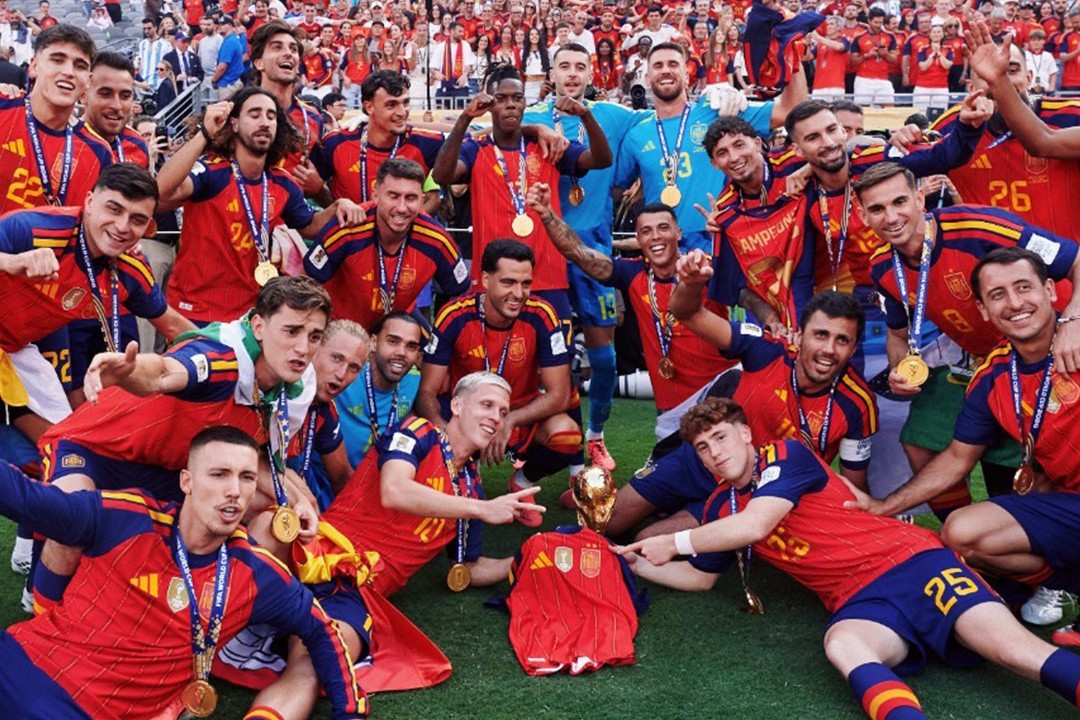
The 2026 World Cup final is set for Sunday in the United States, and the match has arrived dressed less as a sporting event than as a product launch. CBS Sports ran six distinct betting-marketing pieces between 10:50 UTC and 13:59 UTC on 19 July 2026, every one of them anchored to the same fixture: Spain versus Argentina, with Lionel Messi on one side and Lamine Yamal on the other, and the sportsbook industry converting the occasion into a wave of promotional offers, expert picks, and prop-bet guides.
The headline matchup reads as a generational clash. Argentina defend the title they won in Qatar in 2022, with Messi, now in the late phase of his international career, carrying a squad that has absorbed a tournament's worth of pressure. Spain arrive through the bracket as the model of possession football, with Yamal, the teenage forward, as the figurehead of a Spanish generation that has spent the cycle being told this is their turn. The sporting stakes are obvious. What is less often examined is the second product on sale.
The bookmakers are the co-headliners
DraftKings and FanDuel have spent the week competing for the same bettor. CBS Sports's promotional lead, published at 13:59 UTC on 19 July, offered a $200 bonus-bet package tied to DraftKings for new accounts placing a first $5 wager on the final. A separate FanDuel-flagged preview, published at 10:50 UTC the same morning, framed the same fixture as a wagering product. The combined effect is that the average American sports fan's path into the final runs through a sportsbook sign-up page rather than a team sheet.
That is a structural feature of the post-2018 U.S. sports landscape, not an accident of this tournament. Legalised mobile betting has folded the major U.S. leagues and FIFA events into the same promotional machinery that sells fantasy contests. FIFA's choice of the United States, Canada and Mexico as 2026 hosts makes that machinery the default distribution layer.
The expert-pick industrial complex
The promotional content sits on top of a dense layer of expert analysis. CBS Sports published picks from SportsLine's Martin Green, who arrived at the fixture on a documented 20-9 run, and from Brandt Sutton, who analysed the Messi-specific markets. A separate piece ran the network's parlay selections. ESPN ran its own World Cup Daily live show in the final countdown window. The volume is the story: a reader who wanted a clean preview of the football had to step over four or five affiliate-laden betting guides to find it.
The market itself has priced Spain as a slight favourite, with the draw and Argentina available at longer prices. The Messi-only markets, which include anytime-goalscorer and player-prop lines, have become the centre of gravity for casual bettors, partly because the Argentine captain's career arc gives any goal an outsized narrative weight.
What the framing elides
The dominant American framing treats Sunday's match as a one-off entertainment product with a wagering handle attached. A second reading is more honest: it is the closing fixture of a tournament that ran across three host nations, that strained local services in ways that will only be audited retrospectively, and that delivered the men's World Cup back to the kind of saturated commercial environment that already governs the NFL and the NBA.
The counter-position, taken seriously by football-first outlets, is that the sport remains the centre of gravity and that the betting layer is noise. That defence holds for the players on the pitch and for the travelling supporters in the stadium. It holds less well for the median American viewer, whose feed of the match will arrive pre-loaded with prop markets and bonus-bet prompts.
What to watch on Sunday
The substantive unknowns going into the final are familiar and unresolved. Can Spain's possession structure break down an Argentine defence that has shown it can absorb pressure and strike on the counter? Does Messi, at this stage of his career, still carry the difference-making minutes he delivered in 2022? And does Yamal, at his, produce the kind of final-defining performance that would rewrite his trajectory overnight?
The promotional layer around those questions is the part of the broadcast that the viewer cannot mute. FIFA sold the U.S. market on the assumption that the World Cup would behave like a Super Bowl. The bookmakers have spent the week confirming that assumption.
How Monexus framed this: the wire packages read as a unified promotional push. This piece treats Sunday as a sporting event with a wagering layer bolted on, not the other way around.