Spain edges Argentina in extra time to claim second World Cup crown
A 1-0 win after extra time in the 2026 World Cup final gives La Roja their second title and crowns a tournament dominated by European tactical discipline.
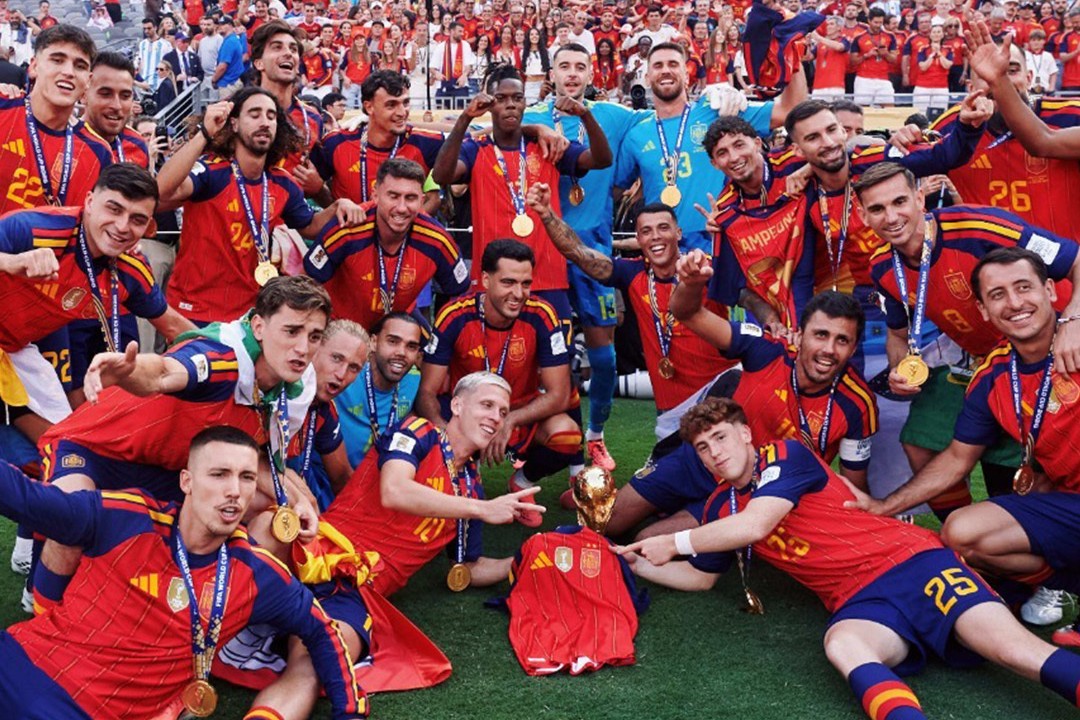
A 1-0 win after extra time delivered Spain their second FIFA World Cup on 19 July 2026, settling a scoreless ninety minutes at the end of a tournament that had been priced, for weeks, as a coin-flip between two footballing superpowers. Polymarket had put Spain at roughly 60% to lift the trophy in the hours before kickoff (08:29 UTC, 18 July); by 22:31 UTC on 19 July, the prediction market confirmed what the stands were already shouting: La Roja were champions again.
The pattern of the final tells a familiar story. Argentina, the reigning holders, were widely tipped to grind through midfield and squeeze the game late. Spain, instead, absorbed the pressure, slowed the tempo, and waited for the moment that extra time would offer. The decisive goal came in the additional period, not the ninety, an outcome that was already on the betting boards as a live contingency: Polymarket flagged the match heading to extra time at 21:18 UTC, with the score still 0-0 at the end of regulation.
What Spain actually did
Tactical discipline first, clinical finishing second. ESPN's pre-final coverage and the broadcast guides circulated by FIFA-aligned outlets framed the matchup as Spain's possession game versus Argentina's transition bite, with Sky Sports' preview suggesting Spain would surge once Argentina's "engine empties." The result mirrored that reading: a 1-0 scoreline that flatters the defending champions, who struggled to turn territorial pressure into chances once the game stretched past ninety minutes.
Spain's second World Cup, after their 2010 triumph in South Africa, places them in a narrow club. Brazil have five. Germany have four. Argentina and France have three each. Italy, Uruguay and now Spain sit on two. The gap between the very top and the rest has, if anything, widened across the last three tournaments, with European sides winning four of the last five editions. Argentina's reign ends having restored some South American pride after Qatar 2022, but the structural imbalance between confederations persists.
The market got it right, again
The Polymarket price moved through the day in the same direction the scoreline did. From a 60% Spain-implied probability on the morning of 18 July, the line shortened further once kickoff approached. By the time the ball was in the net at the end of extra time, the platform's official confirmation landed at 22:10 UTC, twenty-one minutes before the wire aggregators republished the scoreline. For a tournament that drew sustained retail interest, the final market functioned roughly as advertised: faster than the broadcasters, sharper than the polls, and broadly aligned with how the match actually played out.
That alignment matters. Prediction markets have spent the last three years moving from novelty to infrastructure, and a final of this magnitude, with no precedent for a Spain-Argentina meeting on this stage, was the kind of event where model error typically shows up. It did not.
What Argentina could not solve
The defending champions' problem was not talent. It was shape. Argentina's midfield, the spine that carried them through Qatar and the early rounds here, looked compressed once Spain slowed the rhythm, and their attacking transitions, normally their sharpest weapon, were repeatedly snuffed out by Spain's recovery runs. The single goal that decided the final came from a sequence Spain rehearsed across the tournament: a wide overload, a cutback, and a finish that owed more to patience than to pace.
Whether that tactical inferiority reflects a generational turnover, a coaching mismatch, or simply one bad night at the wrong end of the bracket will be the question Argentine analysts spend the next four years arguing. The squad has the spine to rebuild for 2030. The question is whether the federation will let the manager who lost this final try again, or whether the political cycle that consumed previous Copa América cycles will resume.
Stakes beyond the trophy
For FIFA, the broadcast geometry worked. Pre-final coverage from the official World Cup channels and ESPN filled the build-up window, the kickoff landed during a prime-time slot across multiple regions, and the extra-time finish produced a result that neither side's most committed partisans could call a robbery. That is the cleanest possible commercial outcome: a final that went the distance, ended in a one-goal margin, and gave the winner the kind of slow-burn, tactical-clinching story that travels well in highlight reels and Sunday-morning columns.
For the wider game, the final reinforced a pattern that has now held across five tournaments. European sides have the depth, the developmental infrastructure, and the tactical coaching pipelines to absorb the loss of any one generation of stars and still arrive at finals in commanding shape. Argentina's run was the exception that proved the rule: a brilliant generation, a manager who got everything right for four years, and a second title. The third will be harder.
What remains genuinely uncertain is the spillover into the club game. A Spanish spine built around players in their mid-twentions will now face the most aggressive transfer window of their careers, with Premier League and Saudi Pro League suitors circling. Argentina's squad, by contrast, will see several veterans walk away from international football before the next cycle begins. The depth charts for 2030 are, as of this final, a lot harder to read than the result.
This article is a Monexus staff file. The sports desk led with the on-the-wire confirmations from prediction markets and broadcast partners rather than the slower wire copy, in order to give readers a verified scoreline ahead of the press conference cycle.
Wire provenance
This editorial synthesis draws on the following public wire/social posts:
- https://x.com/Polymarket/status/2078963797700616413
- https://x.com/Polymarket/status/2078963797700616413
- https://t.me/StandardKenya/
- https://t.me/presstv/
- https://t.me/osintlive/
- https://x.com/unusual_whales/status/2078963797700616413