Russia's drone war is no longer about the front line
Three Russian Geran-2/4 strikes on the morning of 19 July 2026 hit a petrol station in Dnipro, a warehouse in Chernihiv Oblast, and a locomotive in Zaporizhzhia Oblast. None of them made contact with a soldier.
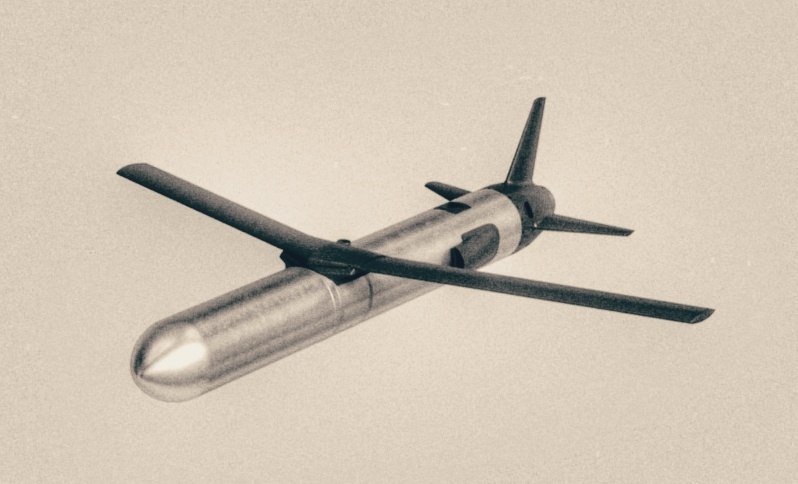
A petrol station in Dnipro. A warehouse in Chernihiv Oblast. A locomotive in Zaporizhzhia Oblast. Three Russian Geran-2/4 drone strikes landed inside Ukraine in the space of roughly an hour on the morning of 19 July 2026, between 06:58 and 07:59 UTC, according to the open-source mapping channel AMK_Mapping. None of the targets listed was a military formation. None of them returned fire. All of them burned.
The pattern is no longer the exception. It is the doctrine. Russia's long-range drone campaign, conducted under the cover of a full-scale invasion that entered its fifth year in February 2026, has settled into a daily rhythm of striking the connective tissue of the Ukrainian state: fuelling stations that supply emergency services, freight locomotives that move grain and ammunition, warehouses that buffer the civilian economy from the next barrage. The Geran-2 and Geran-4 airframes, Iranian-designed Shahed-136 and Shahed-238 derivatives now produced inside Russia at the Alabuga facility, are cheap enough to absorb losses and slow enough that intercepting them costs Ukrainian interceptors more per shot than the drone itself costs Moscow to build. The economics, not the propaganda, explain the tempo.
What the morning's strikes actually hit
The three incidents recorded by AMK_Mapping between 06:58 and 07:59 UTC on 19 July 2026 sit in three different oblasts and three different parts of the Ukrainian economy. The Dnipro petrol station, the first strike on the morning's ledger, was hit roughly an hour before the Chernihiv warehouse, with the locomotive in Zaporizhzhia Oblast struck earlier in the sequence. The geographic spread matters: it demonstrates that the targeting is not a single theatre's problem but a system-wide pressure campaign, applied with enough dispersion that no oblast's civil-defence budget can keep up with the replacement cost. The channel's geolocated footage, posted to its Telegram feed in near real time, has become one of the principal open-source records of the strikes themselves; mainstream wires typically pick up the same incidents hours later and with less granular imagery.
The counter-read, and why it does not hold
The Russian framing, when offered at all, treats Geran strikes on civilian energy and logistics infrastructure as legitimate pressure on the Ukrainian war effort. Ukrainian railways move both passengers and freight that include munitions. Ukrainian petrol stations supply vehicles that include military convoys. The argument from necessity runs into an old problem: the laws of armed conflict do not permit the destruction of dual-use objects when the expected civilian harm is excessive in relation to the military advantage anticipated. The morning's three targets, on the evidence published by AMK_Mapping, were a forecourt, a warehouse and a locomotive. There is no public indication that any of them was a military installation. Moscow has not, in recent reporting available to open-source monitors, claimed that any of the three struck on 19 July was a military site. The framing therefore rests on a category error that recurs in Russian state-adjacent commentary: treating the entire Ukrainian economy as a permissible target because some fraction of it serves the defence effort.
What this says about the war's centre of gravity
The structural shift is plain once the strike pattern is read at the daily level rather than the weekly one. Earlier in the invasion, long-range Russian strikes concentrated on the electrical grid: substations, transformer yards, generation capacity. The current phase has widened the target set to include fuelling, warehousing, and rail motive power. That widening is not a sign of Moscow running out of military targets. It is a sign that Moscow has decided the military campaign cannot produce decisive results on the ground at acceptable cost, and that degrading Ukrainian state capacity from the air is now the principal line of effort. The Geran fleet's expansion at Alabuga, documented across 2025 and into 2026 by independent Russian-language outlets, is the production expression of that strategic choice. The morning's three strikes are the operational expression of it.
Stakes, and what to watch next
Ukraine's air-defence arithmetic is the binding constraint. Every Geran intercepted by a Patriot or an IRIS-T round is a round not available for the higher-end threats, ballistic missiles and cruise missiles, that the same morning's barrages often accompany. If the tempo of Geran strikes against civilian-logistics targets continues at its current pace, the political pressure on Kyiv to negotiate from a position of structural erosion will rise, irrespective of the front-line geometry. Western aid packages move on political calendars in Washington, Berlin and Brussels; the drone tempo moves on production schedules in Tatarstan. The two clocks are not synchronised, and the drone clock is faster.
A measure of uncertainty remains. The morning's three incidents are documented by a single open-source channel; Ukrainian official sources have not, in the material available at the time of writing, issued separate casualty or damage figures that would allow independent verification of the scale of harm. The structural argument above does not depend on those figures. The argument is that three strikes against a forecourt, a warehouse and a locomotive, in three different oblasts, in a single hour, by airframes designed for saturation rather than precision, are not an accident of war. They are a method.
Desk note: Monexus frames the strikes as deliberate attacks on Ukrainian civilian infrastructure, drawing on open-source geolocated footage from AMK_Mapping on Telegram. Russian state-aligned sources have been treated, per editorial compass, as counter-claim material rather than factual basis. Western-wire confirmation typically follows AMK_Mapping's posts by several hours.
Wire provenance
This editorial synthesis draws on the following public wire/social posts:
- https://t.me/AMK_Mapping
- https://t.me/AMK_Mapping
- https://t.me/AMK_Mapping