Nolan's quiet revolution: why performance, not plot, has become the auteur's real signature
A Variety ranking of Nolan's 13 best performances puts actors, not plot mechanics, at the centre of his legacy. That re-framing tells us something about how studio-era directors survive the algorithm.
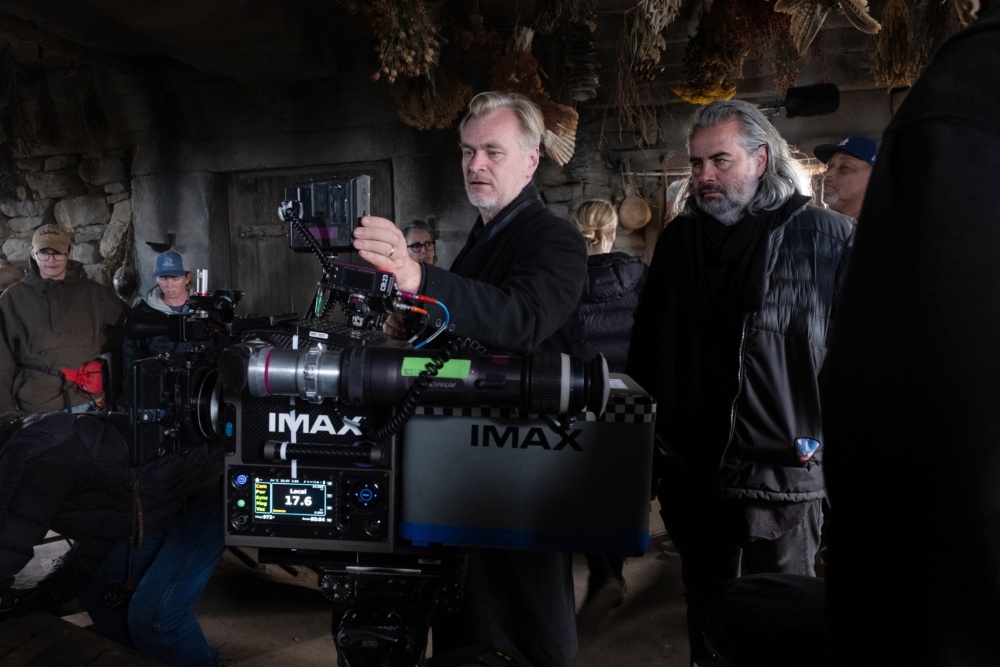
On 19 July 2026, Variety published a list of the 13 best performances in Christopher Nolan's filmography, a roster that runs from Matt Damon to Heath Ledger. The choice is telling. Nolan's name still conjures spectacle: rotating hotel corridors, time-reversed shootouts, practical detonations of city blocks. But the publication's editors handed the trophy not to the production design and not to the clockwork plotting, but to the actors inside the machinery.
That framing deserves a second look. Nolan has spent two decades building a brand around formal puzzles, the conceit that a film is a kind of watch movement the audience disassembles on the way out of the cinema. His defenders love him for it; his critics grumble that the same gimmick has now been recycled across enough titles to fill a television cycle. Putting performance at the centre of the conversation is a quieter argument. It suggests the man behind the IMAX camera has always been a casting director first, and a clockmaker second.
The case Variety is implicitly making
The 19 July countdown treats Nolan's filmography as an anthology of actor showcases rather than a sequence of structural toys. The through-line, on this reading, is not the twist ending or the basso-rumble of a Hans Zimmer score. It is the human figure resisting, breaking under, or being unmade by a system: a city folding in on itself, a city collapsing into a black hole, a magic trick that consumes the magician.
This is not the Nolan the discourse usually rewards. Press coverage tends to fixate on screenwriting credits, shooting format, and the brute logistics of practical effects. Variety's counter-position is closer to an auteurist reading: the director's signature is the actor's face filling the frame at the moment the structure fails. The list's span, from early career turns to current work, implies that this signature was visible long before box-office consensus caught up to it.
What the performance-first framing misses
It flatters the director. Critics and trade outlets have spent years cataloguing Nolan's weaknesses: exposition that explains more than it earns, sound mixes that bury dialogue, a tendency to mistake volume for weight. A ranking organised around performance does not refute those complaints so much as route around them. If the actor carries the scene, the screenplay's seams and the sound designer's mix recede from view.
There is also a brand argument at work. Variety is a trade publication, and trades live off access to the talent whose names move tickets. Centring performance is, in part, centring the agents and the quote machines. A list titled "13 best plot devices in Christopher Nolan films" would not generate the same reactions on the trades wire.
The honest read sits somewhere between. Nolan's best films work because the actors have material at a scale most contemporary blockbusters refuse to offer them: monologues, long takes, sustained interiority. His worst films fail not because the actors are bad but because the architecture refuses to leave them room.
Performance as studio-era currency
Set against the wider film economy, the Variety choice lands as more than a fan-service exercise. Hollywood's mid-budget drama has been hollowed out over the past decade; the streaming platforms have absorbed the acting showcase that used to live in the $30m-to-$60m adult drama, and the theatrical market has consolidated around franchise spectacle on one side and awards-bait biopics on the other. The actor's controlled close-up is harder to monetise than it was when studios ran year-round slates.
Nolan's career is a partial exception. He has kept working with stars who could anchor mid-budget dramas elsewhere: Cillian Murphy, Tom Hardy, Anne Hathaway, Matthew McConaughey, Christian Bale, Marion Cotillard. Several of those names carry the sort of international box-office draw that helps a studio defend a release schedule. Variety's list is also, in this sense, a quiet defence of a particular kind of filmmaking: the auteur-driven, star-propped, mid-budget picture that still has a home, even if the home is narrower than it used to be.
What it means for the next decade
Two things follow. First, the discourse around Nolan is shifting from form to face. Reviews of his most recent releases have increasingly focused on what actors bring to the frame, with less attention to the time-inversion sleight-of-hand that used to dominate coverage. That is partly a function of the films themselves, and partly a function of an audience exhausted by structural puzzles that have, frankly, become routine on both cinema and television screens.
Second, the Variety list is a marker for the industry, not just the audience. If the editorial class begins treating performance as Nolan's defining legacy, that framing migrates into awards-season strategy, into casting decisions on the films he has not yet made, and into the way streamers evaluate mid-budget drama projects not directed by him. The market reads the trades, even when the trades do not intend a market signal.
A few caveats are worth flagging. The source material here is a single 19 July 2026 Variety piece; the article does not name every performer on the final list, nor does it break down how the rankings were assembled. The broader question of whether Nolan's recent output has actually shifted toward actor-driven material, or whether Variety is merely re-framing work that has not changed, cannot be settled from one ranking.
Still, the publication's choice says something honest about where Nolan's reputation now lives. Twenty years into a career built on a kind of cinematic clockwork, the trade press has decided that what survives the rewatches is not the mechanism. It is the human hand setting the dial.
Desk note: Monexus reads Variety's ranking as a trade-press argument, not a fan-service list. The piece foregrounds performance because the wider mid-budget drama sector has lost the institutional home it once had, and Nolan's filmography is one of the few remaining sites where the actor-driven picture still gets theatrical scale. Sources are kept tight: one trade feature, no padding.