Nolan's Odyssey, One Frame at a Time: Inside the All-Night Screening Manhattan Never Got Over
On a hazy, smoke-choked July night, a sold-out Manhattan crowd watched Nolan's four-hour Odyssey from dusk until dawn. The picture, and the price of admission, said something about where moviegoing now lives.
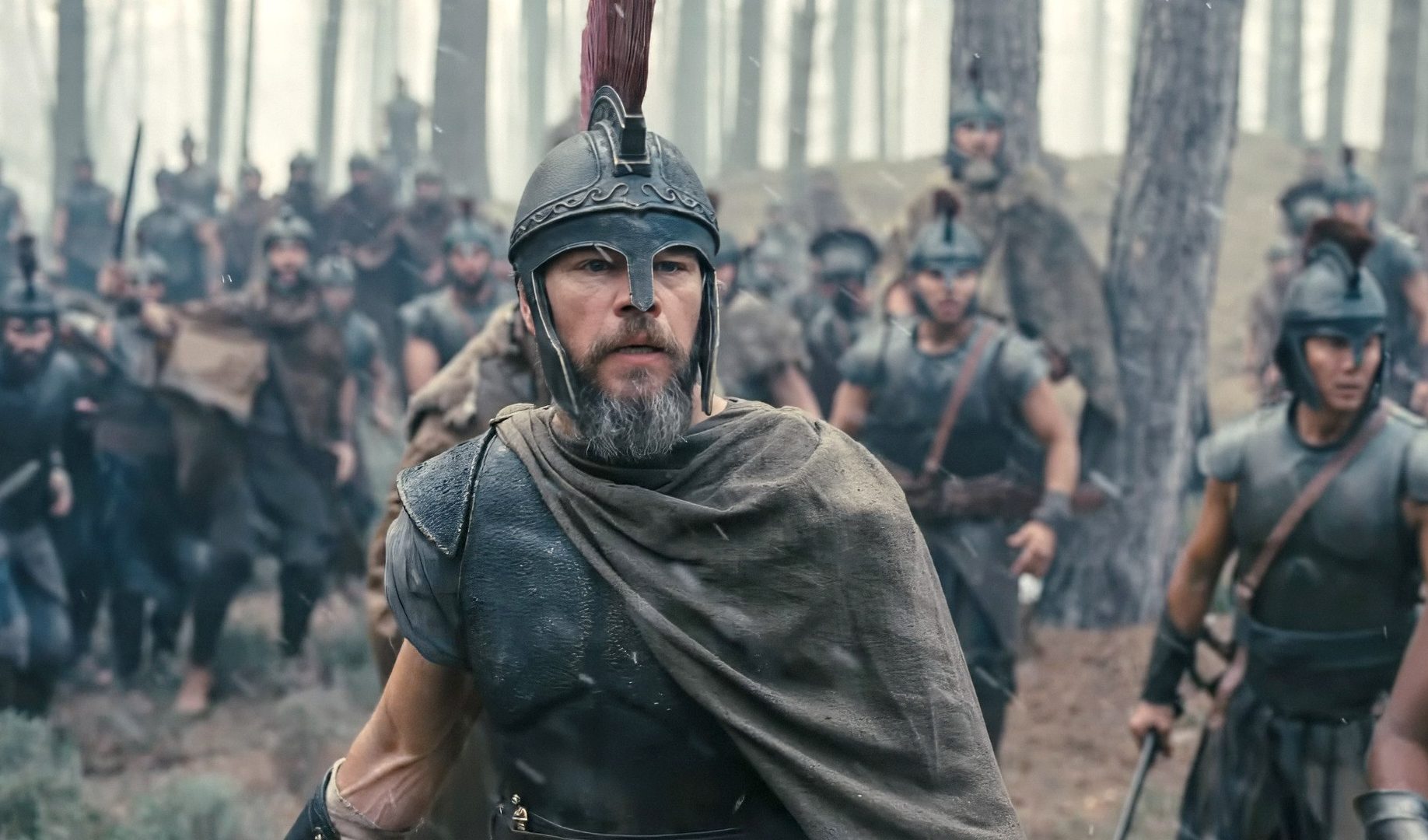
The line for the all-night screening began forming shortly after sunset on 17 July 2026, in a Manhattan where the thermometer still read the low nineties and the sky above midtown had taken on the smeared orange of wildfire smoke drifting south from Canada. Variety's film critic, filing under the headline "My 2 a.m. 'Odyssey'," described the air as "a barbecue of rotten onions" and "a spritz of acid", the kind of sensory detail that doubles as a weather report. Inside the theater, four hours of Christopher Nolan's Odyssey unspooled, and the audience, having paid for the privilege of staying awake through it, did.
What looked, at first glance, like an exercise in cinematic masochism was, on closer reading, a signal: large-scale theatrical cinema, supposedly in irreversible retreat, can still command an overnight sellout in midtown when the title and the running time are right. Both are Nolan's by now. The episode also reveals where the appetite for that experience has migrated, into premium-format, single-night, all-in immersive events that resemble film festivals more than ordinary screenings.
The price of staying awake
All-night screenings are not new; repertory houses have run "cult sleepovers" for decades, and Nolan's own work has been a frequent beneficiary, Interstellar and 2001 have both enjoyed marathon revival runs in recent years. What is newer is the marketing arithmetic around a four-hour epic in 2026. Theaters that book a normal evening's slate get three or four turnovers; a single all-night screening of an Odyssey-length feature gets one, at a premium price, from audiences willing to pay for the spectacle of endurance itself.
Variety's dispatch made the stakes physical. Ninety-something-degree heat. Smoke-tinted air that needed no atmospheric filter for once. An audience hanging in there long after the credits should have given anyone permission to leave. Whatever the box-office lesson of the evening, the cultural lesson is plainer still: the cinema has rediscovered scarcity as a product. In an era of streaming libraries measured in tens of thousands of titles, the scarce thing is a single seat, at a single hour, in a single room, watching a single film from beginning to end. Nolan has built a career on the premise that audiences will pay for what they cannot pause.
What Nolan is selling now
The runtime alone does the work. Modern major-studio releases have spent two decades trimming themselves toward the median length of an episode; a four-hour epic is a marketing proposition before it is a movie. It tells the audience that the experience will not fit inside a commute, a babysitter's shift, or a reasonable evening. It must be planned around. Theaters have responded with scheduling that treats the running time as a feature: dawn-after screenings, intermissions reworked into the mythology of a viewing, posters that count the hours instead of the star names.
The smoke-filtered Manhattan night Variety described is, in that sense, an unusually literal backdrop. There is a parallel between an atmosphere that will not quite clear and a theatrical experience designed not to be skimmed. Both reward patience and punish impatience. Whether that is a sustainable theatrical model, or a concession to a streaming-shaped audience that will only show up for the occasion of an exception, is the question the box office will answer over the next several weekends.
Cinema as occasion, not habit
The deeper signal in the Variety piece is structural. Theatrical exhibition has been steadily re-orienting itself around event programming for at least a decade, with Nolan's name attached to a disproportionate share of the most successful examples. Imax presentations, 70mm reissues, anniversary marathons and one-off screenings have begun to do the work that weekly multiplex programming used to do on its own. The all-night Odyssey sit-down is a more theatrical iteration of the same logic: a screening that doubles as a story the audience will tell later.
That story has a commercial edge. Premium-format and event screenings now command meaningful share of total North American box office, even as overall ticket counts remain stubbornly below pre-2020 baselines. The Variety account doesn't put a number on the Manhattan screening, but it doesn't need to. A sold-out house on a weeknight, at odds-with-the-weather admission prices, for a film four hours long, in a city that has every legal streaming option available to it on the same evening, those are the receipts.
What the smoke left behind
The Manhattan night will be remembered, if it is remembered at all, for the orange sky and the air that stung. Theaters rarely compete with weather, and rarely win. This one did, by the modest measure of keeping a roomful of people in their seats through dawn. The bigger question is what happens to the format when the occasion is not Nolan, when the running time is two hours, when the weather cooperates and the smoke is elsewhere. The cult of the one-off has always been easier to sustain than the habit of the everyday. Variety's midnight dispatch reads, on that reading, less like a victory lap than a reminder of how narrow the path between theatrical and at-home viewing has become.
Nolan declined, as is his custom, to discuss the screening publicly.
Desk note: Wire coverage of the Manhattan Odyssey marathon focused on the production and Nolan's box-office run; this piece reads the evening through Variety's atmospheric reporting and frames it as a data point on the cinematic-event economy rather than a film review.