Mamdani opens legal question over Netanyahu arrest during expected New York visit
New York's mayor says the city is examining whether it has authority to detain the Israeli prime minister during a September trip, a question that mixes municipal law, treaty obligations, and the politics of the Gaza war.
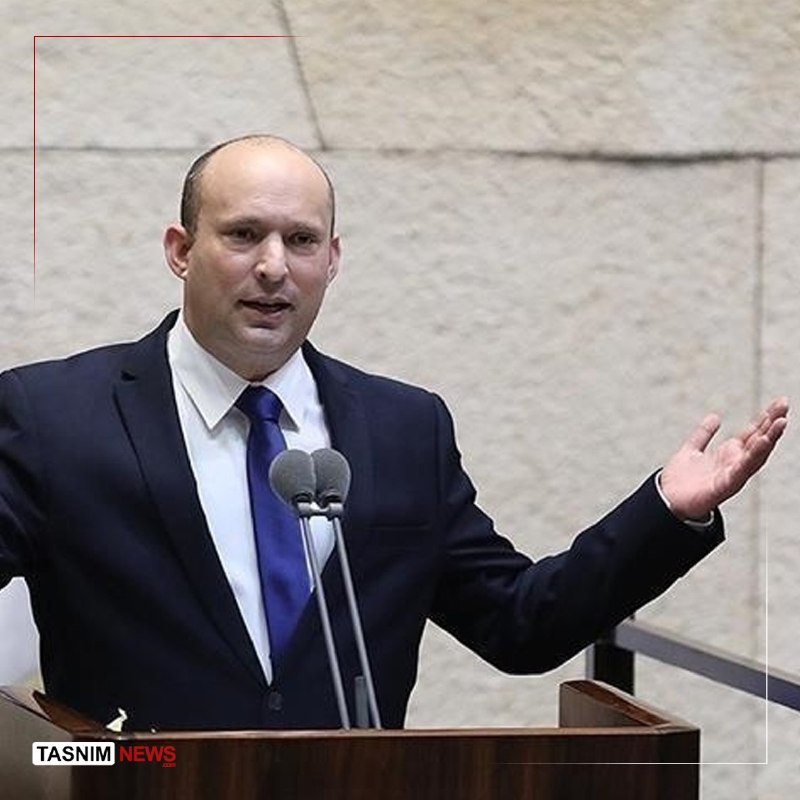
Zohran Mamdani said on 18 July 2026 that New York City is reviewing whether it has the legal authority to arrest Israeli Prime Minister Benjamin Netanyahu if he travels to the city in September as expected, a question that sits at the seam between municipal policing powers, federal treaty obligations, and the politics of an open war in Gaza.
The statement, carried on X by the Polymarket news account at 19:03 UTC and by the Unusual Whales account at 17:23 UTC citing the New York Post, marks the first time a sitting New York mayor has publicly directed city lawyers to study the question out loud. It pushes a long-running legal dispute from op-ed pages and academic journals into the operating room of city government, and it does so on a timeline measured in weeks rather than years.
What Mamdani is actually asking
The review, by Mamdani's account, is narrow and procedural: does the city, on its own authority, have grounds to detain a visiting head of government who is the subject of outstanding arrest warrants from the International Criminal Court? The mayor's framing in both posts was conditional. He described New York as being in "active conversation" about the question and as "reviewing whether it has legal authority," language that signals an examination of powers rather than a directive to use them.
City lawyers in New York operate under a layered regime. Domestic arrest authority flows from state criminal procedure and city charter powers; foreign-head-of-state immunity is governed by federal statute and customary international law. The United States is not a party to the Rome Statute that created the ICC, but it has at times adopted a more cooperative posture toward the court's warrants, including through domestic implementing legislation. The legal answer to whether the New York City Police Department could, on its own initiative, execute an ICC-derived detention is not obvious, and the precise contours of that question are what the review is meant to surface.
Why the timing matters
Netanyahu's reported September visit would be the first such trip since the warrants became a live international legal issue, and the first since the diplomatic fallout from Israel's military campaign in Gaza intensified in Europe and parts of the Global South. Earlier visits by Israeli leaders had drawn protest but not formal arrest talk; the ICC's issuance of warrants, and the subsequent friction with several European governments over execution of those warrants, has reframed what was a political controversy into a question of legal mechanics.
Mamdani's move also lands in a domestic political environment where the Gaza war remains a salient issue. New York hosts large communities with direct ties to the region, and a mayoral signal that the city is at least asking the question can shift news cycles without requiring any action at all. The post from Polymarket's account, framed as a market-moving development, suggests the disclosure is already being read that way by at least some prediction-market participants tracking geopolitics.
What is unsettled in the record
The two source posts describe the same political move from two angles and agree on the core claim: the mayor has initiated a legal review rather than an arrest operation. They differ in framing. The Polymarket post foregrounds the arrest question as headline news; the Unusual Whales post foregrounds the deliberative language ("active conversation") and credits the New York Post as the originating report. Neither post quotes a written legal opinion, names a city lawyer involved in the review, or specifies whether the review is running on a deadline tied to the September visit.
The sources also do not specify the exact jurisdiction of any outstanding ICC warrants against Netanyahu at the moment of the New York trip; whether the United States would, as a non-party to the Rome Statute, recognise or transmit such a warrant; or whether federal authorities would step in before any municipal action. Mamdani's office has not, on the basis of these two items, released a written legal memo, and the New York Post report referenced in the second post is itself a secondary citation whose underlying filing, interview, or statement is not reproduced here.
The structural frame, in plain terms
A sitting leader of a close United States ally traveling to a major American city while under an international arrest warrant would once have been treated as a sovereign-routine event. It now operates inside a new pattern: international criminal law has acquired more practical reach in the post-2022 environment, and cities from The Hague to Budapest have shown that municipal actors can become venues of execution even when national governments hesitate. The same dynamic has played out in reverse, with several European governments refusing cooperation and treating non-execution as a policy choice.
What Mamdani has done, in plain terms, is to insert a United States municipality into that debate. The legal review itself may conclude that the city has no authority to act; the political effect of opening the file in public may be the more durable outcome. Either way, it converts a foreign-policy question into a domestic-law question in a place where both frameworks are binding, and on a clock that points at September.
This article was independently written and sourced from posts dated 18 July 2026 in the Monexus newsroom.
Wire provenance
This editorial synthesis draws on the following public wire/social posts:
- https://t.me/x/869
- https://t.me/x/1174
- https://en.wikipedia.org/wiki/International_Criminal_Court
- https://en.wikipedia.org/wiki/Rome_Statute