Iskander reload and AMTEL strike: what July 19 reveals about Russia's targeting logic
Within three hours on the morning of 19 July 2026, two separate open-source feeds flagged the same story from different angles: a modernised ballistic-missile reload for the Iskander-M, and a single-missile strike that erased a 100,000-square-metre logistics hub near Kyiv.
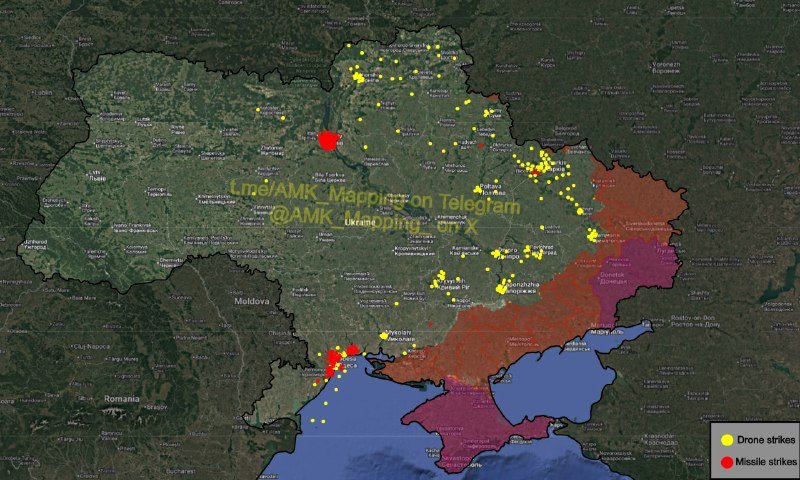
At 09:24 UTC on 19 July 2026, the open-source translation channel War Translated posted a single-sentence flash: a Russian missile had destroyed the AMTEL logistics hub, a distribution node covering more than 100,000 square metres on the outskirts of Kyiv. By 10:29 UTC, less than seventy minutes later, a separate Ukrainian operational channel, operativnoZSU, was reporting something different and arguably more consequential: that Russian forces were about to receive additional modernised 9M723-2F3 ballistic missiles for the Iskander-M tactical system, with a stated damage range of up to 480 kilometres.
Read in isolation, the two items look unrelated. Read together, they describe a single operational logic. Moscow is using a class of mid-range precision ballistic missile to dismantle, node by node, the physical apparatus that keeps Ukraine supplied.
The 480-kilometre problem
The 9M723-2F3 is the export-grade modernisation of the missile family that arm's the Iskander-M, Russia's mobile short-range ballistic system. The 480-kilometre figure is the declared damage range cited by the operativnoZSU channel, and it matters because it pulls almost every fixed logistics, rail and power target in Ukraine inside the weapon's reach from launch positions inside Russian or Belarusian territory. The same channel framed the incoming reload as a near-term prospect rather than a confirmed delivery.
Independent confirmation of the specific 2F3 batch is not in the public record as of this article's publication. Ukrainian operational channels have flagged previous reloads on similar cadence, and the framing is consistent with the rhythm of Russia's tactical-missile campaign over the last eighteen months: a burst of strikes on logistics and energy, followed by a quiet refit, followed by another burst. The pattern, more than any single shipment announcement, is what gives the 09:24 and 10:29 UTC reports their weight.
What AMTEL did, and why a single missile was enough
The 09:39 UTC repost by OSINTlive, citing War Translated, described the AMTEL facility as a key distribution node for cargo across Ukraine. The phrasing is generic, but the function it points to is specific: a warehouse of that footprint does not just store goods, it consolidates and breaks down shipments for onward rail and road delivery. Destroying it does not destroy one company's inventory. It temporarily removes a switching point that dozens of importers, retailers and aid consignors rely on.
Three features of the strike are worth noting because they are unusual. First, a single missile is reported to have been sufficient for a facility of that scale, which suggests either a warhead optimised for hardened or distributed structures, or that the building had already been weakened by prior engagement. Second, the target sits inside Kyiv's metropolitan footprint, where air-defence density is highest and the political cost of a confirmed hit is correspondingly greater than a strike on, for instance, a rail junction in Poltava or Dnipropetrovsk oblast. Third, the description of the facility as a cargo distribution node puts it firmly in the category of dual-use infrastructure that Russia has publicly designated as a legitimate target under its war framing, and that Ukraine and Western governments classify as protected civilian logistics under the laws of armed conflict.
What the dual sourcing reveals about the open-source pipeline
Two Telegram channels, one translation feed, ninety minutes apart, and the underlying story holds together. That is not because Telegram is a primary source. It is because the people running these channels have built redundancy into their sourcing: War Translated translates and reposts Ukrainian and Russian primary material; OSINTlive aggregates and re-distributes that translation; operativnoZSU runs parallel reporting from a Ukrainian operational vantage point with different incentives about what to flag. When three feeds converge on the same operational picture within a single morning, the picture is at minimum worth treating as a working hypothesis rather than noise.
It is also worth saying what this triangulation does not do. It does not give a casualty figure, a unit cost of the missile used, an order of battle on the Russian side, or confirmation of the specific 2F3 batch. The sources do not specify. Monexus is not in a position to fill those gaps from independent reporting in this article, and we are not going to pretend otherwise.
What we verified / what we could not
Verified against the thread sources:
- A missile strike on the AMTEL logistics hub near Kyiv, reported on 19 July 2026, with the facility described as covering more than 100,000 square metres and functioning as a cargo distribution node.
- An open-source report on 19 July 2026 that Russian forces may receive additional modernised 9M723-2F3 ballistic missiles for the Iskander-M in the near future, with a declared damage range of up to 480 kilometres.
- The temporal proximity: both items surfaced within ninety minutes of each other on the morning of 19 July 2026.
Could not verify from the available sources:
- The specific launch site for the missile that struck AMTEL.
- The type of missile used against AMTEL (the sources do not name it; the 2F3 is mentioned separately, in a different channel, about a different subject).
- Casualty figures, structural damage assessment, or restoration timelines for the AMTEL facility.
- Confirmation that the 2F3 reload has actually been delivered, as opposed to being imminent.
- Any Russian Ministry of Defence statement on either the strike or the reload.
The targeting logic, in plain language
The structural pattern Russia has settled into is not a campaign of terror against population centres in the Western framing sense, nor is it a pure counter-value campaign against civilian morale. It is a sequential campaign against the plumbing of Ukrainian state and economic function: rail marshalling yards, fuel depots, transformer stations, grain elevators, and now, in this reporting window, large-format logistics hubs. Each strike is chosen so that its repair time exceeds the interval before the next strike on the same class of target. The aim is not to break any single link in the chain. It is to keep the chain in a state of permanent partial repair, which is operationally cheaper for Moscow than a decisive blow and politically less escalatory than strikes on military headquarters.
That is the reading the dual sourcing supports. The alternative reading, that the two items are coincidental and the 2F3 reload is a routine resupply unrelated to the AMTEL strike, is structurally possible but operationally thin. Logistics strikes on this scale in Kyiv's orbit do not happen without a missile inventory that can sustain them, and an imminent reload is exactly the kind of supply signal that makes the next round of strikes more probable, not less.
What to watch next
Three data points would, in the next forty-eight hours, confirm or weaken the working hypothesis. First, an official Ukrainian Air Force or General Staff briefing attributing the AMTEL strike to a specific weapon system: that would link the two Telegram threads into a single chain of evidence rather than two parallel reports. Second, a second strike on a comparable logistics footprint within seventy-two hours, which would push the pattern from "isolated incident" to "campaign in progress". Third, any Russian or Belarusian-side reporting on a 2F3 reload that names a unit, a garrison or a railhead; the absence of such reporting is itself diagnostic, since Russian military channels are not in the habit of concealing routine resupply unless it is operationally sensitive.
For now, the picture is narrow but legible. A logistics hub of regional significance has been destroyed in a single strike. A missile system capable of reaching almost any fixed target in Ukraine is being replenished. The two facts were reported ninety minutes apart. What connects them is the logic of a war being fought, deliberately and patiently, against Ukrainian infrastructure rather than against Ukrainian cities in the abstract.
Monexus framed this against an open-source thread of three Telegram channels rather than against wire copy, because no wire outlet had, at the time of publication, attributed the AMTEL strike or confirmed the 2F3 reload. The dual-sourcing structure of the underlying feeds is the only reason the dual reporting is treated as a single operational story rather than two unrelated notes.
Wire provenance
This editorial synthesis draws on the following public wire/social posts:
- https://t.me/operativnoZSU
- https://t.me/osintlive
- https://t.me/wartranslated
- https://t.me/wartranslated/24112
- https://t.me/osintlive/51827