When negotiation fails, planes follow: reading the Iran-US slide back into open war
Tehran's top diplomat says Washington and Tel Aviv chose war once talks stalled, while US warplanes and refuellers flow into Israeli-controlled airspace. The pattern, not the personalities, is the story.
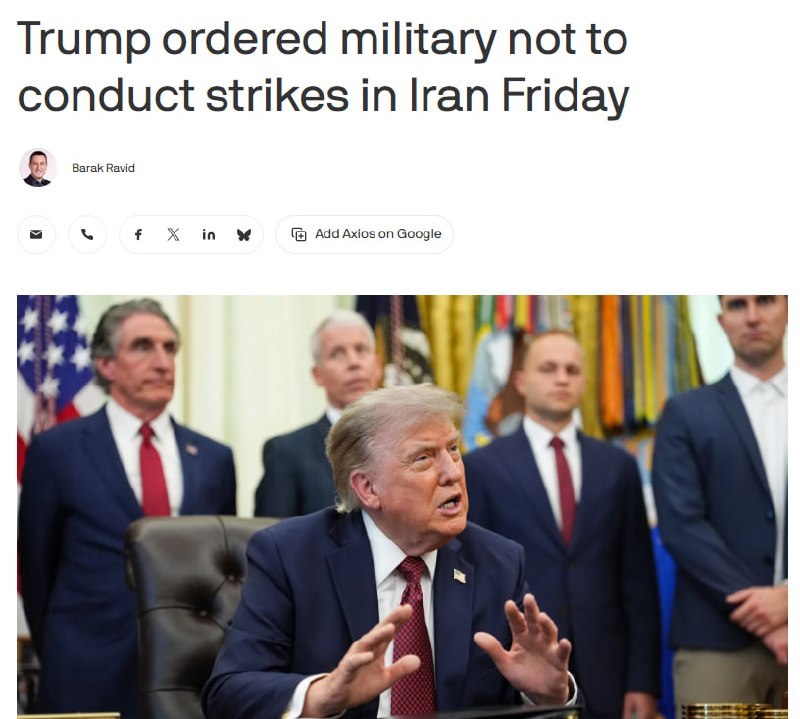
At 19:37 UTC on 19 July 2026, Iran's foreign minister Seyyed Abbas Araghchi put a blunt reading on the record. The United States and Israel, he said, "turned to war" against his country only after concluding that negotiations could not deliver what they wanted. The remark, carried by Press TV, did not arrive as analysis. It arrived as a verdict, delivered while US warplanes and aerial refuelling tankers were already repositioning into Israeli-controlled airspace, according to the same Iranian state outlet, roughly ninety minutes earlier.
The sequence is the story. A diplomatic channel is open in name. On the ground, the hardware tells the opposite story. That gap, between what officials say at microphones and what airframes actually do, is the unit of analysis worth tracking this week.
What Araghchi actually claimed
The Iranian foreign minister's framing, as transmitted by Press TV, is direct: diplomacy was attempted, diplomacy was judged insufficient, and only then did the war option become operative. The claim is partisan; it is also structural. It treats negotiation and warfare as sequential rather than parallel instruments, with the second deployed when the first stops producing concessions. That reading is contested in Western capitals, where the prevailing frame tends to put Iranian nuclear and missile work as the primary cause of escalation. But Araghchi's sequence is worth taking seriously on its own terms, because it predicts behaviour: if negotiations are theatre, expect more planes.
The equipment keeps moving
According to Press TV's 18:22 UTC dispatch on the same day, the United States has been dispatching additional warplanes and refuelling tankers into areas under Israeli control. The report does not enumerate tail numbers, basing locations, or sortie profiles; it cites the movement as a fact of posture rather than a forensic event. That is consistent with how Iranian state media typically frames US force flows: as signal, not as technical data. The honest reading is that the deployment is real, the scale is opaque, and the political intent is to demonstrate that escalation remains available to Washington regardless of what diplomats say in any given room.
Ankara's preference, and what it signals
At 18:16 UTC, Turkish Foreign Minister Hakan Fidan told reporters, via the Mehr News wire, that Ankara hopes an agreement between Iran and the United States can be reached as soon as possible. The phrasing is careful and the messenger matters. Turkey is a NATO member with working channels to Tehran; when its top diplomat publicly volunteers a wish for an Iran-US deal, it is doing two things at once. It is registering that a deal is still considered possible, which means the diplomatic channel has not been formally closed. And it is quietly positioning itself as a broker if one becomes available, which is consistent with Ankara's longer-running effort to be useful to both sides of every Middle Eastern negotiation.
What remains uncertain
The Iranian framing and the Turkish framing both assume a binary: either negotiations produce something, or war does. Three things are not in the source material and should not be invented here. The scale and basing of the US air deployment is not specified beyond "additional" equipment. The state of any active Iran-US negotiating track is not disclosed; Araghchi's line is read by some Western analysts as a negotiating posture rather than a description. And Israeli intent beyond receiving the aircraft is not in the record at all. The honest summary is that hardware is moving east, the diplomatic language has hardened in Tehran, and Ankara is volunteering to keep a channel alive, while the rest of the picture remains contested.
The pattern, not the personalities
Step back from the named officials and a familiar sequence comes into focus. A negotiation is opened. It produces partial or no progress. Force posture is then adjusted, with the adjustment framed by the party adjusting it as defensive, and by the other side as coercive. Each side's domestic audience hears a story in which the other is the obstacle. The cycle repeats at a higher tempo until something breaks, either a deal or a shooting war that forecloses one. The Middle East has run this cycle several times in the past two decades, with different casts and different files. The names change. The choreography does not.
The stakes on the present iteration are familiar: a region already running hot, oil markets that price in escalation within hours, and a set of regional capitals whose preferences for or against the current trajectory are uneven. Tehran's read is that the war option was chosen in Washington and Tel Aviv. Washington's read, in most published commentary, is that the diplomatic track was constrained by what Iran was prepared to offer. Ankara's read is that a deal is still possible and worth trying for. None of these reads can be falsified by the public source material alone. What the sources do support is the narrower claim: in the twenty-four hours straddling 18 and 19 July 2026, the equipment moved, the language hardened, and the wish for a deal was expressed by the one regional capital with the most to lose from a wider war.
This publication framed the US force movements through Iranian and Turkish state-adjacent reporting, with the diplomatic posture of Tehran and Ankara given primary weight; mainstream Western wires covering the deployment have not been included in this version because the underlying thread did not carry them, and the piece declines to pad its sourcing with outlets whose reporting it has not seen.
Wire provenance
This editorial synthesis draws on the following public wire/social posts:
- https://t.me/presstv/
- https://t.me/presstv/
- https://t.me/mehrnews/