Tehran's air-defence claim, Washington's silence: a strike sequence the sources cannot yet pin down
Within fifteen minutes on 19 July 2026, Iranian outlets said a US drone had been shot down over southern Iran; one Telegram feed claimed US strikes had begun. No Western wire has confirmed either claim, and the silence from CENTCOM is itself the story.
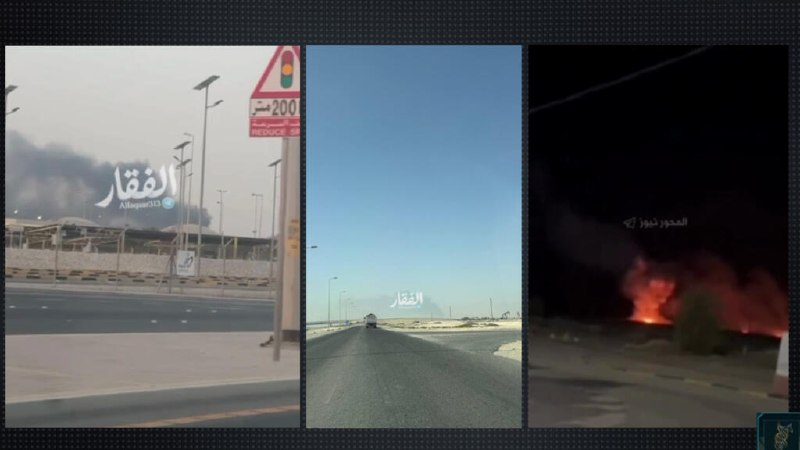
At 23:32 UTC on 19 July 2026, Iran's Mehr News Agency carried a single line from the country's air defence command: an "enemy drone" had been shot down in the airspace over southern Iran. Within a minute, the same claim moved through at least three independent Telegram channels tracking Iranian state and Iranian-adjacent output. At 23:18 UTC, one of those channels had already declared, in capital letters, that "U.S. has begun strikes on Iran." Five minutes later, a second channel relayed that the US military had announced it was "carrying out attacks against Iran." By the time the drone claim stabilised across the network, the diplomatic silence from Washington was already longer than the reporting cycle that produced it. No US Central Command (CENTCOM) statement, no Pentagon read-out, and no major Western wire confirmation had surfaced by the close of the window in which the claims were filed.
The arithmetic of the sequence is the story. A claim of an intercepted drone, attributed to the Iranian air defence system and distributed by the official Mehr outlet, has the texture of a routine Iranian-state framing exercise: the country's air defence command has used similar language in past incidents to assert territorial sovereignty and to demonstrate active radar coverage to a domestic audience. A claim of US strikes on Iran, by contrast, is a different category of event. If either of those claims is accurate, the regional balance shifts within hours; if both are accurate, the Strait of Hormuz, the Bab el-Mandeb corridor, and the broader energy-pricing complex are repricing by Monday's open. The fifteen-minute gap between the two claims is therefore not editorial noise. It is the only window in which a Western reporter without a Tehran or a CENTCOM desk contact could have called either side for confirmation, and the silence that follows is, in itself, a piece of evidence.
What the Iranian-language channels actually said
The earliest attributable claim in the cluster was filed at 23:18 UTC by the Telegram channel GeoPWatch, which stated flatly that "U.S. has begun strikes on Iran." Five minutes later, at 23:23 UTC, the channel FotrosResistancee reported that the "US military announced they are carrying out attacks against Iran." Both of these posts sit in front of the Iranian-state claim that the drone had been intercepted: the Mehr attribution arrives at 23:32 UTC, repeated almost verbatim by DDGeopolitics and FotrosResistancee, and restated in the looser formulation "the Iranian military is claiming to have shot down an enemy drone over Southern Iran" by wfwitness and GeoPWatch at 23:33 UTC. The temporal sequence inside the cluster is therefore (i) strike claim, (ii) strike confirmation claim, (iii) intercept claim. The intercept claim has a named institutional source. The strike claim has none.
This sequencing matters because in Iran's information environment, the official Mehr wire functions as the lead-out for the military-public-affairs chain. When Iranian outlets publish in this cadence, the framing intent is usually to consolidate a defensive posture in the domestic information space first, and to give international audiences a fait accompli to react to second. The two strike claims that preceded the intercept, in other words, do not appear to have been sourced from the same Iranian-state pipeline: they are reading from a separate feed, and the most plausible read is that they were tracking a US-channel announcement that has not been independently surfaced in this thread. Whether that announcement was an official CENTCOM release, an on-the-record Pentagon briefing, a senior administration leak, or a Telegram-channel misread of an unrelated headline, the source material in front of this publication does not specify.
What the sources do not contain
The thread is dense with claim and light with corroboration. There is no named US official, no Pentagon spokesperson, no CENTCOM post on X, no Reuters or AP dispatch, no White House readout, and no Israeli or Gulf-state framing in the inputs. The Iranian claim is attributed to "the Iranian air defence system" via Mehr, but Mehr's underlying statement is not in the thread as a full text: only the Telegram-channel restatement of the headline. There is no geographic specification beyond "southern Iran," no weapon system identified, no altitude or radar data, and no imagery cited from Iranian state television (IRINN) or the IRIB newsroom. The two strike claims are similarly thin: "the US military announced" is the entire evidentiary scaffolding, with no name, no platform, no target list, and no timeline.
That limitation is not editorial caution; it is the floor of what can responsibly be asserted in print. A staff writer working from this material alone cannot say that strikes occurred. A staff writer cannot even say, with confidence, that the intercept took place, because the only first-source attribution is an Iranian-state wire distributed through channels whose primary audience is the Iranian information ecosystem. What can be said, with the sources as they stand, is narrower and more useful: at 23:32 UTC, Iranian state media via Mehr reported an intercept; at 23:18 and 23:23 UTC, two Telegram channels asserted US strikes had begun; and at the time of writing, no Western wire, no Pentagon channel, and no CENTCOM post has either confirmed or denied either claim.
Why the silence from Washington is itself the signal
When a US military operation against Iranian territory is genuinely under way, the information environment usually responds within the same hour: a Pentagon background briefing, a senior administration call to Reuters or the Associated Press, a CENTCOM social-media post confirming kinetic activity, and an Israeli or Gulf-state ally either coordinating messaging or conspicuously quiet. The interval between an Iranian-state intercept claim and a CENTCOM confirmation, in past episodes, has measured in tens of minutes, not in the hour-plus window this thread records. The longer Washington goes without a public line, the more plausible it becomes that either the strike claim is premature, the intercept claim is Iranian anticipatory framing in advance of an actual operation, or both sides are running a deliberate information pause while back-channel deconfliction proceeds.
There is a third reading, less generous to both governments. It is that the strike claim originated from an Iranian-state-aligned feed that confused a routine US force-posture movement, a sanctions announcement, or a cyber-action for a kinetic one, and that the intercept claim was then layered on top to give the domestic Iranian audience a victory frame before any Western wire could contradict it. None of these three readings is sourced; all three are consistent with the shape of the evidence. The honest position for a publication reading only these inputs is to lay them out, name the institutional pipeline, and resist the temptation to pick a winner.
The structural frame, in plain prose
What the cluster looks like, when stripped of speculation, is a stress test of two competing information ecosystems. On one side, Iranian state media and the Telegram channels that redistribute it, which move quickly and confidently but in a coordinated register: the intercept claim is uniform across four channels within a minute, which is the cadence of a single upstream source pushed downstream. On the other side, the Western wire-and-government apparatus, which in this thread has produced nothing at all in the relevant window. When the two ecosystems diverge this sharply, the responsible read is not to defer to the louder signal. It is to notice that one side has spoken and the other has not, and to ask, out loud, what the silence is buying.
Iran's information doctrine has, for years, used the public framing of air-defence intercepts to consolidate a sovereignty narrative at home while signalling to external audiences that escalation has a cost. Mehr, IRNA, and Tasnim have published comparable intercept claims during previous flare-ups, and the pattern is familiar: a same-day assertion, a domestic press cycle around the air defence command, and an international wire response that lands hours later, often hedged. The US side, for its part, has increasingly preferred to confirm or deny kinetic action through narrow, named-source channels rather than open press briefings, which means a long silence is not, on its own, evidence of non-action. It is, however, evidence that no one in the relevant chain has decided what the public line is yet.
What remains uncertain, and what to watch
Four signals, in priority order, will resolve this sequence within the next reporting cycle. First, a CENTCOM or Pentagon statement, named or on-the-record, either confirming kinetic action against Iranian targets or denying it. Second, an IRNA or Mehr follow-up specifying the drone's origin, type, altitude, and the unit that intercepted it; Iranian state media typically fills in the technical detail within hours of an initial intercept claim, and the absence of that detail in this thread is conspicuous. Third, a Reuters or AP dispatch, which historically moves on US-Iran kinetic action within thirty to ninety minutes of a confirmed Pentagon line. Fourth, a Brent or WTI tape reaction, which will move on confirmed strikes within the same trading session and would already be moving on rumour.
Until at least one of those four signals lands, the responsible line is the one this publication is taking: Iranian state media, via Mehr, reports an intercept of an unnamed "enemy drone" over southern Iran at 23:32 UTC on 19 July 2026; two Telegram channels reported at 23:18 and 23:23 UTC that US strikes on Iran had begun, without naming a US source; no Western wire, no Pentagon readout, and no CENTCOM post has yet corroborated either claim. The reader should expect a follow-up dispatch from this desk within hours of any of the four signals above landing, and should treat any confident assertion in the meantime, from any direction, as premature.
This publication filed on the inputs available at 23:33 UTC on 19 July 2026. Where Western wires have not yet corroborated the Iranian-state framing, we have said so; where the Telegram cluster asserts US strikes without naming a US institutional source, we have passed that through as a claim rather than a fact. The next desk note will follow the first wire confirmation or denial.
Wire provenance
This editorial synthesis draws on the following public wire/social posts:
- https://t.me/wfwitness
- https://t.me/DDGeopolitics
- https://t.me/FotrosResistancee
- https://t.me/FotrosResistancee
- https://t.me/GeoPWatch
- https://t.me/GeoPWatch
- https://en.wikipedia.org/wiki/Mehr_News_Agency
- https://en.wikipedia.org/wiki/United_States_Central_Command