Four US service members killed in Iran strikes, the official toll says. Tehran's channels claim a quieter picture.
US-cited casualties and an intercepted American drone converged on Iran in a 24-hour window. The official number, and what Tehran's outlets are emphasising instead, are not the same story.
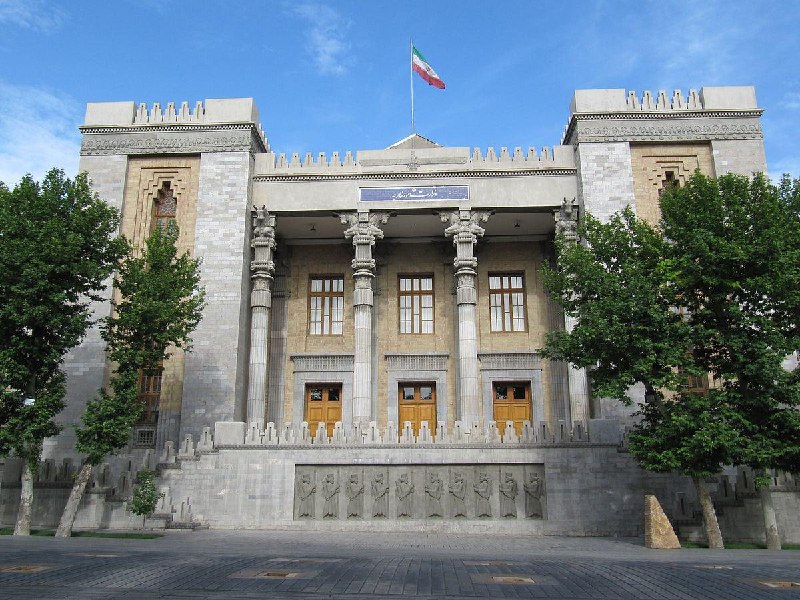
At 20:16 UTC on 19 July 2026, an account monitored across the open-source channels that track the US-Iran military exchange posted that American officials had confirmed four US service members killed in Iranian strikes over the preceding 24 hours. The same post carried a second line, in English translation: "And what remains hidden is significantly larger in scale."
That second line is the story. The headline number, four dead, is what the American side is on the record for. The rest is a guess masquerading as a thesis, and it is doing work the official record cannot yet do.
What is verified in the open is narrower than either side wants to admit. A US MQ-9 reconnaissance drone was shot down by Iranian air-defence forces in the mountains above Asalouyeh, on Iran's Gulf coast, on the morning of Friday 17 July, and was recovered from the mountainside, according to Tasnim News Agency's English-language Telegram channel at 19:41 and 19:48 UTC on 19 July. Asalouyeh hosts the South Pars gas complex, the largest in the world, and the drone's recovery site is therefore both a military and an industrial question. The four-casualty figure, separately, was posted at 20:16 UTC the same day to an account distributing material in English and drawing on what it described as American confirmation. No Pentagon readout, no CENTCOM statement, and no major wire-service bulletin on the casualty number appears in the materials reviewed for this piece.
The number, and the source it came from
The casualty claim travels in a particular ecosystem. The account that posted it at 20:16 UTC is not a US government feed, not a Pentagon press officer, and not a wire service. It is the kind of account that aggregates, translates, and amplifies material from outlets whose editorial line is openly adversarial to the United States. When it writes that the four deaths have been "officially confirmed by the American side", the word "officially" is doing heavy lifting. As of 19 July 2026 at 20:16 UTC, the publicly visible American record on US casualties in Iran-linked operations over the prior day consists of that single assertion. The numbers from Tehran-aligned channels and the numbers from the Pentagon are, for the moment, the same number. That is a thin basis on which to rest a headline.
The pattern is familiar: a hostile-to-Washington channel asserts that a Western government has admitted something the Western government has not, in fact, admitted in any forum a reader can verify. The admission is then quoted as fact by downstream accounts, and the original sourcing chain disappears under the weight of repetition. None of this means the four deaths did not happen. It means the chain of custody for the claim is exactly one account long.
What the Iranian channels are actually emphasising
The Tasnim English channel, the most-read Iranian state-adjacent outlet publishing in English on Telegram, chose a different frame on 19 July. At 19:55 UTC, in a post titled "Why is there no mention of Israel in the recent American attacks on Iran?", Tasnim asked the question its editors wanted Western readers sitting with: if the United States is striking Iranian soil, where is the Israeli role in the operation, and why is it absent from American statements? It is a deliberate piece of narrative management. Iran has been at pains, since operations began in earnest earlier this year, to keep the Israeli variable visible: to frame strikes on Iranian infrastructure as joint US-Israeli operations, and to insist that Israeli involvement changes the political-legal character of those strikes. A US-only frame, in this telling, is a cover.
The Tasnim framing has a parallel in Moscow's wartime communications doctrine: when a state wants to widen the coalition it is fighting, it widens the coalition it is fighting against. Naming Israel is naming a second enemy, and a second enemy means second-front pressure on Western domestic politics, where Israel-related operations carry a separate and louder load of public attention than Iran-only operations do. Whether Israeli forces are actually operating alongside US units inside Iran is not addressed in the materials reviewed; Tasnim's argument is structural, not evidentiary.
The drone, the site, and what each side gets out of the picture
The MQ-9 recovery is the photograph Tehran wants on the front page. A Reaper-class drone is not a small thing. Each airframe costs roughly the price of a Manhattan brownstone, and the sensor package on board is the kind of capability the Iranian Revolutionary Guard Corps can spend months trying to reverse-engineer. Tasnim's English channel twice on 19 July, at 19:41 and 19:48 UTC, ran a story on the recovery operation, including the logistical detail that the airframe was brought down from the Asalouyeh mountains. The detail is small and the point is large: Iranian air-defence works, Iranian logistics work, and Iranian terrain is hard to operate over.
The American side, for its part, did not produce a public confirmation of the shootdown in any of the materials reviewed. The standard practice when a US drone is lost over hostile territory is to acknowledge the loss in a routine statement within 24 to 48 hours. The silence is not itself a fact, but it is the kind of silence that lets adversaries define the moment.
What the open record can and cannot tell us
The honest version of the situation on 19 July 2026 is this: a US MQ-9 was downed over the Asalouyeh mountains on the morning of 17 July; Iranian state-adjacent media says the airframe was recovered; an account hostile to the United States asserts, citing "the American side," that four US service members were killed in Iranian strikes over the preceding 24 hours; no Pentagon readout corroborating that casualty number is in the public materials; and Iranian state-aligned outlets are using the window to ask, pointedly, where Israel is in the operation. The contested terrain is not only the Asalouyeh mountainside. It is the question of who the public believes about what happened there.
The next 48 hours will tell. A formal US military casualty announcement, or the conspicuous absence of one, is the single data point that will settle whether the four-death figure becomes a fact or a rumour. Until then, the gap between what is verified and what is being asserted is the story, and the story is being written faster than the record can keep up.
Monexus framed this as an audit of an unverified casualty claim rather than a wire confirmation, on the principle that a hostile-aligned channel's reading of an American statement is not the same thing as the American statement.
Wire provenance
This editorial synthesis draws on the following public wire/social posts:
- https://x.com/sprinterpress/status/
- https://t.me/tasnimplus
- https://t.me/tasnimplus
- https://t.me/tasnimplus