Iran says US struck Darkhovin reactor site, accuses Washington of attacking a facility under IAEA safeguards
Tehran's atomic energy agency says US strikes hit an under-construction power reactor in Khuzestan, framing it as an assault on a safeguarded civilian site. No US confirmation has been published.
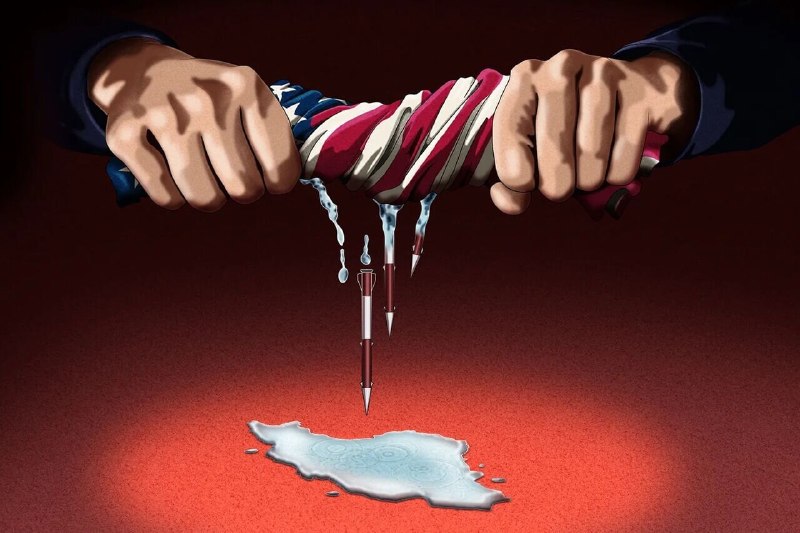
Iran's Atomic Energy Organization said on 19 July 2026 that recent US strikes hit the under-construction Darkhovin nuclear power plant in Khuzestan province, describing the attack as a strike on a peaceful, safeguarded civilian facility. The statement, carried at 10:33 UTC by Iranian state outlets and amplified through Telegram channels aligned with the Tehran security establishment, drew no immediate confirmation from Washington and no comment from the International Atomic Energy Agency in the items Monexus reviewed.
The exchange matters less for the single facility than for what it implies about the limits of diplomatic cover. A reactor under construction, on Iranian soil, declared to inspectors, hit by the arsenal of a nuclear-armed state: that is the line Iran's atomic agency is now drawing, and it is a line the rest of the reporting ecosystem has so far declined to walk up to.
What the AEOI actually said
The Atomic Energy Organization of Iran framed the strike in the language of international law, not the language of war. The 10:33 UTC PressTV wire quoted the agency as calling the strike an attack by the "US terrorist regime" on the Dar Khovin nuclear site, in violation of international law. The 10:37 UTC release circulated by the Russian-aligned RNIntel channel used near-identical wording, characterising the targeting as "an attack on a peaceful nuclear facility under safeguards" and an "overt crime against international law." By 11:43 UTC, the DDGeopolitics channel was carrying the AEOI's condemnation of the strike on what it spelled "Dar Hovein," and by 11:48 UTC the Cradle's Telegram wire had reposted the announcement to its audience alongside additional context.
The geographical target is consistent across the items. Darkhovin (also transliterated Dar Khovein, Dar Khovin, Dar Hovein) refers to a planned reactor complex in Khuzestan, in southwestern Iran near the Shatt al-Arab waterway. The facility has been under construction for years, has been declared to the IAEA, and is not one of the enrichment sites at Natanz or Fordow that have dominated previous escalations. The AEOI's argument rests on that distinction.
The counter-frame: what is missing
No US Central Command release, no Pentagon briefing transcript, no White House statement, and no IAEA verification appeared in the source items Monexus reviewed. The strike claim therefore rests entirely on Iranian institutional messaging and on amplification channels that, in several cases, are themselves state-aligned or state-adjacent. PressTV is the English-language outlet of Iranian state broadcasting. RNIntel has historically carried Russian security-service framings. The Cradle, while presenting itself as independent regional analysis, has consistently run counter-Western frames on Iran, Iraq, and the wider Middle East.
That does not make the claim false. It makes the claim one-sourced. A reader weighing the AEOI's assertion should hold two facts in mind: the agency has a clear institutional interest in characterising any strike on Iranian nuclear infrastructure as illegitimate under international law, and the agency has, in past episodes, also been the authoritative Iranian voice on what was and was not hit. Both can be true at once.
Why a power reactor, not an enrichment hall
The choice of target, if the AEOI's account holds, is more provocative than the familiar pattern of strikes on enrichment cascades. A reactor under construction is civilian infrastructure by any reading of the Non-Proliferation Treaty; its destruction does not degrade a weapons pathway in the near term, because no operational reactor of this class contributes fissile material to a bomb program in any short cycle. It does, however, set a precedent. Striking a declared, safeguarded power-reactor site tells every non-nuclear state with an atomic aspiration that IAEA declarations offer no protection against the arsenal of a state that decides the declarations are insufficient.
Iran's strategic communication reflects that calculation. The phrase "under safeguards" is doing the work. It positions Tehran as the compliant party, the IAEA as the witness, and Washington as the actor breaking the implicit bargain that inspections buy immunity. Whether that framing persuades audiences in Berlin, Brasilia, Beijing, or Pretoria is the open question. The phrasing is already calibrated for them.
Stakes and the reporting gap
The immediate stakes sit in three places. Inside Iran, the strike claim, if confirmed by imagery or by IAEA inspectors, hands the Islamic Republic a domestic rallying point at a moment when its regional position is under sustained pressure. Inside the United States, the absence of any official acknowledgement in the items Monexus reviewed leaves the operational picture genuinely unclear: a strike may have occurred without a public read-out, an Iranian fabrication is possible, or a third party may have hit the site and Tehran has chosen to attribute it to Washington. In the wider non-proliferation regime, a confirmed strike on a safeguarded reactor would weaken whatever residual faith middle powers still place in inspection-based bargains.
What the sources do not yet settle is the basic factual question. The AEOI has named the target. The channel ecosystem has echoed it. The corroborating layer, satellite imagery from independent firms, IAEA inspector access, on-the-record Pentagon confirmation, simply is not in the items Monexus read. Until it arrives, the responsible read is narrow: Iran's atomic agency says the United States struck the Darkhovin construction site on or shortly before 19 July 2026, and no independent verification has yet been published.
Desk note: Monexus carried the AEOI's claim with the institutional attribution intact and flagged the absence of US or IAEA confirmation in the same breath, rather than waiting for the wire desks to settle on a frame and then echoing it.
Wire provenance
This editorial synthesis draws on the following public wire/social posts:
- https://t.me/presstv
- https://t.me/rnintel
- https://t.me/DDGeopolitics
- https://t.me/thecradlemedia
- https://t.me/wfwitness
- https://t.me/TheCradleMedia