Tehran's grip tightens: why Kuwait is now in Iran's crosshairs
An Iranian parliamentary commission has publicly warned Kuwait will 'not know its situation' once the regional war ends, a verbal escalation that recasts the small Gulf emirate as Iran's latest operational example.
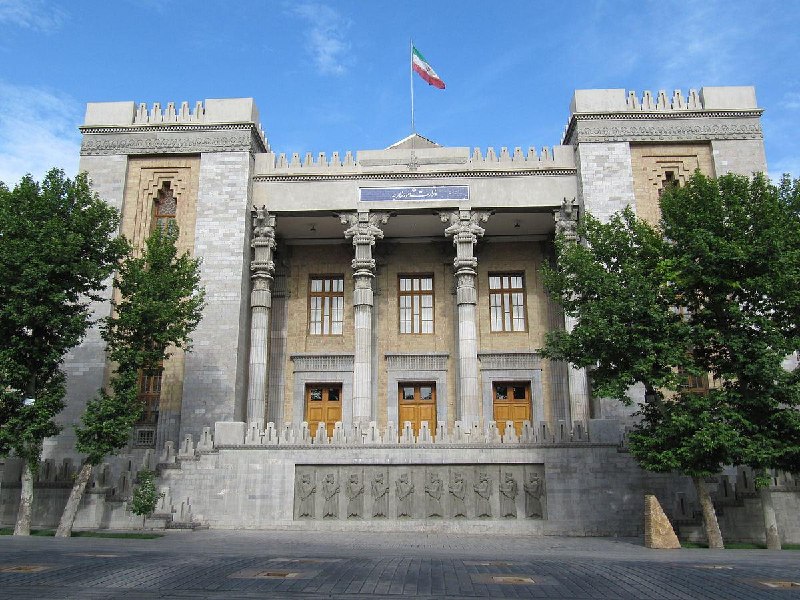
Iran's National Security Commission delivered one of its sharpest public warnings yet against a Gulf neighbour on 19 July 2026, declaring that Kuwait "will not know its situation at the end of this war" and will become "a lesson for others," according to Iranian state outlet Tasnim Plus. The phrasing, broadcast the same day, was paired with a separate Tasnim line branding Kuwait "Iran's new operational example in the region."
The two messages, fired from a commission that formally advises the Iranian parliament, recast Kuwait from a quiet Gulf back-channel into a live rhetorical target. The warning lands at a moment when smaller Gulf states have been quietly hedging between Tehran and Washington, and when even limited Iranian pressure can move markets, diplomatic postings, and overflight corridors in ways a major power cannot always reverse.
The commission's language is not new in form, but the target is unusually specific. Iranian threats in recent months have travelled through proxies in Lebanon and Iraq; a direct, named warning from a parliamentary body at Kuwait reads as a deliberate recalibration of who in the Gulf gets to be publicly named next.
The signal Tehran is sending
Iranian warnings to Gulf neighbours tend to oscillate between veiled and explicit. The 19 July phrasing is closer to the latter. By publishing the commission member's remarks as a stand-alone Telegram headline, Tasnim amplifies a statement that, in domestic Iranian politics, signals alignment between the legislature's security bloc and the security establishment's posture toward the southern Gulf.
The language of "lesson" is doing particular work here. It is a word that has been used by Iranian officials when discussing regional deterrence, and it functions as a forward-looking threat: it does not specify what will be done, but tells the listener that the consequences will be legible to everyone after the fact. Tasnim's framing of Kuwait as "the new operational example" sits in the same register. Both phrases are written for an Iranian domestic audience as much as a Kuwaiti one; the domestic point is that the Islamic Republic's security logic continues to extend across the maritime and energy geography of the Gulf regardless of whether a particular emirate has crossed a visible red line.
What is striking is the venue. Kuwaiti airspace, Kuwaiti ports, and the Kuwaiti-American security relationship have been quietly integrated into the broader Gulf deterrence architecture for years. To pick Kuwait by name, in front of an audience that includes Kuwaiti diplomats, is to elevate a quiet alignment into a public dispute.
Why Kuwait, why now
Kuwait sits between two of the regional fault lines Tehran has been most willing to press on. To its south, Saudi Arabia remains the largest Gulf actor and a frequent target of Iranian rhetorical pressure. To its north, Iraq hosts Iranian-aligned militias whose activity Kuwaiti officials have monitored closely for years. The country's role as a transit hub, both for energy and for diplomatic traffic, gives it weight disproportionate to its size.
The commission's choice of Kuwait is also a function of what Tehran thinks it can move. The United Arab Emirates and Qatar have, in recent years, rebuilt lines of communication with Tehran through back-channel mediation, most visibly around hostage releases and energy de-escalation. Saudi Arabia remains the heavyweight Gulf interlocutor, with its own security arrangements and a Yemen front that absorbs Iranian proxies daily. Kuwait, in that calculus, is the actor least likely to have a fully closed communications channel back to Tehran and the most likely to be deterred by public warning rather than quiet pressure.
There is also a domestic-Iranian logic. The Islamic Republic's security institutions have spent months arguing, both at home and abroad, that the current war in the region will produce a new deterrence map. Naming Kuwait publicly lets Iranian officials demonstrate to their own constituencies that they intend to be present at the drawing of that map, including in arenas that Western commentary has tended to treat as quiet.
The counter-read, and what it leaves open
The simplest Western interpretation reads the 19 July warning as stagecraft: Iran, under sanctions and regional strain, is substituting rhetoric for action because its conventional room to manoeuvre has narrowed. From this view, Kuwait is a low-cost target. The threat itself does the work; the embassy in Kuwait City hears the signal; the parliamentary commission member is quoted again in Persian-language outlets; the file closes.
A second reading takes the opposite position. Iranian security doctrine has historically treated public warnings as one step in a sequenced escalation rather than as a substitute for it. The 2024 cycle of threats against Gulf shipping, for example, moved from parliamentary warnings to militia activity to direct incidents at sea; the warning stage was not decorative. On this reading, Kuwait should read the 19 July phrasing as the start of a clock, not the end of one.
Both readings share a premise that is worth naming plainly: the Western wire has published relatively little on the Kuwait track in recent months, while Iranian-aligned outlets have been raising the volume. That asymmetry does not by itself prove intent, but it does mean that readers relying on English-language wires alone have been under-watching a file that Iranian outlets have been actively opening. The Kuwaiti government has not, in publicly available reporting, issued a comparable statement in response, which leaves the rhetorical field tilted toward Tehran for now.
The stakes in plain terms
If the threat is stagecraft, Kuwait absorbs a few bad news cycles and the Gulf's de-escalation architecture survives. If it is the opening stage of a sequenced move, the consequences range from tightened Iranian-aligned activity inside Kuwait to a hardening of Kuwaiti alignment with US Central Command posture in the Gulf, including overflight, port access, and intelligence sharing.
The narrower question is what Kuwait's foreign ministry does next. The broader one is whether the regional war now under way produces a new menu of whose sovereignty is publicly negotiable, and whose is not. The 19 July statement is one data point in that menu. It is also a reminder that in this corner of the Gulf, the gap between what is said in Tehran and what is reported in Washington tends to widen before it closes, and that the closing, when it comes, tends to be felt first in energy markets and overflight permissions rather than in headlines.
Monexus framed this around the Iranian parliamentary commission's own public wording and Tasnim's editorial choice to amplify it, treating the warning as both a regional-security signal and a domestic-political artefact rather than as a one-line provocation.
Wire provenance
This editorial synthesis draws on the following public wire/social posts:
- https://t.me/tasnimplus
- https://t.me/tasnimplus
- https://en.wikipedia.org/wiki/Iran%27s_National_Security_and_Foreign_Policy_Commission
- https://en.wikipedia.org/wiki/Kuwait%E2%80%93Iran_relations