Tehran's Hormuz threat is a price the world pays for someone else's war
The Revolutionary Guards say no oil or gas will move through Hormuz while American hostilities continue. The Strait handles a fifth of global seaborne crude. The world should treat the threat as a price the United States has chosen to pay, and to pass on.
At 22:50 UTC on 19 July 2026, Iran's Revolutionary Guards declared in a public statement that the Strait of Hormuz remained under their full control, and a minute later threatened that "not a single drop of oil or gas" would be exported through it for as long as American hostilities continued. The same package of statements, distributed via the Iranian state-aligned channel Al-Alam, claimed a "surprise attack" on the US special operations command centre at the Al-Tanf garrison in southern Syria, and said the operation had killed a "large number of American forces" and destroyed a radar system and "a number of helicopters." No independent confirmation of the Al-Tanf casualty claim had been published at the time of writing.
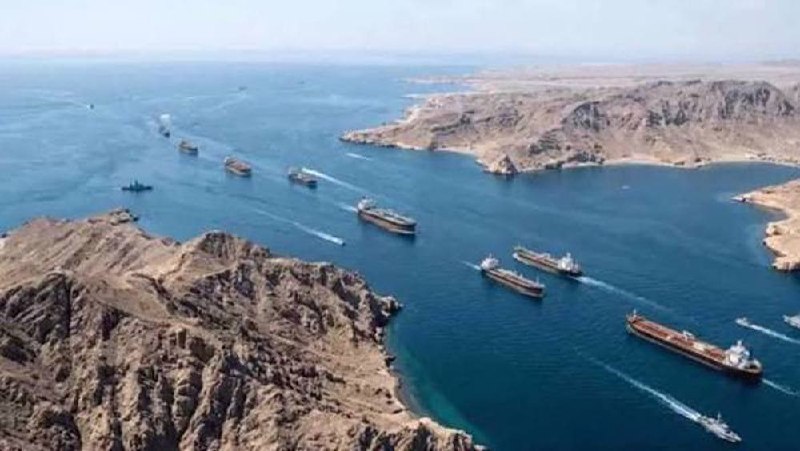
The Strait of Hormuz is the narrowest point of a maritime corridor through which roughly a fifth of globally traded crude oil moves. When a state with the geography to bottle that chokepoint says it intends to bottle it, the signal is aimed less at oil traders than at the foreign policymaker who, by that reading, started the fight.
What the Guards actually said
Three near-simultaneous statements landed in the half-hour before 23:00 UTC. First, a numbered statement ("statement 19") described a surprise operation against an American special-operations command centre in the Syrian Al-Tanf region, framed as retaliation for the killing of Iranian-aligned "martyrs." Second, a follow-up claimed the strike had inflicted significant US casualties and destroyed radar and helicopter assets at the base. Third, in a clear escalation of framing, the Guards declared full operational control of the Strait of Hormuz and announced that no oil or gas would transit the chokepoint while American "hostilities" persisted. The statements were carried by Al-Alam Arabic and bear the editorial fingerprint of Tehran, not an independent on-the-ground correspondent; they should be read as regime signalling, not yet as a verifiable battlefield outcome.
The price of a war fought on someone else's shore
It is tempting to frame Hormuz as a bargaining chip: a threat designed to be withdrawn in exchange for relief on sanctions or on the regional pressure campaign around Iran's proxies. That framing understates what is actually on offer. The Guards are not auctioning the Strait's throughput; they are telling consumers from Tokyo to Rotterdam that energy security has become a downstream variable of US–Iran confrontation. The cost of that signalling, if markets price it as real, lands on importing economies that did not choose the fight and on Iranian civilians who live downstream of their own government's escalation logic.
Western analysts will, with some justice, point out that Iranian closure threats have been made before and not carried out in full; tanker traffic through Hormuz has rarely been physically halted for an extended period. The Iranian counter-position is equally plain: those prior threats did not coincide with a kinetic exchange on Syrian soil. The question is not whether Tehran can close the Strait. It is whether the political conditions in which it would be willing to do so have now been met.
What the Al-Tanf claim changes, and what it does not
The Al-Tanf strike narrative matters less for its specific casualty arithmetic than for what it says about where the United States and Iran are now willing to fight. Al-Tanf is a remote US garrison in the tri-border area of Syria, Jordan and Iraq, long used as a logistics hub for operations against the remnants of Islamic State and as a forward observation post for the wider region. An Iranian-aligned claim of a successful strike there is, whether or not the underlying battlefield facts bear it out, a public statement that the geography of the confrontation now extends to US personnel in Syria. That is a different kind of escalation than a missile test or a tanker seizure.
What it does not change is the underlying balance of incentives. Iran cannot indefinitely sustain a closed Strait without inviting a response it has spent four decades preparing for; the United States cannot accept a sustained closure without breaking the oil-price ceiling that holds its domestic politics together. Both sides are therefore playing for a controlled crisis, not an open one.
Stakes, and what to watch
If even a partial disruption materialises, the bill arrives first in Tokyo and Seoul, then in New Delhi, then in European refineries that have spent two years weaning off Russian seaborne crude. OPEC+ holds the only meaningful spare capacity that could in theory backfill a Hormuz outage, and Saudi Arabia and the UAE sit on the same body of water the Guards now say they control. The Strait is not a domestic American asset. The threat to it is a global externality imposed by a bilateral confrontation conducted on a third country's soil, and the global economy should price it as such.
Three things to watch in the next seventy-two hours. First, whether the US Central Command publishes operational reporting on Al-Tanf, or stays silent, which would itself be informative. Second, whether Lloyd's market and the major war-risk insurers revise Hormuz transit premia by open of trade in London. Third, whether the Iranian statements are echoed by Iranian state media in languages other than Arabic, which would suggest the messaging is intended for a wider diplomatic audience than the Gulf.
Desk note
The wire cycle on this story will lead with the Al-Tanf strike claim because strikes are dramatic and casualty figures travel. Monexus is leading with the Hormuz threat because that is the line that, if enforced, does the damage. The two facts are parts of the same signalling package and should be read together, not as separate stories.
Wire provenance
This editorial synthesis draws on the following public wire/social posts:
- https://t.me/alalamarabic
- https://t.me/alalamarabic
- https://t.me/alalamarabic
- https://en.wikipedia.org/wiki/Strait_of_Hormuz