Iran's foreign ministry takes its moral case to a sympathetic Western audience
A sit-down with Tehran's foreign ministry spokesperson, distributed across four X posts, gives Iran's messaging machine a Western-aligned distribution channel at a moment when regional framing is up for grabs.
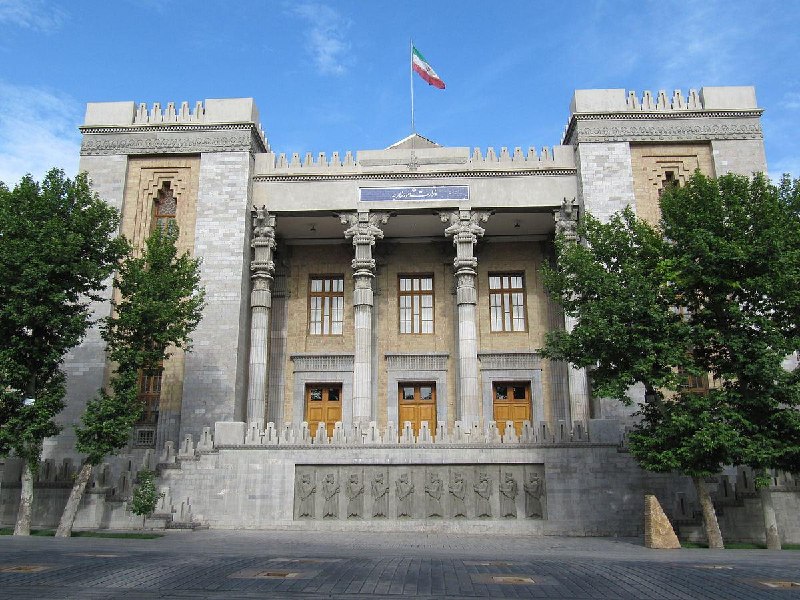
At 00:03 UTC on 19 July 2026, British political commentator Sulaiman Ahmed posted the first of four clips from an interview with Esmail Baghaei, the spokesperson of Iran's ministry of foreign affairs. The four posts, retweeted across the following hour, carried fragments of an exchange in which Baghaei framed the Islamic Republic as a moral actor standing against what the posts describe as "the chains of Zionism." Ahmed, in a caption to the third clip at 01:12 UTC, declared the interview "will be in history books."
The exchange matters less for what it reveals about Iranian policy than for what it shows about the media channel. A foreign ministry in Tehran is choosing to sit with a UK-based commentator whose audience sits largely outside Iran's state-aligned press, and that commentator is distributing the result directly to a Western-literate audience on X. Both sides of the conversation get something out of the arrangement, and the structure of the deal is worth taking seriously before the substance is judged.
The framing Iran bought
The four clips, posted between 00:03 and 01:13 UTC on 19 July, lean on a single rhetorical spine: Iran as a defender of global morality, set against an Israeli-led order the posts describe as "chains of Zionism." In the second post at 01:11 UTC, Ahmed captioning the clip writes that "Iran is standing up for morality in the world," thanking the foreign ministry with a Hawaiian-inflected "Mahalo." That tone, devotional and quasi-religious, recurs across the thread. The third post tells the audience "this interview will be in history books." The fourth, at 01:13 UTC, headlines the same "chains of Zionism" frame.
Baghaei, as foreign ministry spokesperson, is the institutional voice of Iran's elected government on external affairs. The role, like any foreign ministry spokespersonship, is built for exactly this kind of staged, on-camera exchange: long, declarative answers, anchored in the official line, designed to be clipped and circulated. What is unusual is the venue. Iranian state-aligned outlets such as PressTV, Tasnim and Mehr News have been the usual distribution layer for senior foreign ministry messaging. The Ahmed interview, by contrast, lives on a personal X account with a commentariat audience that skews toward the Anglophone right and toward communities sceptical of Israeli government policy.
Why an Anglophone channel matters now
The decision to record with Ahmed, rather than to push the same talking points through PressTV or Tasnim, becomes legible once you ask who the audience is. Iranian state media reaches Farsi-speaking viewers and the foreign policy left in Europe and Latin America. It does not, with any consistency, reach the kind of reader who follows a UK-based commentator critical of British establishment politics. That audience has been moving toward a harder anti-Israel line since October 2023, in parallel with a parallel collapse of trust in mainstream wire coverage of the Gaza war. Iran's foreign ministry is, in effect, buying distribution into that market at a moment when the market is unusually receptive.
There is a counter-narrative that should not be dismissed. Iranian diplomats have long used any platform offered to them, and the foreign ministry has run English-language outreach through state outlets for years. The Ahmed interview could be read as continuity, not novelty: an experienced spokesperson doing another long-form interview, this time with a host whose audience happens to be large. The structural argument, that this is just Tehran's normal reach-extending practice, holds up against the evidence in the thread.
What cannot be sourced from the four clips alone is the editorial ground rules. The thread does not record whether questions about Iranian domestic policy, the suppression of the 2022–23 protests, or the status of dual nationals detained in Iran were put to Baghaei. It does not show whether the spokesperson was challenged on the regional network Iran has built, from Hezbollah to the Houthi movement, or on the supply of drones and ballistic components to Russia's war effort in Ukraine. The four clips, as distributed, are pure diplomatic product. A serious media arrangement would have surfaced those questions; the four posts do not.
The structural picture
Foreign ministries increasingly operate their own media functions, and the line between state communication and independent journalism has been blurring for years. The Tehran-London axis on display here is one variant of a wider pattern: ministries bypassing wire desks and going direct to influencers whose followings already align with the ministry's preferred framing. Russia's foreign ministry has used similar channels since at least the mid-2010s. Gulf state media arms have built parallel operations through content partnerships with English-language outlets.
The interesting question is what kind of work this kind of arrangement does that a PressTV interview does not. Three things. First, credibility transfer: a foreign ministry spokesperson answering questions from a host the audience trusts borrows that trust. Second, distribution cost: posting to a personal X account with a large follower base is essentially free, compared to the production cost of a translated, subtitled state-media segment. Third, search and archival value: the clip lives on X under a name searchers will find, rather than inside a PressTV URL that a search algorithm may de-rank in Western jurisdictions.
That third point is the one to watch. A clip that lives on @ShaykhSulaiman is a clip that a researcher, a journalist or a curious reader can pull up in five seconds. The same clip, hosted on PressTV, is a clip that gets screened out of UK and US search results for sanctions-compliance reasons and that carries the visible marker of state media. The state ministry, in other words, gets the message out without the marker.
What the clips do not settle
The thread does not disclose when or where the interview was recorded, whether it was edited before distribution, or whether additional footage exists beyond the four clips. The four posts are the entire corpus available to a reader working from public sources. Esmail Baghaei's full record of remarks, as posted, runs across four short fragments; the surrounding interview material is not in the thread.
The arrangement also raises questions the thread does not address. Iranian foreign ministry officials have not, in the four posts, been pressed on the scale of the country's regional proxy network, on the execution of dual nationals, or on the status of IAEA inspectors inside the country. A reader looking for a substantive test of Iran's moral claims will not find one in the four clips distributed on 19 July. What they will find is a foreign ministry spokesperson, a sympathetic host, and a message tailored for circulation. That, increasingly, is the genre.
The Monexus desk treats this story as a media-channel story first and a foreign-policy story second. The wire services covered the Baghaei remarks as a foreign ministry statement; we cover it as a case study in how the statement was packaged and to whom.