Who pulled the trigger on al-Udeid? A reported Iranian strike on the US Gulf base reopens the China–Russia question
A reported Iranian strike on al-Udeid air base in Qatar has reopened the question of how much Chinese and Russian technical support Iran is drawing on, and what that means for Gulf escalation.
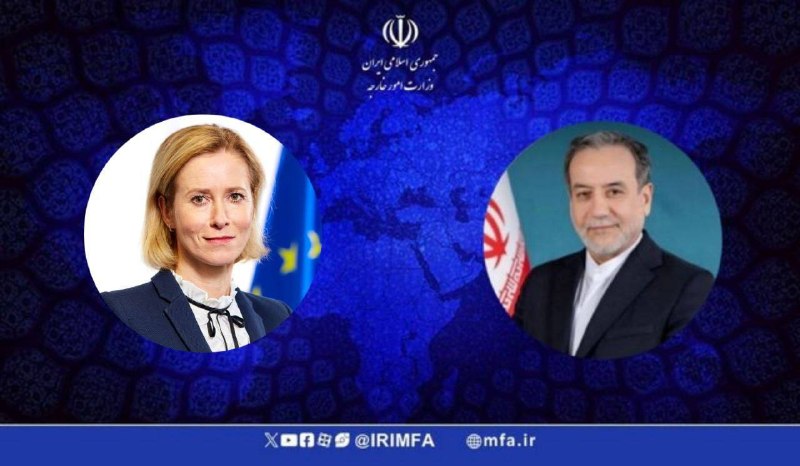
Iran's armed forces carried out a missile strike on the al-Udeid air base in Qatar on 18 July 2026, killing at least one US servicemember and wounding several others, according to a report carried by The Indian Express on 19 July. The attack, described in the report as one of the deadliest Iranian strikes against a US installation in years, has revived an older question in Western and Gulf analysis: how far Tehran's improving strike capability is really home-grown, and how much of it sits on Chinese and Russian technical foundations.
The Indian Express report, citing regional intelligence assessments, raises the possibility that Beijing or Moscow provided targeting, guidance or industrial support that materially improved the precision of the strike. The framing matters less for the forensic question of provenance, which the public sources do not resolve, than for what it signals about the architecture of Iran's deterrent: a country under heavy sanctions has built, or absorbed, the capacity to put warheads on a base that hosts the forward headquarters of US Central Command and roughly 10,000 American personnel.
The strike itself
Al-Udeid, near Doha, is the largest US military facility in the Middle East. Its hardened aircraft shelters and pre-positioned logistics make it the regional hub from which US airpower projects across the Gulf, into Iraq, Syria and the wider Indian Ocean. The Indian Express account frames the strike as retaliation for an earlier US action against an Iranian-backed facility, and reports at least one US fatality with several wounded. US Central Command had not, at the time of writing, released a public casualty breakdown; the numbers cited in regional reporting remain preliminary.
The technical specifics also remain contested. Iranian state-aligned outlets have claimed a mix of ballistic and cruise missiles, while analysts quoted in the Indian Express report flag the possibility of precision-guided munitions with electro-optical or satellite-aided seekers, the kind of subsystem that few domestic Iranian vendors can produce at scale.
The China and Russia question
The more uncomfortable line of inquiry is not the strike but its supply chain. Iran's missile programme has long been understood as a synthesis of indigenous engineering, North Korean propulsion heritage, and steady leakage of foreign dual-use components. The Indian Express report asks whether Chinese inertial measurement units, optical seekers or satellite-navigation augmentation, or Russian guidance electronics, materially sharpened the rounds that hit al-Udeid.
Neither Beijing nor Moscow has been named as a direct party to the strike. China's foreign ministry has, in past incidents of this kind, framed its arms-export policy as "responsible" and "defensive". Russia's defence establishment has been even less forthcoming. The structural read is simpler: both countries maintain deep, multi-decade industrial ties with Iran's missile sector, and both have strategic reasons to keep Iranian deterrence credible without leaving fingerprints. Tehran, in this reading, is a useful pressure valve on US force posture in the Gulf, and a long-term customer whose industrial base has been partly externalised.
Why this is harder than the usual denials
Iranian spokespeople will deny foreign authorship, as they have after past strikes on US positions in Syria and Iraq. Chinese and Russian officials will deny any role. That symmetry of denial is itself the story: each side has an interest in ambiguity.
There is a counter-reading worth taking seriously. Iran's defence industry has, over twenty years of sanctions, produced genuine domestic capacity. The unveiling of newer-generation ballistic systems in the early 2020s, and steady improvements in solid-propellant manufacturing, suggest the strike could have been entirely indigenous. If the foreign-component thesis is correct, it would imply a degree of operational coordination between Tehran, Beijing and Moscow that none of the three has an incentive to confirm in public.
The honest answer is that the public record cannot yet separate the two scenarios, and may never do so cleanly. The Indian Express report flags the question; it does not close it.
What it changes for the Gulf
A single Iranian strike on al-Udeid is not, by itself, a strategic reversal. The US retains overwhelming conventional superiority in the Gulf and a dense network of regional bases. But the political effect travels further than the military one. Gulf states that host US forces now have to price in a credible Iranian ability to hit those bases, which is the point of any deterrent strike. That calculation sits on top of two years of de-escalation diplomacy that has visibly frayed.
The longer arc is about industrial depth. If Iran can credibly threaten a hardened US installation with precision fires, the question of whose components sit inside those warheads becomes a question for sanctions enforcement, for export-control policy in Beijing and Moscow, and for the Gulf monarchies weighing whether continued US basing actually buys what it used to. None of those audiences will be satisfied by a routine denial.
The next signal to watch is whether the US releases satellite or radar imagery that pinpoints the munition type, and whether either Beijing or Moscow moves to publicly dissociate from the strike. Both moves would tell us something; the silence between them is already telling us more.
The Monexus desk note: the wire framing of the al-Udeid strike has so far centred the casualty count and the US response. This piece keeps those facts in view but pushes the analytical centre of gravity to the supply chain, where the public record is thinnest and the policy stakes are largest.
Wire provenance
This editorial synthesis draws on the following public wire/social posts:
- https://en.wikipedia.org/wiki/Al_Udeid_Air_Base
- https://en.wikipedia.org/wiki/United_States_Central_Command
- https://en.wikipedia.org/wiki/Iran%E2%80%93United_States_relations