Gaza's eastern edge: another morning of artillery in Zaytoun
Palestinian sources report three killed in Israeli artillery shelling of Gaza City's al-Zaytoun neighbourhood, with systematic operations underway in the eastern districts as of mid-morning UTC.
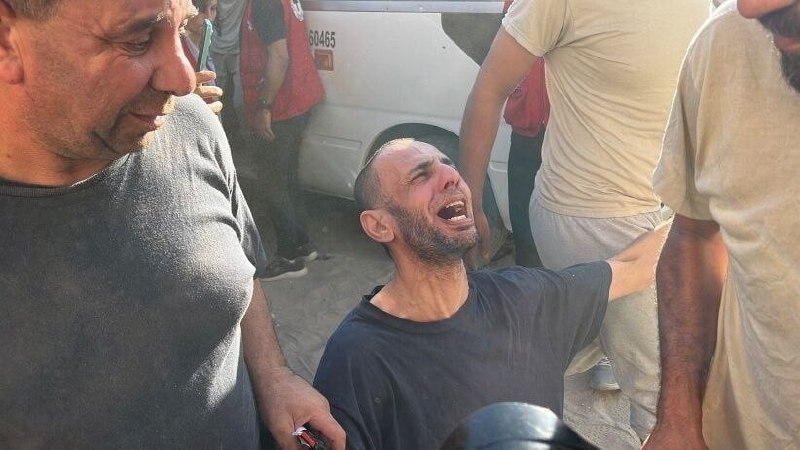
Three people were killed and others wounded on the morning of 19 July 2026 when Israeli artillery struck the al-Zaytoun neighbourhood in the south-east of Gaza City, according to Palestinian sources cited by the Beirut-based channel Al-Alam Arabic. The same outlet, posting to its verified Telegram channel at 07:41 UTC, reported a rising toll from the shelling; a follow-up at 07:49 UTC described "systematic military operations" by occupation forces across the eastern districts of the city, with al-Zaytoun singled out by name.
The pattern matters more than the single shell. A neighbourhood on Gaza's eastern flank, already thinned by earlier campaigns, is once again absorbing concentrated fire; the toll is being counted in real time on messaging channels because conventional press access remains sharply restricted. Each new bulletin folds into the next without a verifiable baseline for what preceded it, which is itself the story.
What the wires show
Two timestamps from Al-Alam Arabic, an outlet aligned with the Iranian-backed axis but operating openly in Arabic and widely monitored for early indicators inside Gaza, frame the morning. The first, at 07:41 UTC, put the death toll from the shelling of al-Zaytoun at three. The second, eight minutes later at 07:49 UTC, escalated the description rather than the number: not a strike but "systematic military operations" across the eastern regions, with al-Zaytoun named explicitly. Both items were attributed to "Palestinian sources," the standard phrasing used by regional outlets when relaying information from Gaza-based correspondents or civil-defence contacts whose identity and affiliation cannot be independently confirmed.
No Israeli military spokesperson statement, no casualty figure from the IDF, and no independent wire confirmation (Reuters, Associated Press, Agence France-Presse, BBC) appears in the immediate thread. That absence is itself part of how these mornings now read: a fast-moving Arabic-language Telegram bulletin cycle producing a granular, neighbourhood-level picture of violence that the English-language wires often catch up with hours later, if at all.
The counter-narrative Israel will offer
Tel Aviv's framing, when it arrives, will run along predictable rails. The Israel Defense Forces have repeatedly described operations in eastern Gaza City as directed at Hamas and Palestinian Islamic Jihad infrastructure: tunnel shafts, observation posts, weapons caches embedded in residential blocks, and militant cells regrouping after previous rounds of combat. Hostage recovery, the IDF will say, continues to shape operational tempo in districts where intelligence suggests captives are being held. Civilian harm, in that framing, is the consequence of Hamas's decision to site military assets inside or adjacent to populated areas, a claim that international humanitarian-law scholars and UN investigators have, in turn, contested case by case.
A reader weighing the 07:49 UTC Telegram bulletin against that expected Israeli line is being asked to compare two evidentiary registers that do not actually meet: an Arabic-channel account citing unnamed Palestinian sources describing indiscriminate shelling on one hand, and an institutional military statement explaining the tactical logic of operations in urban terrain on the other. Both can be true at once. Neither, on the morning's evidence, can be verified from outside the neighbourhood.
Why Zaytoun, why now
Al-Zaytoun sits east of Gaza City's old centre, abutting the Shejaia and Zeitun districts and pressing toward the 1949 armistice line that now marks the perimeter fence. It has been a focal point of multiple Israeli campaigns since 2008–09, both because of its geography, the eastern edge offers observation over the approaches to Sderot and the northern Negev, and because Israeli intelligence has, in successive operations, identified it as a hub for rocket-launch squads and tunnel networks running eastward.
That history is not a justification; it is a structural fact about why artillery, drones, and ground manoeuvres keep returning to the same streets. When the IDF speaks of degrading Hamas's eastern Gaza City battalions, al-Zaytoun is named in the operational order. When Palestinian civil defence counts bodies after a night of shelling, al-Zaytoun is named in the casualty list. The neighbourhood has become, almost mechanically, the seam where each side's stated objectives meet civilian geography.
Stakes and what to watch
Three deaths in a single neighbourhood, on a single morning, would in most conflicts trigger a formal incident report within hours. In Gaza, the figure merges into a daily count whose cumulative weight is documented by the UN Office for the Coordination of Humanitarian Affairs, the International Committee of the Red Cross, and a small handful of wire correspondents still able to enter under embed conditions. The granular Telegram cycle fills the gap, but it cannot substitute for the press access that would let a Reuters photographer or a BBC crew independently walk the street, count the wounded, and interview the families.
The near-term watchpoints are mechanical: whether the IDF issues a readout naming the target struck in al-Zaytoun; whether the Palestinian toll rises beyond three as hospitals in Gaza City process the wounded; whether the language in subsequent Arabic-channel bulletins shifts from "shelling" to "ground incursion," which would signal a different phase of the operation; and whether the English-language wires, several hours behind, eventually corroborate the morning's picture or replace it with a different one. The larger pattern, however, is the one the day's two Telegram posts, taken together, make legible: in eastern Gaza City, operations described as systematic are producing casualties described as martyrs, and the distance between those two words is the entire war.
Desk note: Monexus treats the Al-Alam Arabic Telegram feed as a regional early-indicator source, useful for granularity on specific neighbourhoods in Gaza but not as a stand-alone basis for casualty counts. Where this piece cites figures, it does so with the sourcing caveat used by the channel itself; independent wire confirmation from Reuters, AP, AFP, BBC, or the UN OCHA daily snapshot has not yet appeared for the 19 July 2026 al-Zaytoun shelling and should be sought before any figure is treated as final.
Wire provenance
This editorial synthesis draws on the following public wire/social posts:
- https://t.me/alalamarabic
- https://t.me/alalamarabic
- https://en.wikipedia.org/wiki/Zeitoun,_Gaza
- https://en.wikipedia.org/wiki/Gaza_City