Europe's defence planners are quietly rewriting the Ukraine lesson
Berlin's army chief says Europe's security now leans on Kyiv's combat experience, a re-framing that turns four years of war into a procurement and doctrinal template for the continent.
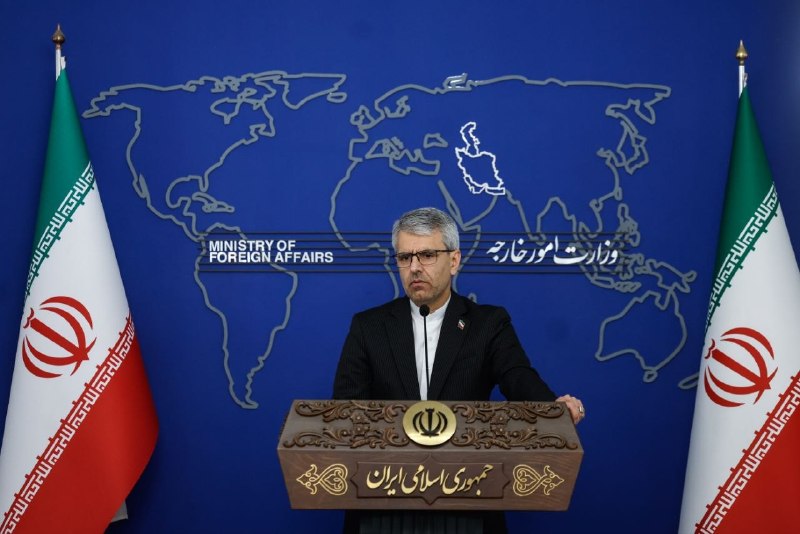
Germany's senior soldier walked into a room in Berlin on 19 July 2026 and made a quiet, consequential argument: that Europe's security now sits on the shoulders of a Ukrainian military which has spent four years absorbing the Continent's hardest lesson. General Carsten Breuer, the inspector-general of the Bundeswehr, told a defence gathering that Kyiv's battle-hardened and innovative armed forces had become strategically vital to European defence, a phrasing carried by analyst Christopher Missick on a widely circulated thread that same afternoon.
The remark did not announce new weapons, new bases or new budgets. It announced a re-ordering of how Europe's defence planners intend to write the next chapter of the war. If the German army's top officer is publicly treating Ukraine not as a recipient of European help but as a producer of European security, then the procurement memoranda, the joint-training calendars and the doctrinal handbooks circulating inside NATO headquarters will follow that logic. The question is no longer how fast Europe can arm Ukraine. It is what Europe is willing to learn from a war it did not fight.
From recipient to reference force
Ukraine has, since 2022, been the largest single recipient of Western military assistance: artillery, air defence, anti-tank systems, main battle tanks, F-16 fighters and, more recently, the long-range strike tools that have pushed Russian logistics further back from the line. Yet the framing inside European capitals has shifted from a charity ledger, what we gave, to a competence ledger, what we absorbed.
Breuer's argument lands because Kyiv's force has had to solve problems European armies have not been forced to solve in a generation: integrated air defence against mass glide-bomb and Shahed-style loitering attacks, drone-first reconnaissance-strike loops at scale, dispersal doctrine under constant surveillance, and the rapid repair-and-return cycle that keeps armour and artillery in the fight. None of these lessons appear in a NATO standardisation agreement. All of them are now showing up in European exercises and acquisition plans.
A useful test is the language used in Berlin's own defence review cycle. Where documents once read "support to Ukraine" as a line item, current drafts increasingly place Ukraine inside the European section on lessons learned and combat readiness. Procurement officers who a year ago discussed ammunition stockpiles as a domestic insurance policy now discuss Ukrainian-firing rates as the benchmark.
The Russian counter-narrative
Moscow's framing of the same reality is, predictably, the inverse. Russian state media and pro-Kremlin military commentators portray European interest in Ukrainian tactics as evidence that the West is using Kyiv as a proxy laboratory, testing weapons, tactics and the tolerance of European publics for attritional warfare. The argument has two layers. The first is conspiratorial: that NATO is waging a calibrated war against Russia through Ukrainian hands. The second is closer to a structural complaint: that European armies, having hollowed out their conscript-heavy mass formations for decades, now depend on the very force they refused to build.
The second layer is not entirely wrong. Europe's post-Cold War professionalisation produced smaller, more capable forces optimised for expeditionary operations rather than continental defence. The war in Ukraine has exposed the cost of that choice in blood that is not European. To pretend otherwise would be intellectually lazy. But the conspiratorial first layer collapses under its own weight: European planners are not asking Kyiv to fight longer so that Berlin can write better field manuals. They are asking because a border war with a nuclear-armed neighbour is the kind of problem their own forces have stopped training to solve.
What the doctrinal shift looks like in practice
Three concrete signals are worth watching over the coming months. First, the frequency and seniority of bilateral staff talks between the German general staff and Kyiv's. If meetings move from theatre commanders to inspectors-general and defence ministers on a regular cadence, the relationship has crossed from aid into alliance plumbing.
Second, the composition of European battle groups. If standing force packages increasingly include Ukrainian-veteran liaison elements, Ukrainian-supplied drone doctrine and Ukrainian-shaped training cycles, the military-cultural transfer is no longer theoretical. Existing frameworks such as the UK-led Operation Interflex and the EU Military Assistance Mission in support of Ukraine provide a ready-made vehicle for that transfer, and several European armies are already running complementary courses in Germany, Poland and the Baltic states.
Third, the industrial procurement calendar. If European orders for short-range air defence, loitering munitions, cheap one-way attack drones and uncrewed surface vessels accelerate in the second half of 2026, while orders for crewed heavy platforms plateau, the war's lessons will have moved from rhetoric into contracts. The same logic applies in reverse to ammunition: if 155mm production stays on a wartime footing past 2027, planners have accepted Ukrainian attrition rates as the planning baseline.
Stakes for the Continent
The geopolitical stakes are easy to state but hard to price. A Europe that treats Ukraine as a partner in its own defence moves closer, in plain text, to a posture in which Kyiv's battlefield losses are European security losses, and therefore European political liabilities. That is a closer alliance than many Western publics, including in Germany, have signed up for. It is also the alliance that four years of war have made defensible.
The risks are equally concrete. A doctrinal embrace of Ukrainian methods risks locking European armies into a war they do not directly fight, importing casualty-acceptance norms and force-employment habits calibrated to a survival crisis. Polish, Baltic and frontline NATO members are likely to welcome that lock-in. Southern and western European publics may not. The Bundestag's spending debates, always a leading indicator in Berlin, will be the first place that tension becomes legible.
What remains genuinely uncertain is whether the lessons travel at all, or whether institutional gravity pulls European armies back toward pre-2022 templates the moment headlines move on. Defence reform has a long history of declaring victory on a PowerPoint slide and reverting to form on the next budget cycle. The Breuer statement, and the German general staff's willingness to put its weight behind the framing, raises the cost of that reversion. It does not eliminate it.
Wire provenance
This editorial synthesis draws on the following public wire/social posts:
- https://t.me/osintlive