Trump's 'Eurasian Axis' Label Sticks to a Tie That Predates the Slogan
Washington has a new name for an old pairing. The Iran-DPRK relationship long predates Trump's 'Eurasian Axis' framing, and treating it as a novelty flatters both capitals' strategic patience.
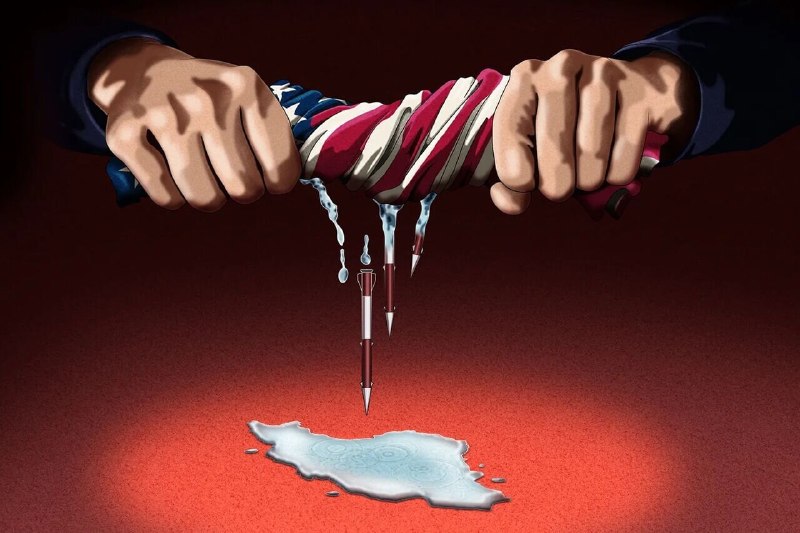
The Trump administration has settled on a label for two of its most conspicuous adversaries: the "Eurasian Axis," a phrase that groups the Islamic Republic of Iran and the Democratic People's Republic of Korea into a single strategic object. The branding is fresh. The relationship underneath it is not, and the gap between the two is where this story actually lives.
The Iran-DPRK partnership stretches back decades, built on a straightforward transaction. Pyongyang has supplied ballistic-missile technology and, at various points, engineers and technicians to programmes of Iranian interest. Tehran has supplied hard currency, energy, and a market for North Korean conventional arms where fewer options remain. Both governments treat the arrangement as a hedge against American power. Neither advertises it. That is what makes the new White House framing worth dissecting: the two capitals long treated the tie as quietly useful, and Washington has now chosen to treat it as loudly existential.
What the label does
In Washington, a name is a procurement decision. Calling Iran and North Korea a single "axis" lets a White House justify treating two separate theatres as one budget line. It also gives the administration a clean rhetorical shape for any future escalation: sanctions packages drafted against Iranian missile procurement can now be sold as countermeasures against a North Korean export pipeline, and vice versa. The frame is convenient.
The frame is also flattering to the two governments it names. Iran's missile programme is indigenous and self-funded, with a thirty-year record of flight tests from solid- and liquid-fuel families. North Korea's exports help, but the headline capability is Tehran's. Conflating the two overstates Pyongyang's leverage on Iran's deterrent and overstates Tehran's influence on the Korean peninsula. It also obscures the fact that the two have, at points, been competitors in third-party arms markets rather than a single bloc.
What the cooperation actually looks like
The single most concrete artefact of the Iran-DPRK relationship is the Shahab-family of Iranian medium-range ballistic missiles, whose lineage traces back to North Korean designs of the late 1980s and early 1990s. Subsequent generations are widely understood by Western intelligence assessments as homegrown derivatives with DPRK-sourced components and know-how in the early stages. Beyond missiles, Iran has periodically been reported as a customer for North Korean artillery rockets, and Pyongyang has been reported as a customer for Iranian oil deliveries routed through intermediaries to circumvent UN sanctions.
The arrangement matters less for its volume than for its reliability. Both governments operate under sustained Western-led sanctions regimes and under sustained threat of military action. In that environment, a partner that does not ask political questions and accepts settlement in non-dollar terms is a strategic asset. The dollar denomination of global energy trade is itself a pressure point, and the Iran-DPRK tie sits, structurally, on the seam of that pressure. Any architecture that bypasses US-cleared payment rails is useful to both.
What is new, and what isn't
The novelty in 2026 is the framing, not the cooperation. Iran and North Korea have been read as a pair in Western threat assessments since at least the early 2000s, when the now-defunct Iraq Survey Group's work drew the connection publicly. Subsequent US administrations have varied in how loudly they have made the case. The current administration's choice to elevate "Eurasian Axis" to a brand is a function of domestic political appetite for an organising enemy: a label that names two adversaries at once, neither of which is a NATO partner, and which can be cited to justify a wide portfolio of measures from missile-defence procurement to secondary sanctions on third-country buyers.
The counter-read is straightforward. Treating Tehran and Pyongyang as a single threat object also risks treating them as a single negotiating object, which neither capital has shown any interest in being. Iran's diplomatic bandwidth in 2026 is occupied by its rivalry with Israel and by sanctions relief negotiations. North Korea's bandwidth is occupied by its nuclear stockpile and by relations with Russia and China. Their bilateral agenda is a maintenance operation, not a frontier.
Why the framing flatters the wrong side
There is a quieter question here. By naming the relationship publicly, Washington has given it more airtime than either partner usually seeks. The two governments benefit from being underestimated as discrete problems and disliked as a single one only if the policy response is poorly calibrated. A unified sanctions architecture is harder to enforce than two parallel ones; a unified deterrence posture is harder to resource than two separate ones; a unified diplomatic offer is something neither side has asked for and is unlikely to accept. The "Eurasian Axis" label, in other words, may end up functioning as a Washington commitment device rather than a description of reality.
What remains uncertain is whether the label becomes a fixture of the administration's second-term rhetoric or a passing slogan that gives way to two separate policy tracks. The sourcing for this piece consists of a single Telegram channel summary circulating on 19 July 2026; the underlying primary documents are the public US Treasury sanctions notices, the UN Panel of Experts reports on North Korea, and the Iranian and DPRK foreign ministry statements issued over the past decade. Those records will tell, in the end, whether the axis is a thing or only a word for it.
This article treats the Iran-DPRK relationship as the long-running maintenance partnership the evidence supports, rather than as a fresh strategic bloc produced by a White House label. Sources: see below.
Wire provenance
This editorial synthesis draws on the following public wire/social posts:
- https://t.me/DDGeopolitics