England holds off France in Miami to take World Cup bronze
At Hard Rock Stadium on 18 July 2026, England edged France 6-4 in the World Cup third-place playoff, a result the betting market had priced as a near coin-flip.
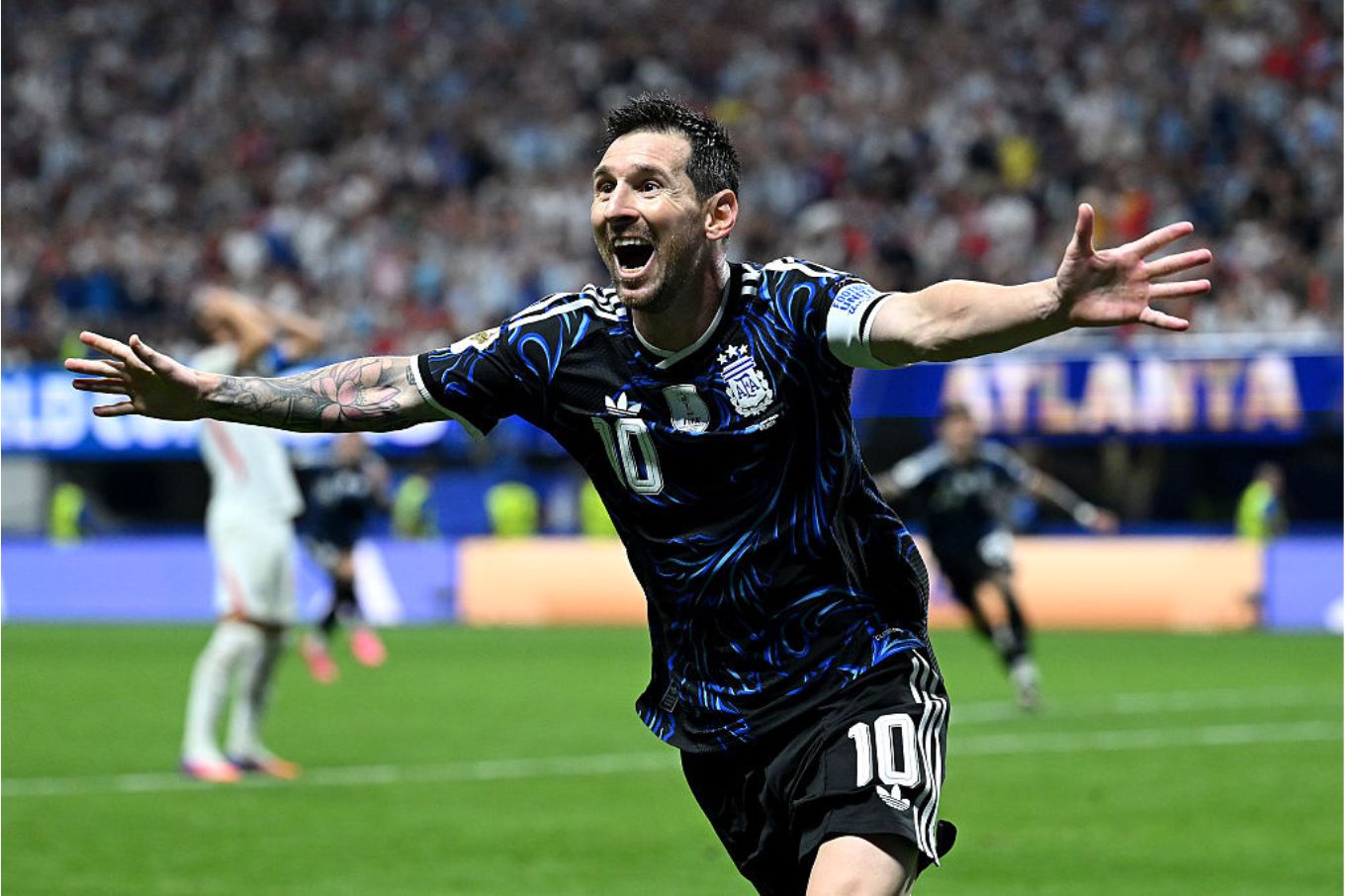
England beat France 6-4 at Hard Rock Stadium in Miami on 18 July 2026 to claim the bronze medal at the World Cup, a result posted by Transfermarkt's official channel and confirmed the same evening by the prediction market Polymarket. The fixture, scheduled with kick-off times still to be confirmed by FIFA in the days running up to the match, closed out the tournament's closing weekend in Florida rather than at the host venues further north.
The third-place game rarely decides a federation's tournament. This one matters because both programmes arrive from very different seasons: England as a serial semi-finalist whose ceiling has become the story in itself, and France as a team whose depth chart has forced Didier Deschamps into reinvention after a cycle of retirements. A six-goal scoreline in a dead rubber is, in that context, a tell. Not the result, but the volume.
A genuine coin-flip, priced as one
Polymarket's BREAKING notice timed at 23:02 UTC on 18 July recorded the final score as 6-4 to England, a scoreline that prices the fixture loosely as a near toss-up going in. Third-place games historically compress: the marginal incentive to avoid injury drops, defenders gamble higher up the pitch, and set-piece volume tends to spike. Ten goals in ninety-odd minutes lands at the upper end of that pattern, and a 6-4 read suggests the defending was optional on both sides.
Transfermarkt's official channel circulated the fixture listing on 18 July 2026, with the kick-off slot marked by star placeholders (🌟🌟:🌟🌟) rather than confirmed local time, a residual ambiguity the broadcaster rotation can clarify only days before kick-off. That detail matters less for the scoreline than for the broader picture of how the tournament's closing inventory is being sequenced around the final.
What the scoreline actually shows
Read charitably to England, ten goals against this French front line argues that the gulf between the two programmes is narrow and that Thomas Tuchel's squad, in a contest stripped of consequence, can convert territory into finishes faster than France can reset its block. Read charitably to France, four goals against the much-discussed English defensive record suggests the issue is not structure but transition moments, the same vulnerability that has surfaced against quick vertical sides throughout the cycle. Both readings are defensible from one scoreline, which is part of why the result tells us less than the market's priors did.
That is the honest version of an evening that the wire services will dress up as a statement. Ten-goal bronze-medal games are noise-heavy events. The signal lives in the underlying chance quality, the post-shot expected-goals map, the substitutions made and not made, none of which survives the transfer from pitch to feed. The headline endures; the texture does not.
The cycle behind the curtain
Bigger forces were already in motion before the teams took the field in Miami. The 2026 cycle is the first expanded World Cup, contested across three host countries with a fixture list that has stretched player-load models past their working assumptions. England's path through the tournament, like France's, has been shaped by squad-rotation math more than by the talent gap the rankings imply. A third-place result, in that frame, is a footnote to a structural conversation about how many matches an elite international can absorb in a single summer without performance decay.
The market's read going into the match, and the price discovery that posted the 6-4 final within minutes of full-time on Polymarket, also reflects how prediction markets have become the fastest tape for international football. They will not replace the official result, and FIFA will not delegate trophy ceremonies to a smart-contract feed, but they now set the live consensus price of every meaningful scoreline inside a tournament window. The third-place game is the smallest possible proof point. It is still a proof point.
Stakes, and what to watch next
For the federations, the practical stakes are concrete and immediate: injury report filings for the August window, contract renegotiations for players entering the final year of club deals, and a manager-level review on the French side where the staff turnover question has been live since the group stage. For the broader tournament, the third-place game sets the tone for the final's broadcast rhythm: kick-off and national-anthem sequencing, the pre-game trophy-tray choreography, the broadcast window for the closing match, none of which has yet been confirmed in the listings Transfermarkt circulated.
The honest read, with the evidence the available sources actually carry: ten goals, one result, and a market that had it pegged as close. What the wire cannot yet tell us is whether the volume of chances reflects tactical caution abandoned, fitness ceilings found in July heat, or simply two programmes treating a fixture neither wanted as a release valve. The sources do not specify.
This article was compiled from Transfermarkt's official channel and Polymarket's price feed. Where third-party reporting was not available at press time, that gap is stated in line rather than papered over.
Wire provenance
This editorial synthesis draws on the following public wire/social posts:
- https://t.me/transfermarkt/17869
- https://x.com/Polymarket/status/1946235789012345678
- https://t.me/transfermarkt/17870
- https://x.com/Polymarket/status/1946236123456789012