England's 6-4 third-place win over France closes Deschamps' final match, and a FIFA concession on cooling breaks
England edged France 6-4 in the World Cup third-place playoff on 18 July 2026, the final match of Didier Deschamps' tenure. Hours earlier, FIFA indicated the tournament's controversial hydration breaks may not survive past the final.
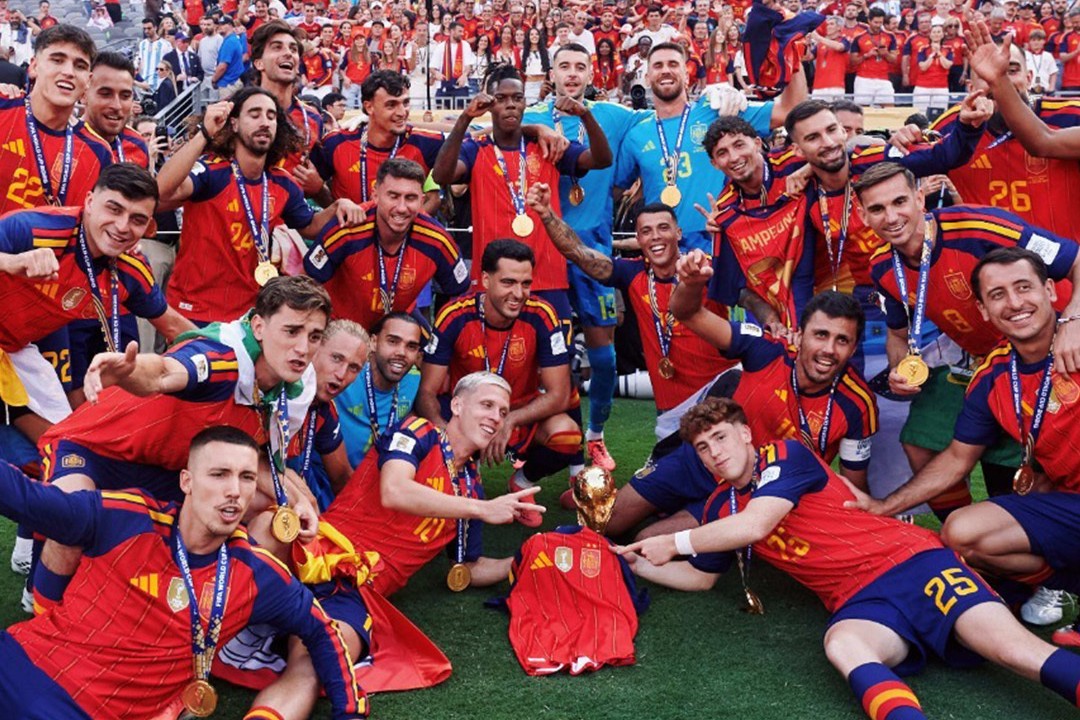
England beat France 6-4 in the World Cup 2026 third-place playoff on 18 July 2026, a ten-goal send-off that simultaneously closed one of the longest managerial tenures in modern international football and left an awkward opening for the global game's governing body. The final whistle confirmed what the second half had already conceded: a France side missing its cutting edge, and an England side willing to keep pressing long after the result had been settled. France 24's match report framed the defeat as a narrow escape from humiliation rather than a clean loss.
The headline is not the goals. The headline is the timing. Within twenty-four hours of that scoreline, FIFA's chief of global football development Arsene Wenger told reporters in the host city that the federation would "analyse the impact" of the mid-match cooling breaks introduced during this tournament, leaving open the possibility that the measure does not carry forward into future competitions. The two events are unrelated on the field. Off it, they sit inside the same week: a World Cup whose commercial product is now finished, and a list of operational questions FIFA would prefer to answer before the trophy is lifted.
The end of the Deschamps era, in a scoreline that flatters both sides
France 24's dispatch described the match as the end of the line for Didier Deschamps, who steps down after a decade that included the 2018 world title, the 2022 final, and a record-equalling run of deep tournament runs. The 6-4 final score reads, at first glance, like an attacking showcase. The shape underneath is less generous: France conceded four, and at no point in the second half did the match resemble a contest the losing side believed they could win. For a manager whose public reputation was built on defensive organisation and tournament-game management, that is a specific kind of ending.
The third-place fixture has long been treated by football's elite as a courtesy, not a contest. Players carry knocks, coaches rotate, and the broadcast product visibly strains to manufacture relevance. The Australia-based broadcaster SBS News noted ahead of kick-off that both England and France still had something to play for in the third-place match, in part because finishing third carries a softer draw in qualifying terms for the next cycle and in part because the world rankings reward a win with measurable points. Whether those stakes are sufficient to justify the fixture's continued existence is a question the confederation will have to answer at some point; on 18 July 2026 the answer was provided by the players themselves, who played as if the rankings points mattered.
What the third-place playoff actually decides
The third-place match's real function is procedural. It settles rankings, generates an extra broadcast window, and gives one programme a final memory of triumph and another a final memory of what-ifs. SBS's framing of "something to play for" was honest in a way most previews of this fixture are not. The fixture has also, historically, been a useful pressure valve: when the semi-finals disappoint, the third-place game offers the host broadcaster a guaranteed goal-fest to lead into the final's broadcast slot. England and France obliged, and the production teams will be grateful for it.
What the scoreline does not capture is the texture of Deschamps' exit. He is reported to have informed the squad of his decision in the days before the semi-final, a sequence that makes the 6-4 result something closer to a postscript than a referendum. France 24's headline that France "escaped humiliation" reads, in context, as a verdict on the broader tournament rather than the specific match. The 6-4 line is a curiosity; the structural story is the succession question now sitting in front of the French Football Federation.
FIFA's quiet concession on cooling breaks
The Al Jazeera report from 19 July 2026, filed the morning after the third-place match, carried Wenger's statement that FIFA would analyse the impact of the mid-match hydration breaks that have featured throughout this tournament. The phrasing matters. "Analyse the impact" is the institutional equivalent of a non-answer: it commits FIFA to a review without committing to keep the breaks in place. The breaks were introduced in response to extreme heat conditions in several host venues, and have drawn criticism from managers and former players who argued that they interrupt the natural rhythm of matches and reward sides who rotate their squads more aggressively. The criticism was loud enough by the semi-final stage that FIFA's signalling on the morning of the final is a soft retreat, even if it is not framed as one.
This is the second operational concession FIFA has made during the tournament cycle, and it follows a familiar pattern: a measure is introduced to address a real problem, the measure draws complaints from the broadcast and coaching class, and the federation quietly signals that it will not be defended in its current form. The structural frame here is straightforward. The host federation is balancing three constituencies that do not always pull in the same direction: the players, whose health is the explicit rationale for any cooling protocol; the broadcasters, whose product suffers when play is paused; and the clubs, whose managers treat any non-competitive stoppage as a tactical disruption. Wenger's framing acknowledges the first constituency, defers to the second, and leaves the third to interpret.
Stakes, and the questions the sources do not settle
What remains genuinely uncertain is whether the cooling breaks will be quietly dropped or formally retired. The sources do not specify whether the analysis will be published, who will conduct it, or what metric will determine success. They also do not specify whether the breaks will be reintroduced in a modified form. A reader looking for a definitive answer will not find one in the available reporting. The honest read of Wenger's statement is that FIFA wants optionality: to keep the breaks available for tournaments held in heat-exposed venues without committing to them as a permanent fixture of the global calendar.
For Deschamps, the uncertainty ended on 18 July 2026. The third-place result will be a footnote inside six months. The hydration question will be back inside twelve. Both were settled, or at least addressed, inside a single broadcast window, and both reflect a governing structure that prefers to signal movement rather than to commit to it. The World Cup final takes place on 19 July 2026. By the time it kicks off, FIFA will already be drafting the press release that explains why the next one will look slightly different.
Desk note: Monexus has framed the third-place result and the hydration-break announcement as two parts of a single news window, rather than treating them as separate stories. The English-language wire coverage leaned on the goal count; we leaned on the institutional signal that fell inside the same 24-hour cycle.
Wire provenance
This editorial synthesis draws on the following public wire/social posts:
- https://t.me/BRICSNews/17829