Ten goals, one consolation prize: England outlast France 6-4 in the World Cup's loudest afterthought
A 6-4 scoreline that will outlive the tournament's actual final, and a manager trying to keep both the result and the wreckage in proportion.
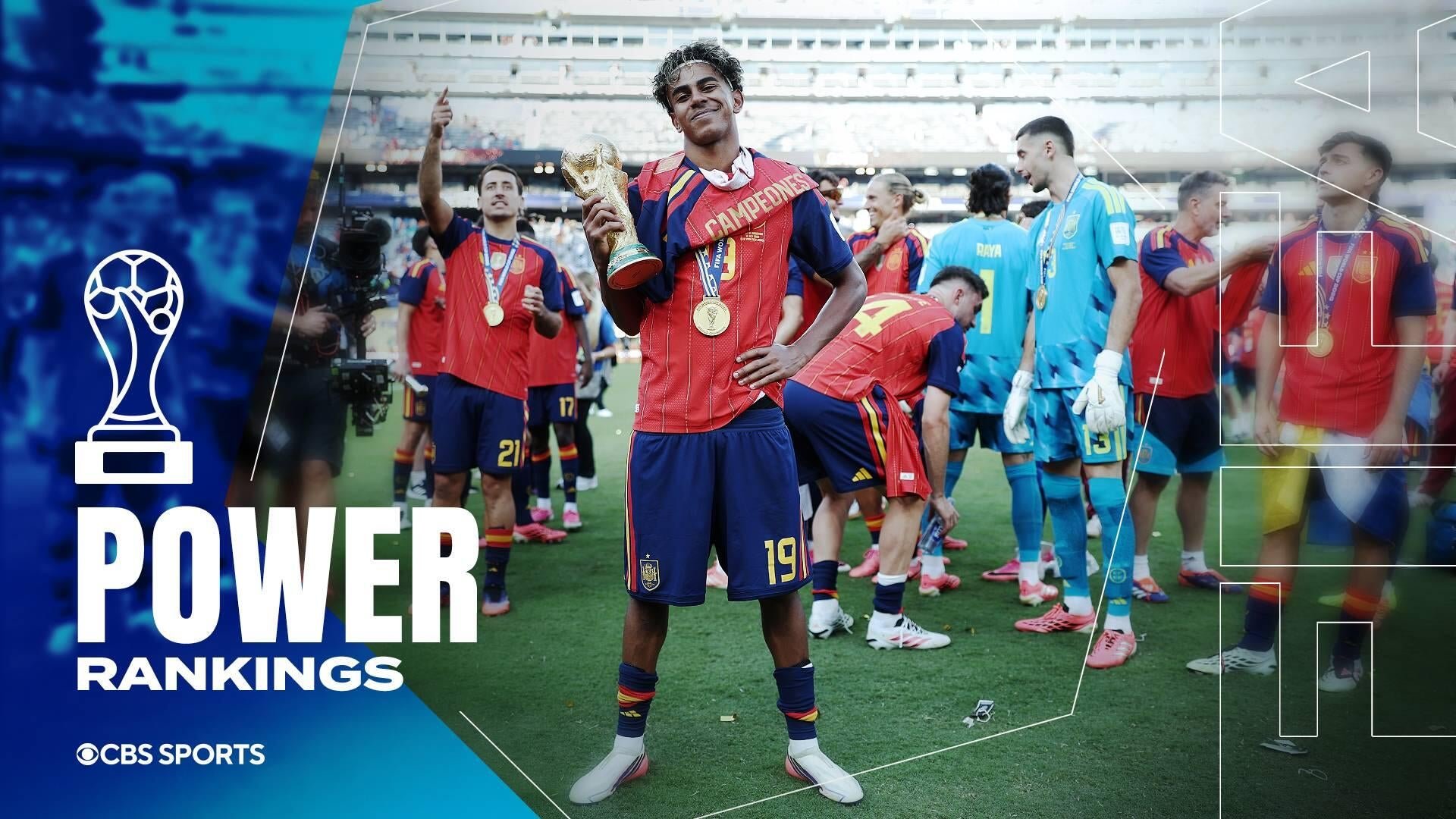
At full time in the 2026 World Cup's third-place play-off, the scoreboard read England 6, France 4, and the question that mattered most was whether anyone would remember it as anything other than a curiosity. By the end of Thomas Tuchel's post-match media appearance on 18 July 2026, the England manager had done what he could to bury the result in the right context. He praised a "brilliant first half" from his players, acknowledged a "turbulent second", and walked away with the bronze medal he had been sent to North America to deliver. The match, played a day after both sides lost their semi-finals, will not be the line either nation files in its history books. The scoreline probably will.
That is the awkward arithmetic of the third-place game: it is simultaneously the loudest dead rubber in international football and the only fixture left for two squads that travelled to the 2026 tournament with title ambitions. England went out in the last four. France went out in the last four. What remained on 18 July was a 90-minute scramble for the right to be called third best in a 48-team field, contested in front of a global television audience that had spent the previous fortnight picking favourites.
A first half worth keeping
Tuchel's verdict, recorded by BBC Sport on the night, was not the boilerplate of a man managing expectations downward. He framed the opening 45 minutes as the template England will want to carry into the next cycle, even as he conceded that the second half will be the part his staff spend the longest reviewing. A 6-4 scoreline, even in a match stripped of trophy consequence, is not a clean data point. It is two halves running in opposite directions, stitched together.
The pattern is familiar to anyone who watched the semi-finals. England, beaten narrowly in a match that ended their run, came into the third-place game with the higher floor and the more organised defensive shape. France arrived with the players who had carried them to the previous round and the looseness of a side that had been told, in effect, that the rest of the tournament was a courtesy stop. The first half rewarded the side that treated the fixture as a referendum on its own standards. The second half rewarded nobody, and the eventual six-four scoreline is in some sense a fairer description of the chaos than a cleaner margin would have been.
The market that did not care
If the match itself was an afterthought, the wagering infrastructure around it was not. On 18 July, CBS Sports ran at least four separate markets pieces through its SportsLine desk: odds and a model pick from expert Jon Eimer, a BetMGM promo pushing $1,500 in bonus bets tied to the result, a streaming guide for the broadcast, and a parlay column for bettors looking to turn the consolation game into a longer card. Eimer's model, advertised on a 27-18 run across the tournament, installed France as the favourite despite the result.
That detail is worth lingering on. The betting market and the actual 90 minutes disagreed about which team was better placed, and the disagreement is informative. Markets price third-place games as a function of squad rotation, motivation, and recent minutes logged as much as underlying quality; England's run to the semis had clearly cost them more, in fatigue terms, than France's, even though both exited at the same stage. The model was right about the inputs. It was wrong about the outputs. That gap is not a moral judgement on either side. It is the texture of a fixture nobody quite wanted to play at full power.
What Tuchel can actually take home
Strip the scoreline away and the residue for England is mixed but defensible. The manager arrived in the job with a reputation for tactical discipline and a brief to convert individual talent into a structure capable of reaching the final. He reached the last four. He did not lose a match by more than a goal until the third-place game, and the third-place game, by long-established precedent, is the match the manager most needs to survive without an injury and without a story.
The harder judgement is on France. A squad built around the goalscoring form of Kylian Mbappé, who featured prominently in the CBS Sports imagery leading into the match, went into the tournament as one of the two or three favourites and finished outside the top two in its own confederation's bracket. A 6-4 loss in a dead rubber does not, on its own, qualify as a crisis. Read against the semi-final defeat, it begins to.
What the scoreline will and will not mean
By Monday morning the highlight reels will have settled on the ten goals and a handful of individual moments. That is the risk of any third-place game that finishes with this kind of scoreline: the chaos crowds out the architecture underneath it. England's first-half shape, the specific substitutions Tuchel made at the break, the way France's midfield allowed the game to become a series of isolated duels, none of it survives contact with the headline.
The fairer read is that both sides got exactly what the fixture was designed to deliver: a chance to leave the tournament with one more performance on tape, a chance to send the older players off with a medal, and a chance for the younger ones to play themselves into the next cycle. Whether that is enough to call the campaign a success, for either dressing room, will be a longer conversation than a 6-4 scoreline allows. Tuchel, for one, was already steering the conversation back to the first half. That is the part he intends to keep.
This desk treated the third-place play-off as a discrete news event rather than a forecast market, CBS Sports' SportsLine coverage is cited as context for how heavily the fixture was priced, not as a source for the on-pitch result, which is sourced to BBC Sport's match report.