England's bronze, Mbappé's golden boot, and the question the 2026 World Cup leaves behind
England's first men's World Cup semi-final in six decades and a Ballon d'Or-weight duel between Mbappé and Messi define a tournament whose legacy is still being written.
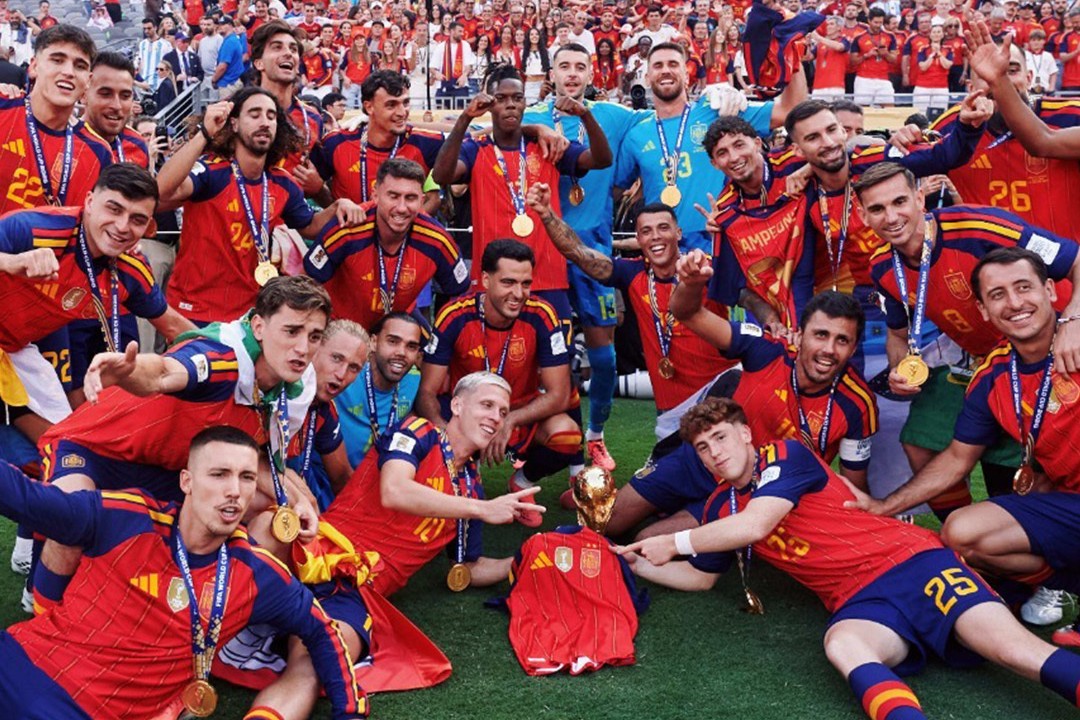
England walked off the pitch in the early hours of 19 July 2026 with the bronze medal draped somewhere in the dressing room and a question hanging over the tournament they had just finished: how does a nation measure its best men's World Cup in sixty years, when the trophy is silver rather than gold? The Three Lions fell short of the final, then recovered to take third place in a "scoring extravaganza" against the side that knocked them out, according to Olympics-telegram-channel reporting on 18 July 2026 at 23:54 UTC. The result is England's deepest run since the 1966 triumph on home soil, a fact that any honest accounting of the tournament has to start from.
That accounting is what BBC Sport pressed on 19 July 2026 at 00:23 UTC, asking whether the performance is being under-appreciated simply because the trophy cabinet stayed shut. The framing matters. England's men had not reached a World Cup semi-final in a generation. They reached one this summer and finished with a medal to show for it. Whatever else the 2026 edition becomes, it resets the ceiling for English expectation, and that reset carries consequences for the next cycle.
A bronze that reads like a beginning
England's route to third place ran through a tournament that rewarded goals. The third-place match produced the kind of end-to-end scoreline that has become this World Cup's trademark, with both sides trading blows until the final whistle. For a squad that had spent the previous two tournaments flattering to deceive, the practical difference between losing a semi-final and winning the consolation game is small. The psychological difference is not.
The Indian Express reported on 18 July 2026 at 21:52 UTC that the Golden Boot race had come down to whether Lionel Messi could overtake Kylian Mbappé in the final, a storyline that hung over the bronze-medal game and the championship match alike. By the close of 18 July, that storyline had resolved. Olympics-telegram-channel reporting noted that Mbappé finished ahead of Messi in the scorers' chart. For a player widely treated as the heir apparent to the Messi era, it is the statistical confirmation of a generational handover that has been visible in-market for two seasons.
Argentina's 1986 jacket, and what it carried
If the result was English bronze, the imagery belonged to Argentina. On 18 July 2026, in the Nations Championship fixture against England, the Albiceleste wore a replica of the kit Diego Maradona wore when he won the 1986 World Cup single-handed, per BBC Sport reporting at 20:29 UTC. The choice was not subtle. It was a deliberate invocation of the single most politically loaded result in the history of this fixture.
The framing has split opinion since it became public. To one reading, it is a marketing decision. To another, it is a pointed reminder that Argentina's football identity was forged in the sort of street-tough, individual-genius performance that the modern game often squeezes out of its stars. Read either way, the kit choice tells the reader something the scoreline does not: that this Argentine generation wants to be measured against the country's best, not against the European champions they dispatch on the way to a final.
The Mbappé–Messi ledger, in plain numbers
Numbers did the work where poetry did not. The Indian Express's note on the Golden Boot race made the question concrete. Messi needed to outscore Mbappé in the final to overtake him. He did not. The end-of-tournament ledger has Mbappé ahead, and that ordering will define the post-tournament discourse far more than any single goal.
Mbappé, whose club future has been the off-field story of the year, finishes the World Cup as the tournament's leading scorer, with the trophy going to a side Argentina could not stop in the championship game. Messi, conversely, exits a tournament he has shaped across five editions without the statistical capstone that many pre-tournament previews assumed was his to collect. Neither narrative is straightforward. Each will be smoothed into a highlight reel by Monday. The ledgers, however, are settled.
What the tournament leaves behind
The 2026 World Cup expanded the field. It also expanded the share of goals per game, the share of storylines per round, and, by extension, the share of unresolved questions about how a generation of English, French and Argentine players should be remembered. The Mbappé–Messi table has a winner. The bronze-medal column has a winner. The argument about what any of it means does not, and will not, until the next cycle begins in earnest.
Two things are worth holding onto. First, that England delivered its best men's tournament finish in sixty years, by the standard measure the BBC set out on 19 July 2026, and that this achievement deserves to be named at full volume even as the FA plots how to convert it into a final in four years' time. Second, that Argentina's kit choice and Mbappé's Golden Boot, taken together, mark a tournament where the past and the future of the sport collided on the same Saturday night in North America, with both sides claiming what they came for.
Monexus framed this tournament wrap against the wire through the lens of the Mbappé–Messi duel and the Argentine gesture toward 1986, neither of which fit cleanly into a "winner / loser" headline, and both of which tell a fuller story than the bronze-medal scoreline alone.
Wire provenance
This editorial synthesis draws on the following public wire/social posts:
- https://t.me/Olympics/