Eight Nights Over Iran: Inside a Strikes Campaign That Doesn't Match the President's Script
Eight consecutive nights of strikes have pushed the United States into a sustained aerial campaign against Iran. The shape of the war, and the president's instinct to wage it, are pulling in opposite directions.
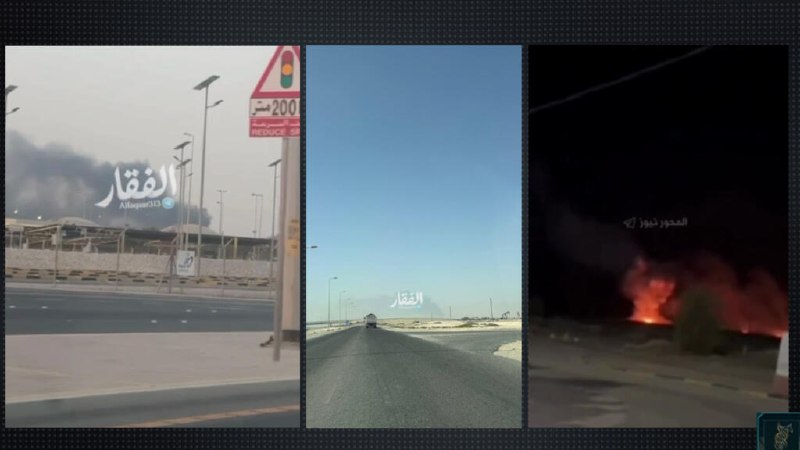
At 0210 UTC on 19 July 2026, with Tehran still dark and the Caspian horizon beginning to lighten, the United States completed its eighth consecutive night of strikes on the Islamic Republic of Iran. CENTCOM, the unified combatant command responsible for the Middle East, says the latest wave hit Iranian military facilities and air-defence positions. President Donald Trump, who ordered the campaign, framed the operation in the language he has used since returning to office: pressure, maximum force, an adversary that bends or breaks. The phrase relayed from the commander-in-chief to his generals, and from the generals to their crews, was to "open the gates of hell." Eight nights in, the gates are open. What is unclear is whether the war they were opened against is the one the president believes he is fighting.
This publication set out to read the campaign as it actually appears on the wire, rather than as it is being marketed from the White House. The picture that emerges is a sustained, escalating bombing campaign directed at a country the United States has bombed before, supported by regional partners whose patience for the project is being tested nightly, and shaped by a doctrine of personal pressure that has worked on smaller targets. Iran is not a smaller target. It is the larger one. The question worth asking is not whether the strikes will continue. They probably will. The question is what they are for, and what happens when the answer drifts.
What has actually been hit
The cumulative shape of the campaign is beginning to show through the daily summaries. According to the CENTCOM statements circulated through the AngelList and Product Hunt channels on 19 July 2026 at 0905 UTC, the eighth wave of strikes targeted Iranian military facilities and air-defence sites. The early waves, by the same sourcing, hit command-and-control nodes, missile storage, and drone-production lines. The shift across the week has been subtle but consistent: a higher proportion of air-defence targets in the later flights, suggesting that the campaign is now clearing a path for deeper strikes rather than degrading a fixed target set.
The geography matters. Iran's air-defence network is layered. The Russians helped build the outer ring in the 1990s and 2000s; the Iranians have added indigenous systems, including the Bavar-373 and Khordad variants, on top. Hitting those systems is not the same as hitting a missile silo. It is closer, in strategic terms, to peeling the lid off a fortification before laying siege to what is inside. The reported pattern of the eighth night, read against the pattern of the first, suggests the United States is now in the lid-peeling phase.
What the available reporting does not specify is the depth of the degradation. CENTCOM statements, by design, speak in terms of facilities struck and capabilities degraded. Independent damage assessment, the kind that takes satellite imagery and compares it frame by frame against baseline, has not been published in the reporting this publication could verify on 19 July 2026. The honest reading is that the United States is hitting real things, in real places, on a sustained schedule, and the operational effect of those hits is being asserted rather than demonstrated.
The president who does not enjoy this kind of war
Donald Trump's second-term foreign policy has been built on three pillars: tariff pressure against economic competitors, transactional deal-making against smaller adversaries, and theatrical displays of force meant to signal resolve. Each of these has produced a result he can claim. Tariffs have generated revenue and headlines. Deals, including the negotiated arrangements with several Latin American and African governments, have produced photo opportunities. Shows of force, from the Venezuela naval posture to the carrier strike group cruises of 2025, have produced market jitters and political talking points.
None of those pillars were designed for Iran. Iran is too large to be moved by a tariff. Iran is too experienced to be flattered into a deal. And Iran's response to a show of force is not silence. It is escalation through proxies, missile barrages, and the slow, patient attrition of any force that gets close enough to be hit. The country Trump is now bombing nightly is the country that, for forty years, has built its entire defence doctrine around absorbing the opening blow of a larger adversary and surviving long enough for the politics to change.
This is not an adversary that does not fit the president's mould because the president misread it. The mismatch is structural. Trump's deal-making instinct requires a counterpart who needs something the United States can give or withhold. Iran's leadership calculates in different units: time, martyrdom, the demonstration of resolve to a domestic audience, and the credibility of deterrence to a regional one. You cannot tariff your way to a better arms-control regime with a country that believes its survival depends on the regime's existence.
The regional architecture is not what it was
Eight nights of sustained bombing does not happen in a vacuum. The regional architecture around Iran has been quietly rebuilt across the last three years. The Saudi-Iranian rapprochement brokered by Beijing in March 2023, whatever its limits, took the kingdom off the immediate war footing. The United Arab Emirates has spent the interval building commercial depth with Tehran, including shipping routes that bypass the Strait of Hormuz chokepoint the United States would prefer to control. Iraq's federal government in Baghdad has been receiving Iranian oil exports and paying for them in dinars, a transaction structure designed to be uninterruptible by US sanctions enforcement.
What this means for the strikes is that the regional partners the United States might have expected to mobilise behind a sustained campaign against Iran are, at best, neutral. Several are actively unhelpful. The strikes are therefore being flown, at this stage, by US assets alone, from bases in the Gulf and the Indian Ocean, with overflight and staging rights negotiated bilaterally and expiring on a clock the campaign does not control. The longer the strikes continue, the more that clock matters.
There is also the question of Israel's posture. Israel has, for two decades, treated the Iran file as its central national-security preoccupation. The current Israeli government has not, in the reporting this publication could verify on 19 July 2026, joined the strikes. That silence is itself information. It suggests either that Tel Aviv was not consulted, or that it was consulted and declined, or that it is participating in a way the public reporting has not yet captured. None of those readings are reassuring. A unilateral US bombing campaign against Iran, without Israeli participation, is a different war than a coordinated one.
What the strikes are actually for
There are three plausible theories of the case, and the reporting does not yet distinguish between them.
The first is the demonstration theory. The strikes are meant to degrade Iran's capacity to strike back, and the eighth night of air-defence targeting fits that reading. Under this theory, the campaign continues until the Iranian retaliatory capacity is judged insufficient, at which point the United States either escalates to decapitation strikes or accepts a negotiated settlement from a position of demonstrated strength. The problem with this theory is that it requires a definition of "sufficient," and the reporting has not surfaced one.
The second is the signalling theory. The strikes are meant to send a message to a third party, not to Iran. The candidates for that third party are China, Russia, or both. A sustained bombing campaign against a major regional power, executed without coalition cover, is a statement about American willingness to act unilaterally. It is also a stress test of the sanctions and dollar architectures that underpin the post-1991 order. If Iran can be bombed for eight nights without the global energy market seizing up and without the BRICS+ clearing arrangements showing strain, then the order is more durable than its critics claim. If it cannot, the order is showing its age in real time.
The third is the leverage theory. The strikes are a means to an end, and the end is a deal. Trump's transactional instinct points here, and the leverage theory fits his pattern of converting military pressure into a signed document. The problem with this theory is the same as the mismatch described above. Iran does not deal well under bombardment. Its decision-making apparatus slows, hardens, and routes around the actors Washington would prefer to negotiate with. The leverage theory is a theory about how Trump negotiates. It assumes the other side negotiates the same way.
Stakes and the time horizon
If the strikes continue at the current cadence for another two to three weeks, the campaign crosses thresholds that are difficult to uncross. Iranian retaliatory strikes against US bases in the Gulf become operationally inevitable rather than politically optional. The price of oil, already elevated by the uncertainty premium, repriced into the high-$90s and likely to break $100 on any confirmed strike on a Gulf facility. The global clearing and shipping arrangements, which have been quietly diversifying away from dollar intermediation for three years, get the kind of stress test their architects hoped would never come. And the domestic politics of the campaign, in a United States heading into the late summer of an election year, begin to bite.
Iran, for its part, has options it has not yet used. It can strike US bases. It can activate Hezbollah in the north and Shia militias in Iraq. It can shut down the Strait of Hormuz for a week, long enough to spike insurance and freight rates without committing to a closure it cannot sustain. It can do nothing visible at all and wait for the politics of the operation to turn in Washington, betting, as it has bet before, that time is on its side. The first three options carry the risk of escalation the regime may not want. The fourth has worked before.
The honest reading of 19 July 2026 is that the United States is conducting a sustained aerial campaign against a country whose defence doctrine assumes it will be the target of one. The strikes are real, the targets are real, and the cost in Iranian lives is real and uncounted in the reporting this publication could verify. The political theory of the case is underbaked. The regional architecture is not aligned. The counterpart is not in the room. Eight nights in, the gates of hell are open, and what walks through them next is a function of decisions not yet taken by people who have not yet decided to take them.
The desk notes that this article relies on the wire reporting circulated via AngelList and Product Hunt channels on 19 July 2026, plus the X commentary published under the sprinterpress handle the same morning. CENTCOM's official statements, carried through those channels, are treated as the primary factual record. The interpretation offered here is Monexus's own, and it is offered in the staff-writer register: sharper than a neutral wire brief, more restrained than a partisan one. The structural mismatch between the president's negotiating style and the Iranian regime's strategic posture is the through-line. Whether the strikes produce a deal, a demonstration, or a deeper war is, on this morning's evidence, still in motion.
Wire provenance
This editorial synthesis draws on the following public wire/social posts:
- https://t.me/s/AngelList
- https://t.me/s/producthunt
- https://t.me/s/AngelList/2
- https://t.me/s/producthunt/2
- https://x.com/sprinterpress/status/2