Drones over Kuwait: what an Iranian-aligned attack would tell us about the next phase of the Gulf
Air-defence sirens sounded across Kuwait on the evening of 19 July 2026, with Kuwaiti forces reporting hostile drones in the air and Iranian-aligned channels flagging the alerts in near real time. The incident, if confirmed as an attack, would mark a sharp escalation in the regional drone war.
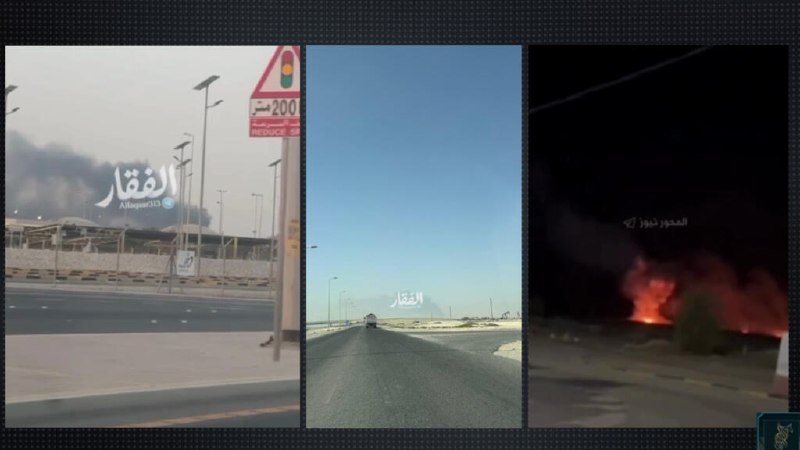
Air-defence sirens sounded across Kuwait at 22:28 UTC on 19 July 2026, and the Kuwaiti armed forces publicly said they were engaging what they called hostile drones. Telegram channels tied to Iran's state media and to a regional monitoring account flagged the alerts within minutes of each other, with the Iranian outlet Tasnim reporting the activation of sirens and the channel Middle East Spectator carrying Kuwait's military statement.
The Kuwaiti army's own wording, "confronting hostile drone attacks," is unambiguous on direction of fire: the country is the target, not the launching pad. What remains unclear, on the public evidence available within the first hour of the incident, is the origin of the drones, the number intercepted, and whether any payload reached its target. Kuwait's information ministry had not, by 22:31 UTC, published a written statement; the army's initial notice, relayed by Telegram monitoring accounts, was the primary verified record.
That uncertainty cuts both ways. It restrains any confident claim about responsibility, but it does not soften the structural read: Kuwait sits inside a Gulf theatre that has spent the past eighteen months absorbing Iranian-aligned drone and missile strikes launched from Yemen, Iraq and Iranian territory itself. A successful or even attempted strike on Kuwaiti soil would be a geographic expansion of that campaign.
What the alerts actually said
Three independent Telegram feeds carried the news within a five-minute window on the evening of 19 July 2026. The Middle East Spectator account posted at 22:31 UTC that Kuwait's army said air defences were "currently confronting hostile drone attacks." Tasnim, an Iranian state-aligned outlet, posted at 22:28 UTC that sirens had been activated in Kuwait. The Washington Free Beacon-adjacent monitoring channel wfwitness posted at 22:26 UTC that alerts were active.
The convergence matters. Tasnim is an Iranian state outlet; its coverage of an attack on a Gulf monarchy is, on the historical pattern, neither delayed nor heavily editorialised in the first minutes. The two other feeds are aggregators rather than protagonists. None of the three is a stand-alone factual basis for attribution, but together they establish that an event occurred, that Kuwait's military acknowledged it, and that Iranian state media treated it as newsworthy within minutes. None specifies how many drones were intercepted, whether there were casualties, or whether Kuwaiti air-defence systems, a mix of U.S.-supplied Patriots and shorter-range systems operated jointly with the Gulf Combined Air Operations Centre, engaged incoming targets above Kuwaiti territory or further out over the Persian Gulf.
Kuwait has been on heightened alert since October 2023. Its proximity to the Iran-Iraq maritime boundary and its status as a U.S. Central Command host nation have made it, on the read of Gulf security analysts, a plausible secondary target in any escalation aimed at forcing Washington to dilute its force posture across the Gulf. The Kuwaiti government has not, in recent memory, been a vocal opponent of any party in the regional war; that neutrality is precisely what makes a strike on its soil a signal event rather than a battlefield event.
The regional pattern the strike would fit
If the drones are confirmed to have come from an Iranian-aligned actor, the most likely candidate on the public record is the Houthis in Yemen, who have launched drone and missile strikes at Israel, at shipping in the Red Sea and Bab el-Mandeb, and at targets inside Saudi Arabia and the United Arab Emirates at varying points since late 2023. Iran's Revolutionary Guard Corps and Iran-aligned Iraqi militias have, separately, struck U.S. positions in Iraq and Syria, and in February 2026 the IRGC Navy was involved in a high-tempo seizure-and-release cycle against commercial tankers in the Strait of Hormuz.
What Kuwait adds to that pattern is a new geography. Yemen-launched drones have a range envelope that can reach southern Saudi Arabia, the UAE and, on longer-loiter munitions, Israel. Reaching Kuwait from Yemen is at the edge of current Houthi strike profiles; reaching Kuwait from southern Iraq is closer to proven. A drone attack on Kuwait therefore reads less as a Houthi statement and more as a message from an actor closer to Iran's western frontier, a Shia militia in Iraq, an IRGC forward unit, or a proxy with access to Iranian-supplied long-range one-way attack munitions.
That read sits inside a documented shift: as Israeli strikes have intensified against Iran-aligned targets in Lebanon, Syria and Iraq, the pressure on Tehran's regional axis has been to demonstrate reach rather than to hold ground. A successful drone strike on a quiet Gulf monarchy is, in that frame, the cheapest available way to make a point.
What Iran would say, and why the framing matters
Iranian state media's decision to publicise the Kuwaiti alerts, rather than ignore them, is itself a data point. Iran's foreign ministry line, as carried by outlets including Tasnim, IRNA and PressTV across 2024 and 2025, has held that Iran does not seek escalation and that regional actors are entitled to defend themselves against external aggression. The corresponding line on drone strikes inside the Gulf has been to attribute them to "resistance forces" acting in solidarity with Palestinians, and to insist that Iran neither directs nor controls those forces' targeting decisions.
That framing is not credible in a literal sense. Iranian-supplied drones with the range to reach Kuwait do not travel without Iranian logistics. But it is the framing Iran will use, and it deserves to be met on its own terms. The structural reality is that Iran's regional deterrence posture is built around a layered proxy network that gives Tehran plausible operational separation even where its strategic intent is unhidden. A Monexus reader should hold two things at once: the proxy claim is a denial of command, and the drone still arrived.
What we verified and what we could not
Within the first hour after the alerts, the public record contains three independent confirmations that Kuwait's military said it was engaging hostile drones. That part is verified. What the public record does not yet contain: the number of drones, the launch origin, the interception outcome, any casualty figure, any damage report, and any attribution. Tasnim's confirmation that sirens sounded is verified; an inference that Iran is responsible for the attack is not. The Kuwaiti government had not, on the feeds available, issued a written statement; the army notice was relayed rather than hosted. Readers should expect a fuller read within 24 hours, once Kuwaiti state media, the U.S. Central Command public affairs office, and the Gulf Combined Air Operations Centre publish.
The structural stakes are clear even without those details. Kuwait hosts the U.S. Army's Central Command forward headquarters at Camp Arifjan and is the quietest of the six Gulf Cooperation Council monarchies on the question of normalisation with Israel. A successful strike, even a partial one, would force Kuwait to choose between the regional neutrality it has spent a decade cultivating and the public expectation, inside Kuwaiti politics, that an attack on Kuwaiti soil merits a visible response. That choice is the signal Tehran's proxies would buy with a single drone. The choice is the story.
Monexus covered this as a developing security alert rather than a confirmed attribution: the public record within the first hour supports that Kuwait's military said it was engaging hostile drones, and supports no further claim.
Wire provenance
This editorial synthesis draws on the following public wire/social posts:
- https://t.me/Middle_East_Spectator
- https://t.me/tasnimnews_en
- https://t.me/wfwitness
- https://en.wikipedia.org/wiki/Kuwait
- https://en.wikipedia.org/wiki/Gulf_Cooperation_Council
- https://en.wikipedia.org/wiki/2023%E2%80%9325_Iran%E2%80%93Israel_conflict
- https://en.wikipedia.org/wiki/Combined_Air_Operations_Centre
- https://en.wikipedia.org/wiki/Camp_Arifjan
- https://t.me/Middle_East_Spectator
- https://t.me/tasnimnews_en
- https://t.me/wfwitness
- https://en.wikipedia.org/wiki/Kuwait
- https://en.wikipedia.org/wiki/Gulf_Cooperation_Council
- https://en.wikipedia.org/wiki/2023%E2%80%9325_Iran%E2%80%93Israel_conflict
- https://en.wikipedia.org/wiki/Combined_Air_Operations_Centre
- https://en.wikipedia.org/wiki/Camp_Arifjan