Strike on a warned house in Deir al-Balah resets the civilian-casualty baseline in Gaza
An Israeli strike on a house in Deir al-Balah that residents say they had been told to evacuate killed multiple Palestinians on 18 July 2026, the latest in a daily tempo of killings that is reshaping how reporters on the ground are filing the war.
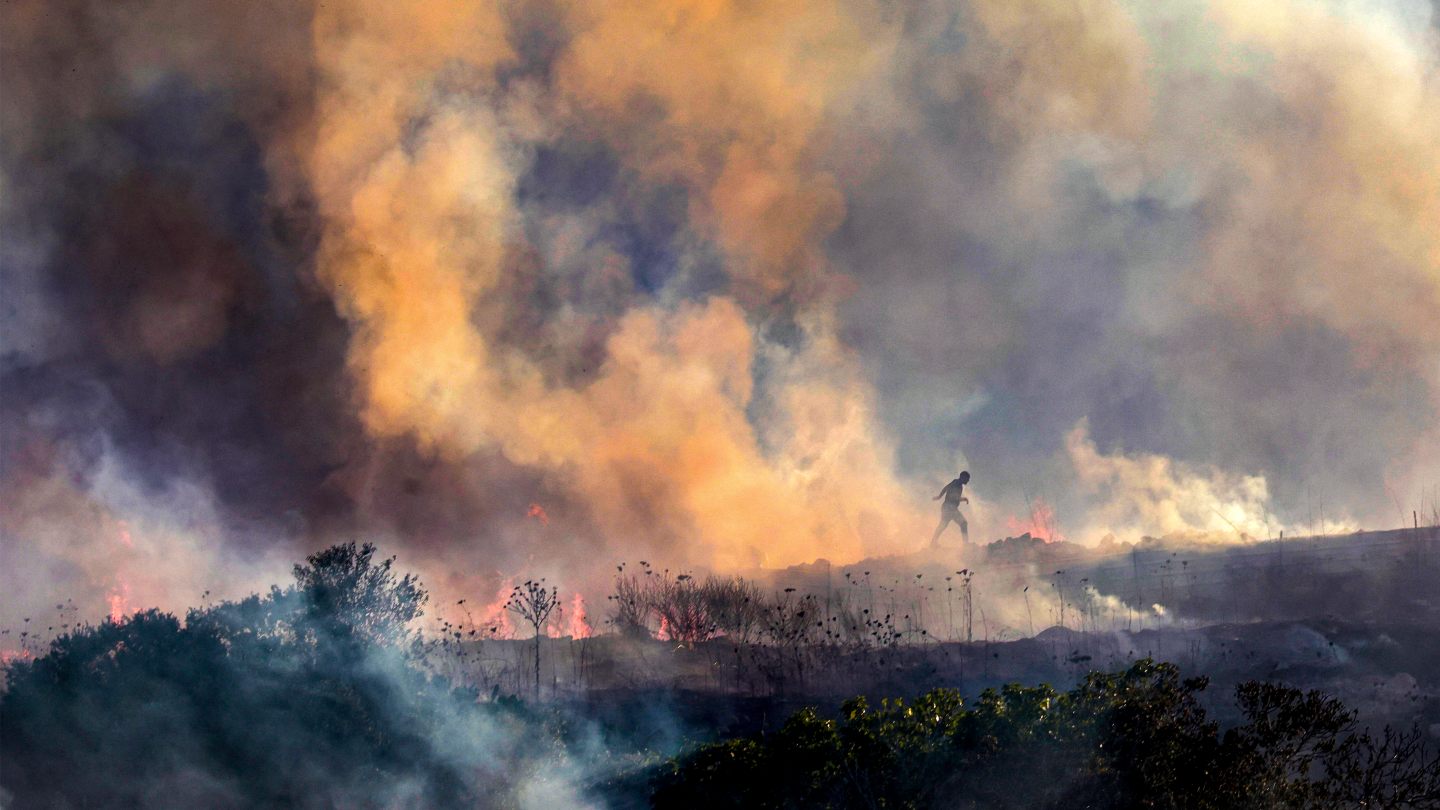
At 19:00 UTC on 19 July 2026, Reuters published video from Deir al-Balah in central Gaza showing Palestinians mourning relatives killed the previous day when an Israeli strike hit a house whose residents said they had been warned to evacuate. The clip is one of several the wire has moved from the strip in the past week, and the framing it chose, "Every day there's killing and strikes", is now a near-default line in pool copy from the enclave.
That choice matters. The daily-casualty baseline in Gaza has been re-set, and the language wire reporters are using to describe it has hardened into a flat cadence that strips individual strikes of context. A strike on a warned house is no longer a notable event; it is a data point in a rolling series. Reporting on Gaza is increasingly written in the register of the casualty column, and the column itself is getting longer.
What the wire actually shows
Reuters' pool footage from Deir al-Balah on 19 July 2026 puts faces on a count that, in the Iranian state-aligned PressTV summary filed the same day at 18:50 UTC, ran to at least 13 Palestinians killed across the besieged enclave in the previous 24 hours, including what the channel described as an entire family. PressTV's framing, that Israeli "fresh assaults" are producing mass-casualty episodes on a near-daily tempo, is consistent with the Reuters footage, even though the two outlets are operating from incompatible editorial baselines.
The Reuters clip also surfaces a quieter detail that wire reporters have started foregrounding: the evacuation order. Residents told Reuters they had been warned to leave the house before it was struck. The line sits awkwardly inside the standard IDF talking-point structure, in which the Israeli military's evacuation directives are treated as one of the principal protective measures available to civilians in a dense urban theatre. When the warned house is the one hit, that protection narrative breaks at the household level, and reporters have started letting the contradiction stand in their copy rather than resolving it on the page.
The counter-narrative and why it is harder to source
The Israeli military has, over the course of the war, argued that strikes on warned structures are the exception rather than the rule, and that the bulk of civilian harm in Gaza comes from Hamas' use of civilian infrastructure for military purposes. PressTV, which is editorialised by the Iranian state, presents every strike as deliberate and mass-casualty by design. Neither framing is fully testable from open-source material alone; the press pool on the Israeli side is largely institutional, while the casualty counts coming out of Gaza are filtered through the Hamas-run health ministry that Reuters and others treat as the best available tally, with caveats.
What can be said is that the daily tempo of strikes producing multi-civilian-casualty episodes is now a structural feature of the war, not an aberration. The Reuters clip and the PressTV summary, read together, are describing the same arithmetic from opposite editorial poles, and that arithmetic is no longer contested in its broad strokes.
Why the lede writes itself now
A reporter arriving on the ground in Gaza in July 2026 is filing into a wire ecosystem that has effectively standardised the daily-casualty lede. The structure is consistent: a struck location, a casualty figure, an attributed quote from a survivor or a medic, and a standfirst about the broader tempo. Reuters' "Every day there's killing and strikes" line is the editorial compression of that structure into a single sentence.
That compression is doing analytical work. It collapses what would otherwise be a story about a specific strike on a specific warned house into a story about a pattern, which is the story the wire now treats as the actual news. The result is a corpus of coverage that increasingly treats the daily death toll as the unit of analysis, and individual strikes as instances of the unit.
What the pattern costs
For readers in Western audiences, the standardisation has the perverse effect of making the war less legible, not more. A casualty figure embedded in a daily column registers differently from a casualty figure embedded in a single named event. The Reuters clip from Deir al-Balah is the second kind of story; the wider wire ecosystem is forcing it back into the first kind by the time it reaches a reader's feed.
For Palestinians in Gaza, the cost is not rhetorical. It is the cost of living inside a daily tempo of strikes that the international press has, by sheer repetition, normalised into the background of its own reporting. The PressTV summary's "including an entire family" is the human-scaled version of that arithmetic; the Reuters standfirst is the wire-scaled version. The two are not in conflict; they are in different registers of the same report.
The unresolved question is what a non-normalised lede would look like at this stage of the war. The sources do not provide one. What they do provide is the daily tempo, the warned houses, and the casualty columns, and the working assumption on both ends of the editorial spectrum that tomorrow's file will read much like today's.
Desk note: Monexus is filing the Deir al-Balah strike in the casualty-column register because that is the register the wire is using, but this publication flags the normalisation cost explicitly. Israeli security concerns are first-order context that the available pool copy does not develop; readers seeking that frame should consult Haaretz, the Jerusalem Post, or the IDF Spokesperson's daily briefing.
Wire provenance
This editorial synthesis draws on the following public wire/social posts:
- https://x.com/reuters/status/2078897186788790272
- https://t.me/presstv/