Beijing's new chaperone: China moves to regulate AI companions as birth rate falls
Chinese regulators are drafting rules for AI companion apps, citing concerns that emotionally attached users are substituting synthetic relationships for the family formation Beijing says it needs.
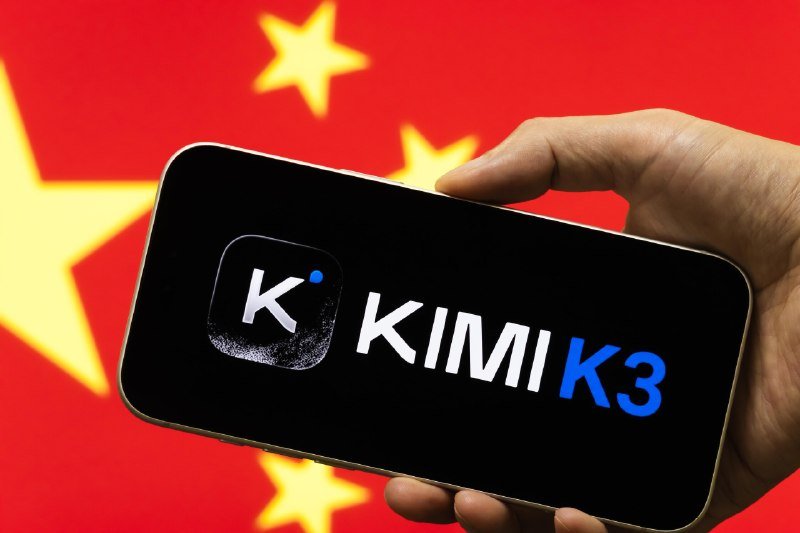
On 18 July 2026, Beijing signalled it intends to chaperone the country's fastest-growing intimate technology. Chinese regulators, alarmed by the gravitational pull of AI companion apps and their potential to crowd out the marriage-and-childbearing formula the state has spent two decades subsidising, are drafting new rules for the sector. The move, disclosed in posts on X and amplified across Chinese-language channels, frames a category of software once treated as a curiosity as a matter of demographic statecraft.
The intervention lands at a moment when China's fertility rate has settled into a long, quiet slide that no subsidy has yet reversed. What is new is the explicit linkage: officials are not just fretting about phones in bedrooms, but about synthetic personas engineered for emotional capture. The category that began with early chatbots has matured into apps that remember, flirt, and respond in voices tuned to the user. Beijing's draft rules, in the framing carried by Chinese-language commentators, treat that intimacy as a population problem in software form.
A regulator in the bedroom
The immediate trigger is a familiar one for Chinese industrial policy: a market that grew faster than the rulebook. The X account Pirat Nation, citing reporting on the draft measures, said officials are concerned that "some people are becoming too emotionally attached" to AI companion products. The phrasing matters. Regulators are not contesting the products' utility, but their substitution effect on the social bonds the state has identified as upstream of childbirth.
Chinese policy tends to reach for administrative tools when behaviour drifts. The companion-app draft follows the same pattern as earlier interventions on gaming time for minors, livestream tipping, and short-video feeds for children. Each was justified in the language of family welfare, then operationalised through screen-time caps, identity verification, and curfews. Companion apps, by their design, target adults, so the levers will differ. Expect registration rules, age gating, content ceilings, and a tightening of the data-retention and emotional-manipulation surface area, the same way other jurisdictions are reaching for disclosure rules around so-called dark patterns in consumer software.
The political economy of the move is also worth naming. China holds a structural advantage in deploying AI at consumer scale, both because the largest models are domestic and because the regulatory perimeter is drawn in Beijing rather than negotiated across federal jurisdictions. If the rules are workable, they become a soft-power export: a template other demographically anxious governments, from Seoul to Rome, can point to as they draft their own.
The market behind the moral panic
What the draft rules actually constrain is a category that has scaled quickly and cheaply. The AI Post channel, summarising domestic coverage on 18 July, flagged an "affordable robot girlfriend starter pack" announcement alongside the regulatory push, a juxtaposition that captures the simultaneity Beijing is trying to manage: a market the same firms are being urged to lead, and a population the same firms are being told not to displace.
This is the deeper tension. Chinese AI firms have shipped consumer companion products at price points Western rivals have not matched, in part because domestic competition forces aggressive monetisation, and in part because training and inference costs on homegrown model stacks have fallen faster than in the US. That pricing power is a competitive asset globally. It is also the mechanism by which these products reach the unmarried young men demographic studies in China consistently identify as the country's most under-married cohort. The regulator's calculus is straightforward: if the price of a synthetic confidant falls below the price of a first date, the substitution effect is no longer hypothetical.
Western commentary has tended to read Beijing's move as censorship by another name. The Chinese counter, carried in the state-aligned press and in industry responses to earlier platform interventions, is more pointed: China is willing to use administrative tools to correct a market failure the West is content to leave unmanaged. That framing is not without force. The same companion-app category that Beijing is now auditing has prompted lawsuits, congressional letters, and parental-class-action filings in the United States, where the federal response has been slower and more fragmented. The structural point is that demographic pressure, like industrial policy, rewards governments willing to act before a market calcifies.
A pattern, not a one-off
The companion rules are the latest in a sequence. The South China Morning Post reported separately this week on China's quiet ban on most civilian drone flights in cities, a measure that links, on the face of it, to the Ukraine war, where low-cost commercial drones have reshaped the battlefield, but which also serves a domestic order-and-safety rationale. Read together, the two moves suggest a regulator in expansion-of-authority mode, comfortable with sector-specific rules when the political logic is clear.
The throughline is selective enablement. Beijing is happy to see Chinese AI firms export companion products to Southeast Asia, the Middle East, and parts of Africa, where regulators have neither the bandwidth nor the doctrinal vocabulary to draft competing rules. It is also happy to constrain those products at home, because the demographic logic of substitution is more electorally sensitive than any single app's market share. The arithmetic of acceptance is the same: industrial policy in, social stability out.
There is a less flattering read. Companion apps are an easy target because the constituency that uses them heavily, young, urban, single, disproportionately male, is not the constituency that lobbies effectively. Crackdowns on this group carry low political cost. That asymmetry is structural, and it shapes which categories of consumer AI get treated as national champions and which get treated as moral hazards.
Stakes, in two directions
The international stakes are real. If China's rules create a working template for the sector, expect two follow-on effects. First, Chinese firms operating abroad will face pressure to apply home-country standards, the GDPR effect for AI intimacy. Second, other demographically anxious states will look at the Chinese rulebook as a reference design, the same way they have studied Beijing's content-moderation norms and its data-localisation statutes. The result is a more fragmented global market, with Chinese rules dominant across much of the Global South and a slower-moving, litigation-driven regime in the West.
The domestic stakes are demographic and harder to measure. China's fertility rate was already low before companion apps reached scale, and the marginal effect of any single product category is small. The framing in the draft rules, however, treats substitution as cumulative: every hour spent in a synthetic relationship is an hour not spent in a social network that historically produced marriages. If that framing is right, even modest substitution across a large cohort compounds into meaningful demographic drag. If it is wrong, Beijing will have regulated a phantom, and the real fertility floor will be set by housing costs and the slow grinding of urbanisation, not by chatbots.
The honest answer is that the sources do not yet tell us which read is correct. The draft rules are new. The behavioural data on long-term companion-app use is thin. The political logic is clear; the demographic payoff is not. What can be said with confidence is that Beijing has decided the question is too important to leave to app stores, and that the rulebook for AI intimacy is being written first, and fastest, in the country with the most to lose from low birth rates and the most institutional willingness to act on the problem.
This article was framed by Monexus against the available wire and channel reporting on 19 July 2026. Where Chinese state-aligned framings and Western press framings diverge, both have been presented and the structural reasoning laid out for the reader.
Wire provenance
This editorial synthesis draws on the following public wire/social posts:
- https://t.me/aipost
- https://t.me/SCMPNews