The recruiter's pitch: a Ukrainian veteran reflects on a foreign legion's promise
A Telegram post from a Ukrainian officer channels commentary on who joins foreign legions and why, prompting questions about the promises held out to the willing.
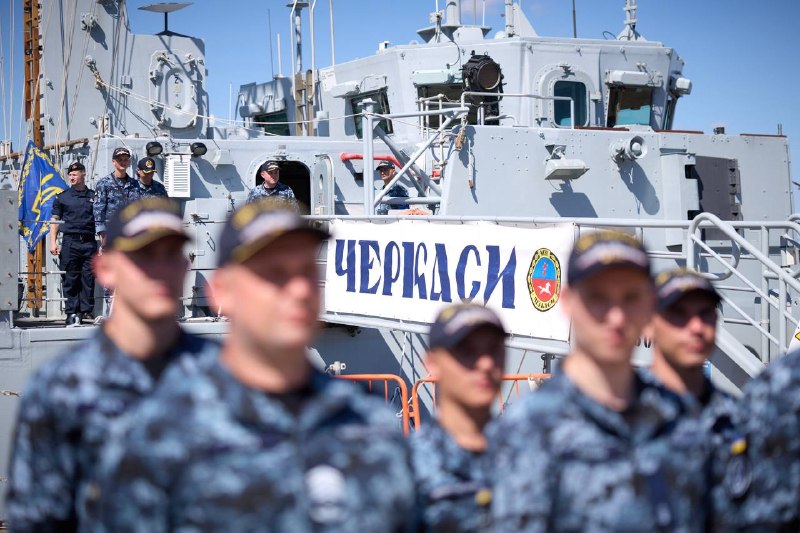
A short reflection published on the Telegram channel Butusov Plus on 19 July 2026 at 07:29 UTC frames the choice to enlist in a foreign legion as an exercise in temperament rather than patriotism. The post, written in the channel's house register, argues that "every nation has people endowed with natural militancy," a cohort that selects the warrior's profession for reasons closer to vocation than ideology.
The framing matters less for what it says about Ukraine than for the global market in armed recruitment it implicitly describes. Foreign legions, from the French tradition revived in the 19th century to contemporary units recruited for the war in Ukraine, have long sold willing soldiers on a particular bargain: danger, pay, foreign service, and a chance at status that civilian life rarely offers. That bargain is doing brisk business in 2026.
The willing, not the dutiful
Recruiters for foreign formations in Ukraine have run paid campaigns on social media in Spanish, Portuguese, German, and English, with sign-on bonuses reported in the low five figures and monthly compensation pitched above regional militaries' scales. The Butusov Plus commentary lands in the middle of that market and pushes back against it, gently. It treats the recruit not as a mercenary in the pejorative sense but as someone whose temperament fits the work, and who has chosen the danger rather than stumbled into it.
The distinction is sharper than it sounds. A professional army that recruits from temperament can absorb casualties more sustainably than one that conscripts from obligation. The French Foreign Legion's own doctrinal literature leans on a similar distinction: esprit de corps built on chosen service rather than imposed service. Ukraine's International Legion for the Territorial Defense Forces, formed in the early weeks of the full-scale invasion and still drawing volunteers, sits inside that older lineage even if its institutional memory is short.
A labour market with uniforms
The economic subtext is hard to miss. Across Latin America, parts of West Africa, and the post-Soviet space, informal recruiters have spent two years pitching enlistment contracts as escape routes from economies where a single paycheck can determine a family's housing status. The pitch is not always honest about casualty rates, and it is rarely honest about what happens after discharge. But it has been effective enough that several governments have moved to restrict outbound recruitment for foreign armed service, on paper at least.
Treating this trade as straightforward mercenarism misses what is actually being sold. Foreign legions offer something that domestic militaries, especially conscript armies, do not: a clean contract, a clear chain of command, and an exit. For a working-age man weighing a Colombian minimum wage against a Ukrainian sign-on bonus, the calculation is grim and arithmetic.
What the Ukrainian officer sees
Butusov Plus writes from inside a country that has absorbed more foreign volunteers per capita than any conflict of the last decade, and that has also watched those volunteers cycle through at a rate that the channel's own coverage has occasionally flagged. The 19 July post is not a complaint. It is closer to a warning shot at readers who imagine recruitment as a clean transaction. The temperament that makes a soldier effective, the post suggests, also makes him expensive to lose and difficult to replace.
That observation has policy weight. Ukraine's defence ministry has shifted, in stages, from a foreign-volunteer model toward tighter integration with the Armed Forces, partly because the legion model was draining scarce training capacity faster than it produced combat-ready sub-units. The shift is consistent with the broader lesson of post-2014 European recruitment: foreign volunteers are useful at the symbolic and auxiliary margins, less so at the core.
The wider contract
For governments watching from outside, the more durable question is what happens to the volunteers who return home. Colombian, Brazilian, and Senegalese returnees from earlier foreign-service deployments have, in several documented cases, brought combat skills into criminal economies, with consequences their sending states are still working through. Ukraine's returnee problem is smaller in absolute terms because the war is still active, but the structural risk is the same: a market that recruits on temperament and pays in cash will, eventually, have to account for what its products do next.
The Butusov Plus post is unlikely to be read that way by its own audience. It is a short, almost pastoral reflection on vocation. But the recruitment ecosystem it gestures at is large, well-funded, and lightly supervised, and it sits at the intersection of three trends that will outlast the current war: declining returns to civilian life in parts of the Global South, persistent demand for infantry in a high-intensity conflict, and the willingness of recruiters to bridge the two.
Desk note: Monexus framed this around the recruiting bargain itself rather than around any specific national contingent, on the view that the labour-market framing carries further than the battlefield framing.
Wire provenance
This editorial synthesis draws on the following public wire/social posts:
- https://t.me/ButusovPlus