Safety car for Russell at Spa: a Belgian GP weekend already tilting away from Mercedes
George Russell's car was pulled from the track under safety-car conditions at Spa-Francorchamps on 19 July 2026, the latest in a Belgian Grand Prix weekend that has already run through qualifying and into race-day recovery work.
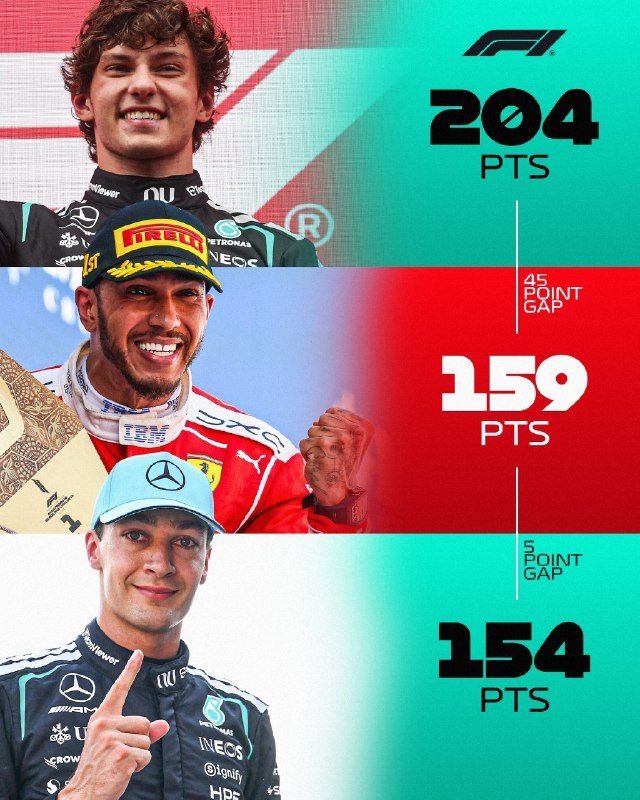
George Russell's car was being recovered under safety-car conditions at Spa-Francorchamps at 13:12 UTC on 19 July 2026, the @formula1 Telegram channel confirmed, with the warning tags "⚠️ SAFETY CAR ⚠️" attached to a post tagging both #F1 and #BelgianGP. The interruption came less than 24 hours after the qualifying hour for Sunday's Belgian Grand Prix got underway at 13:54 UTC on 18 July, a one-hour session that traditionally sets the grid for a circuit where pole position is not optional: the run from La Source to Les Combes alone punishes any driver starting outside the top three.
The race weekend has already absorbed the parts that normally determine outcomes. Qualifying has run. The starting order is set. What is now being managed is the wreckage of a Mercedes entry that, on the timing of the channel's alert, was being pulled from the circuit before the field could resume green-flag running. The shape of the story is small in the way that mid-race retirements are small, and consequential in the way that any DNF for a works team is consequential. Mercedes came into Spa trailing in the constructors' standings; losing a chassis at this point in the calendar does not rescue that gap.
A circuit that does the punishing
Spa-Francorchamps rewards cars that carry speed through Eau Rouge and the long-radius Pouhon, and it punishes cars that cannot. Russell's weekend at this circuit has rarely been a quiet one. The track is a tyre-management problem masquerading as a power problem, and it is unusually hard on a recovering vehicle because the recovery vehicles themselves have to navigate the same blind crests that the cars do. The official @formula1 feed did not specify the mechanical cause or the on-track location in its 13:12 UTC alert, a routine omission for race control messaging during a live session: details get attached later, in stewards' documents and team statements, once the marshals have cleared the circuit.
What the channel did say is the operative fact. The safety car was deployed. Russell's car was being recovered. The session would resume once the track was clean. That sequence is the standard response to a stopped car at any FIA-sanctioned grand prix, and it carries with it the standard penalty of lost time for everyone, the field bunched under yellows and the gaps that drivers had spent the previous lap building erased in an instant.
What Mercedes loses when one car goes home early
The 2026 season has not been a comfortable one for the works Mercedes team. The introduction of the new power-unit regulations, the recalibrated hybrid architecture, and the reshuffled competitive order have left the Silver Arrows fighting for position rather than from the front. A retirement at Spa is not a single weekend's problem; it is a spare-parts problem that runs through the next three rounds before the August break, and a wind-tunnel-allocation problem that compounds any floor-development direction the team has committed to.
The alternative reading, the one the Mercedes garage will not say out loud, is simpler. Spa has historically swallowed the cars that arrive out of balance. If Russell qualified outside the points-paying window and the car was already compromised, an early retirement converts a probable zero into a certain zero, and it frees the team to manage the power-unit allocation for the races where scoring actually matters. The wire does not say which of those readings applies. The channel alert does not distinguish between a strategic retirement and a mechanical failure. That distinction will surface, if it surfaces, in the FIA stewards' report and in the team's post-race statements.
The weekend is the story, not the lap
The Belgian Grand Prix has carried an unusual weight in 2026 because of where it sits in the calendar: the last race before the mandatory summer shutdown, the last data-gathering weekend before the factory freeze, the last chance for the midfield to steal a wind-tunnel direction from the leading teams before the regulation reset window closes. Russell's retirement, on its own, is a footnote. The combined picture, a weekend that opened with the qualifying-hour warning at 13:54 UTC on 18 July and ran through a safety-car recovery at 13:12 UTC on 19 July, is the broader shape.
The remaining uncertainty is the obvious one. The @formula1 channel has not named the mechanical fault, the on-track sector, or the lap number. Readers following the wire know only that a Mercedes stopped on circuit and that the recovery operation was active at the time of the post. Everything else, including whether the chassis will race again before the August break, will become clear in stewards' notes, in the team's own communications, and in the FIA's official classification once the chequered flag falls on Sunday.
Desk note: Monexus is treating the @formula1 Telegram feed as a live wire for race-control messaging during the Belgian Grand Prix weekend. In-race mechanical detail, when it surfaces, will be sourced to the FIA stewards' documents and the team's own statements rather than to a single channel alert.
Wire provenance
This editorial synthesis draws on the following public wire/social posts:
- https://t.me/formula1/
- https://t.me/formula1/
- https://t.me/formula1/
- https://en.wikipedia.org/wiki/Belgian_Grand_Prix