Bahrain Halts Flights at Manama as Regional Military Tensions Escalate
Bahrain International Airport suspended flight operations on 19 July 2026 amid a reported escalation of military tensions in the Gulf, according to Iranian state-linked outlets.
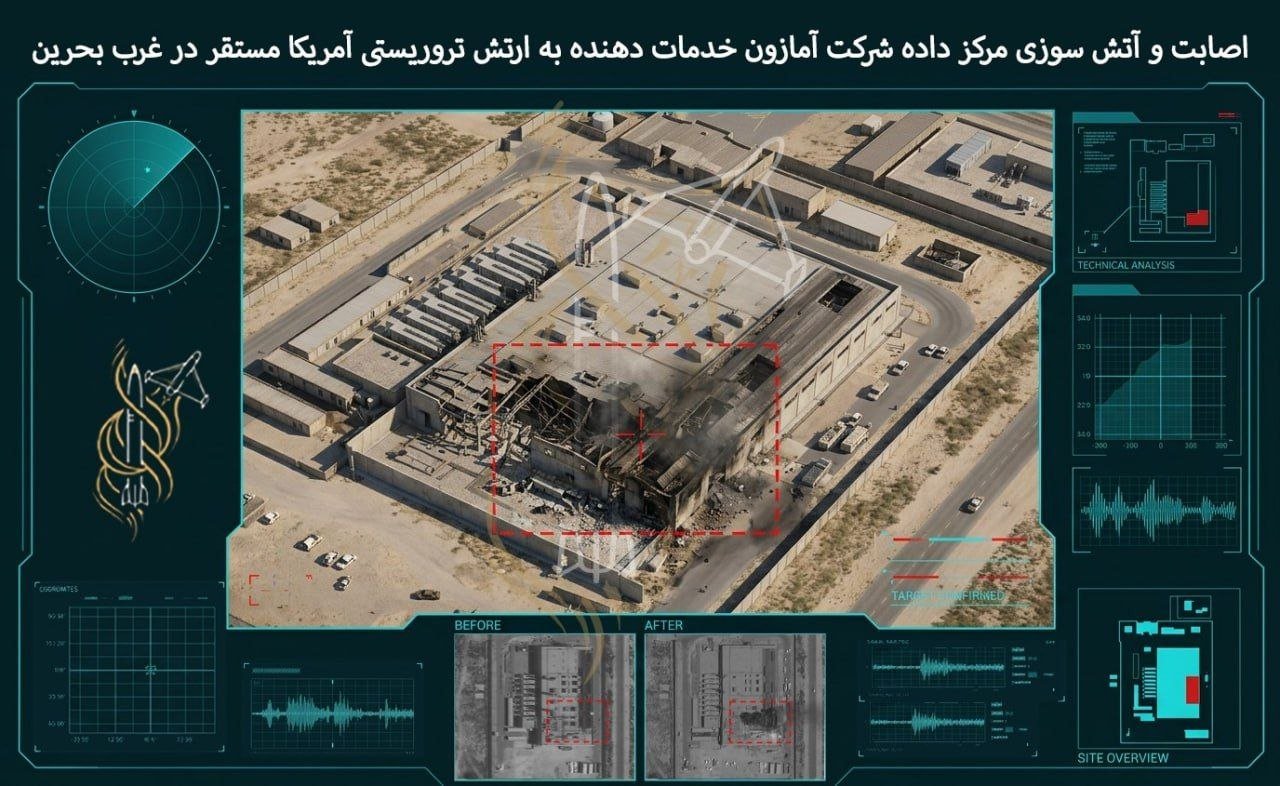
Bahrain International Airport suspended flight operations on 19 July 2026, halting arrivals and departures at the country's main civilian gateway on Muharraq Island, according to Iran's Tasnim News Agency. The agency cited what it described as an escalation of military tensions in the Gulf, without naming the trigger, the parties involved, or a projected resumption time.
Manama's decision lands at a moment when the Gulf's airspace is unusually congested with military movements, humanitarian diversions, and the residual caution of carriers that re-routed through the region during earlier rounds of US-Iran confrontation. Bahrain hosts the US Naval Forces Central Command's Fifth Fleet and the combined maritime headquarters of some thirty coalition navies, which makes any closure a logistical as much as a symbolic event.
The airport authority did not, as of the time of Tasnim's 08:35 UTC report, issue an English-language statement on its official channels naming the cause. Iranian state-linked outlets were the first to circulate the halt, which is unusual given that Bahraini officials have historically preferred to publish operational changes through the airport's own feed rather than via foreign wire.
A Gulf airport with a strategic footprint
Bahrain International is small by regional standards but punches above its weight politically. The facility sits directly adjacent to the main US Fifth Fleet base at Mina Salman, and the runway approach paths cross some of the most sensitive military airspace in the northern Gulf. A ground stop therefore tends to read two ways at once: a precautionary measure for civilian traffic, and a quiet acknowledgement that something in the wider airspace is no longer safe for scheduled service.
The halt also has an immediate commercial effect. Gulf carriers operating the regional shuttle, Bahrain's Gulf Air, and a dense cluster of Iranian and Iraqi operators serving the Mashhad-Kerbala pilgrimage corridor all use Manama as a transit node. Withdrawing it from the schedule, even briefly, forces a rerouting onto Dubai, Doha, Abu Dhabi, or the eastern Saudi hubs, adding hours and cost to flights that depend on tight turnarounds.
The information problem: Iranian sources, first
The reporting trail on 19 July illustrates a recurring difficulty in fast-moving Gulf incidents: the first verifiable word came not from Manama, not from Washington, and not from any Western wire, but from Tasnim and its sister outlet Jahan Tasnim, both of which posted the closure alert within minutes of each other at 08:30-08:35 UTC. Both carry the institutional weight of the Islamic Revolutionary Guard Corps, and both have a track record of breaking regional security stories that turn out to be accurate in their broad strokes, even when the framing skews toward Tehran.
That does not mean the reporting is neutral. Tasnim's editorial line is to position Iran as a respondent to external escalation rather than a protagonist in it. The phrasing in both alerts, "following the escalation of military tensions in the region", is structurally passive, with no actor named. A reader relying solely on these dispatches would know that flights stopped, but not who or what prompted the stoppage.
Western wires have so far not carried an independent confirmation, and the Bahraini airport's own public feeds had not, as of the 08:35 UTC flash, posted an operational notice in English. Until those gaps are filled, the closure sits in an evidentiary grey zone: real, sourced, but under-explained.
What a Gulf flight halt usually signals
History offers a rough template. Bahrain halted operations in 2019 during a brief Iranian seizure of a UK-flagged tanker in the Strait of Hormuz, and again in 2020 after Houthi strikes on Saudi oil infrastructure raised concerns about retaliation spilling into Gulf airspace. In each case, the closure lasted between several hours and a few days, and in each case the underlying trigger became public within twenty-four to forty-eight hours.
The pattern that matters for markets and travellers is not the duration but the signal: a Manama ground stop is rarely only about Manama. The runway is rarely the target. The decision to close reflects a judgment, by the host government, that the overhead environment is no longer predictable enough for a carrier holding a load of paying passengers and a fuel tank.
What remains uncertain
Three questions are unresolved as this article goes out. First, the proximate cause: no source item reviewed here names the triggering incident, the parties involved, or whether the halt was ordered by Bahrain's civil aviation authority, requested by a foreign military customer, or prompted by a direct threat. Second, the duration: Tasnim's report does not carry an end time, and Bahraini channels have not, as of writing, issued a counterpart advisory. Third, the regional ripple: airlines operating Gulf overflights routinely re-route around Bahrain on news like this, and whether the closure widens into a wider no-fly posture depends on whether other Gulf states follow Manama's lead.
For now, the only firm fact on the record is the operational one: a regional hub stopped flying on a Sunday morning, and the first to tell the world about it was the Iranian side of the Gulf.
This publication framed the closure through the available primary sources, Tasnim and Jahan Tasnim, and declined to speculate on the trigger until Bahraini or Western-wire confirmation lands. The Bahraini airport authority's own feed, as of 08:35 UTC on 19 July 2026, had not posted a corresponding English-language advisory.
Wire provenance
This editorial synthesis draws on the following public wire/social posts:
- https://t.me/tasnimnews_en/
- https://t.me/JahanTasnim/
- https://en.wikipedia.org/wiki/Bahrain_International_Airport
- https://en.wikipedia.org/wiki/United_States_Naval_Forces_Central_N Command