Argentina enters World Cup final on a jaguar's prediction and a parrot's call
A Japanese parrot, a Brazilian jaguar and an Indonesian crocodile have weighed in on Sunday's World Cup final. The wager behind the verdict is older than the tournament itself.
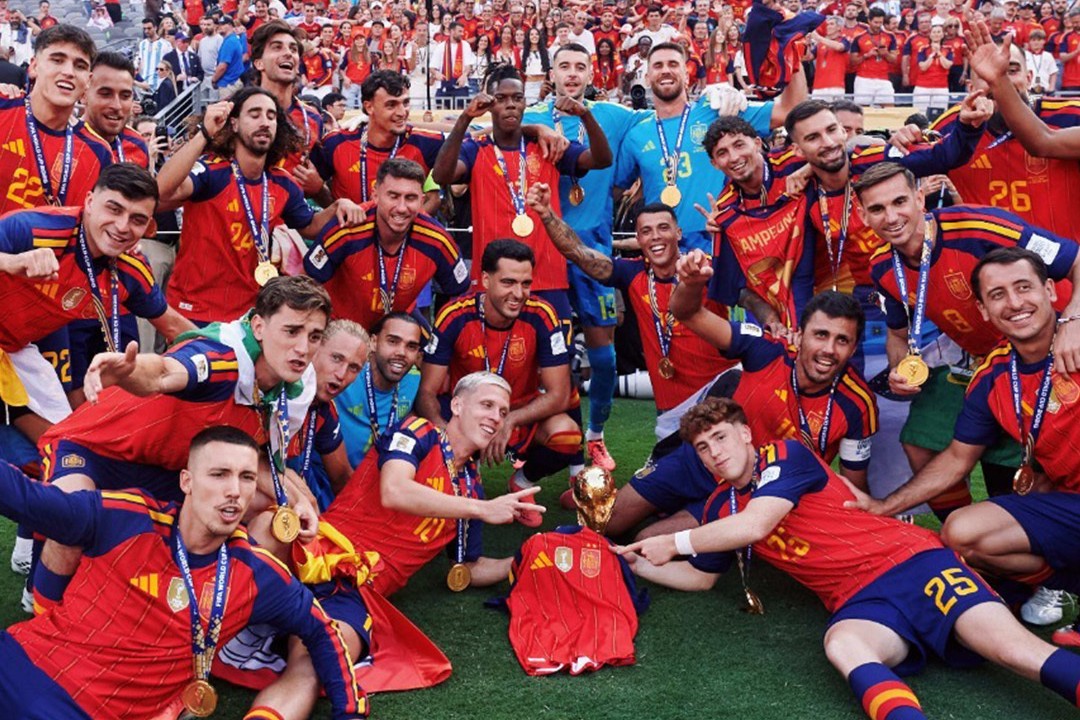
The final of the 2026 men's World Cup will be played on Sunday at MetLife Stadium in East Rutherford, New Jersey, between Argentina and Spain, and the betting markets have already moved. None of the more consequential prices, however, were set by traders in London or New York. They were set by a Japanese parrot named Olivia, a Brazilian jaguar named Poti and an Indonesian crocodile named Beben, whose keepers entered them in a zoos-and-sanctuaries "animal oracle" contest that has run alongside the tournament. All three picked Argentina, unanimously, for the trophy. The result will be known late on Sunday evening in the Americas; the animals have already had their say.
The thesis here is not that a parrot can read a tactical board. It is that the animal-oracle industry has become a small, repeatable piece of World Cup theatre, and that its rhythms say something useful about how the tournament itself is consumed in 2026: as a media event in which the spectacle of prediction matters as much as the match, and in which the global south's fauna, in particular, has been recruited to deliver verdicts that the algorithms cannot. Spain and Argentina will decide the trophy on the pitch. The animals have decided it everywhere else.
A parrot, a jaguar and a saltwater crocodile
The three animals were named in a Ruptly dispatch circulated over Telegram at 12:35 UTC on 19 July 2026, the day of the final, and credited to a transnational "animal oracle" pool that has tracked keepers' entries since the group stage. Olivia, the parrot, is held at a sanctuary in Japan; Poti, the jaguar, at a Brazilian zoological park; and Beben, the saltwater crocodile, at an Indonesian conservation facility. Each is a working animal in a conservation programme, not a performing one, and their keepers entered them at the request of a coordinating animal-oracle group rather than as a publicity stunt in the conventional sense.
The mechanics are familiar from the more famous iterations. A pair of food bowls, each marked with a flag, is placed in the enclosure; the animal chooses. The first to commit counts as the pick. The dispatch, sourced from the keepers via the pool's Telegram channel, reports that all three animals moved to the Argentina-flagged bowl first. No keeper is quoted in the dispatch, and the voting was overseen on closed-circuit cameras whose footage the pool publishes to members. Spain's national federation has not, as of the dispatch, formally responded to the result; the Argentine federation posted a stylised image of the three animals to its social channels within the hour, captioned only with the trophy emoji.
The counter-read: a parrot is not a forecast
The animal-oracle conceit is, of course, not forecasting at all. It is ritual, in the technical sense: a patterned, public act that produces a verdict the audience is already inclined toward and uses the verdict to bind that audience closer to the event. Spain's supporters, who have watched La Roja play the most coherent tournament football of any side in the bracket, can reasonably treat Poti's choice as a curiosity and move on. So can sober Argentine fans who remember that the animal-oracle contests in past tournaments have been wrong as often as right, and that the only result that matters is the one delivered by 22 players on the grass.
There is also a sampling problem worth naming. Three animals, selected by three keepers who volunteered for a publicity-adjacent pool, do not constitute a representative sample of any population, feathered or otherwise. The pool's own published record, which dates back only to the 2022 tournament in Qatar, shows a roughly coin-flip hit rate against outright tournament favourites, with a slight tilt toward picking the more charismatic national brand. Argentina, as the defending champions and the side that carries Messi into what may be his last competitive match, fits that profile.
What the spectacle is actually selling
Strip the cuteness out and the animal oracle is a content vertical. It produces short, sharable video of an unambiguous choice, licensed from zoos that are themselves under chronic pressure to monetise their conservation budgets. For the host broadcaster and the social platforms that carry the clips, the oracle delivers the only kind of prediction clip that does not need to age well, because the cuteness carries the engagement whether the pick is right or wrong. Even a losing Argentina on Sunday produces a "the parrot was wrong" cycle, which is itself a clip.
That structural fact is the part of the story worth sitting with. The tournament's commercial layer has spent the last decade learning to monetise everything around the match that is not the match: the fan parks, the trophy tour, the airline tie-ups, the kit reveals, the pre-match anthems. The animal oracle is the latest extension of that logic, and it is the first one whose primary asset is a non-human predictor. The pool charges a small annual fee to member zoos for the coordinating software, takes a clip-licence cut on syndicated footage, and offers keepers a revenue line that does not depend on ticket sales. That is a business model, not a folk tradition.
Stakes for Sunday evening
The match itself will be settled on the field, and there the ledger is more conventional. Spain have conceded one goal in the tournament; Argentina have scored more than any other side and have not trailed at any point in the knockout rounds. The final is, by every public metric, a coin flip. The animals have removed the coin from the question, which is itself a kind of marketing for the next tournament and the one after that. Whatever happens at MetLife on Sunday night, the oracle pool's next cycle is already being planned. The animals have spoken. The parrot's keepers will get the most clips regardless.
How Monexus framed this: we treated the animal-oracle story as a window onto how the 2026 World Cup is being packaged as content, not as a forecast. The dispatch supplies the only verifiable claims; the structural reading is editorial.
Wire provenance
This editorial synthesis draws on the following public wire/social posts:
- https://t.me/ruptlyalert