Araghchi frames Hormuz closure as a pre-planned escalation lever
Iran's foreign minister says closing the Strait of Hormuz was a contingency activated on day one, framing the move as a designed lever rather than a panic response.
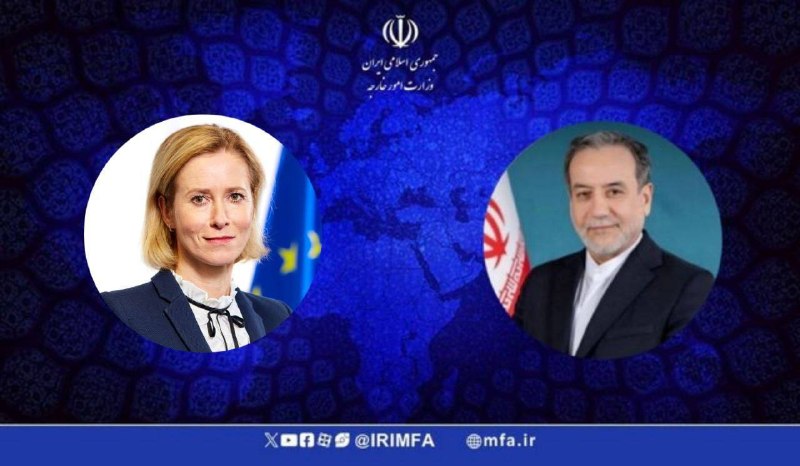
Iran's Foreign Minister Abbas Araghchi told an audience on 19 July 2026 that the closure of the Strait of Hormuz was triggered "from the very first day" of the current crisis, framing the choke-point's shutdown not as a reactive panic but as a contingency Iran had pre-positioned around a single trigger: any strike on Supreme Leader Ayatollah Ali Khamenei. His remarks, circulated by the Open Source Intel and ClashReport channels on Telegram between 12:58 and 13:11 UTC, give the clearest public statement yet of how Tehran intends to narrate the chokepoint's weaponisation.
The argument matters because the Strait of Hormuz carries roughly a fifth of global oil shipments, and its operational status moves insurance markets, freight rates and Gulf state posture within hours. Iran's diplomatic corps is now claiming a logic for the closure, not a spasm. That is the story: a designed lever, with the trigger name attached.
The stated trigger
Araghchi's account is unusually specific for Iranian public messaging. The Strait, he said, was closed because the plan had been written in advance: "if the Supreme Leader were targeted, the Strait would be closed." In the same set of remarks, the foreign minister pointed to an unresolved security breach, telling the audience that "the enemy were aware these meetings were taking place, and that points to the existence of a security breach, a breach that has probably still not been completely" addressed. The excerpts circulated by ClashReport and Open Source Intel between 12:58 and 13:11 UTC on 19 July run as continuous quotes with that structure.
The choice of trigger is telling. Hormuz is not framed as retaliation for a particular strike; it is framed as a deterrent against a particular category of strike, one aimed at the apex of the Iranian state. That is qualitatively different from the tit-for-tat closure language Tehran has used in past tanker disputes, where the lever was attached to sanctions or shipping seizures rather than to the survival of the leadership itself.
The negotiating rationale
Alongside the deterrent framing, Araghchi addressed the diplomatic track. "There were extensive discussions over whether we should resume negotiations," he said, according to the ClashReport excerpt circulating at 12:58 UTC. "In the end, it was decided that we would enter negotiations, primarily to establish", the passage cuts off in the circulating text, but the direction is plain. Tehran is publicly casting the talks as a strategic decision made on its own terms, not as a concession extracted under pressure.
This is the second-order message: while the Strait is closed, diplomacy is open, and the order of operations is chosen in Tehran. The framing holds the lever up and reaches for the pen in the same breath. Whether Western and Gulf negotiators read it that way is a separate question; the broadcast is meant for a domestic audience and for adversaries calculating cost.
The leak problem
The security-breach language is harder to spin. Araghchi named a specific failure mode: that the location and timing of sensitive meetings were known to "the enemy." He did not name the adversary, did not name a service, and did not specify whether the breach was human, signals or cyber. The acknowledgement, paired with the Strait's day-one closure, builds a tidy internal story for Iranian audiences: the regime was attacked at its most sensitive node, and the response was prepared, swift and complete.
For outside analysts the language raises a different question. If Iran believes its senior meeting schedule is compromised and has not closed that gap, then every subsequent negotiation venue becomes a variable in itself. The statement does not provide evidence of the breach, only the claim of one. Reporting by outlets outside the channel network has not, in the material available to Monexus on 19 July, independently corroborated the specifics.
What the lever costs
A pre-planned closure framed around the survival of the Supreme Leader changes the deterrence math. The traditional reading of Hormuz as a tool of last resort assumes closure is costly and rare; Araghchi's account presents it as cheap, scripted and ready. That presentation is itself a signal. It tells adversaries that any operation against the top of the Iranian state will trigger an immediate, globally visible energy shock, and that the closure is not a debate in the National Security Council but a switch.
The flip side is credibility cost. A lever that is described as automatic and pre-scripted invites adversaries to test whether it really is. If the Strait stays closed through the diplomatic track Araghchi describes, Iran claims the wins. If it reopens under pressure before the talks resolve, the pre-planning narrative is exposed as cover for a more contingent decision-making process. The next weeks of negotiation traffic, oil futures and tanker insurance rates will price that test in real time.
The channel excerpts do not specify what Iran is asking for at the table, nor do they name the counterparty governments involved in the current round. That detail, when it surfaces in the wire reporting over the coming days, will determine whether the "primarily to establish" line reads as a guardrail or a pretext.
Monexus framed this on the Iranian foreign minister's own terms, then read the same remarks for what they reveal about Iran's threat architecture. The wire cycle on 19 July is still thin outside the Telegram channels; the structural read here is provisional.
Wire provenance
This editorial synthesis draws on the following public wire/social posts:
- https://t.me/s/osintlive
- https://t.me/s/ClashReport
- https://t.me/s/ClashReport
- https://t.me/s/ClashReport