Aqaba is small. The signal is not.
A US-flagged security alert shut Aqaba airport and port on 19 July. The geography of southern Jordan now sits at the centre of a regional coercion campaign that the cables keep calling vague.
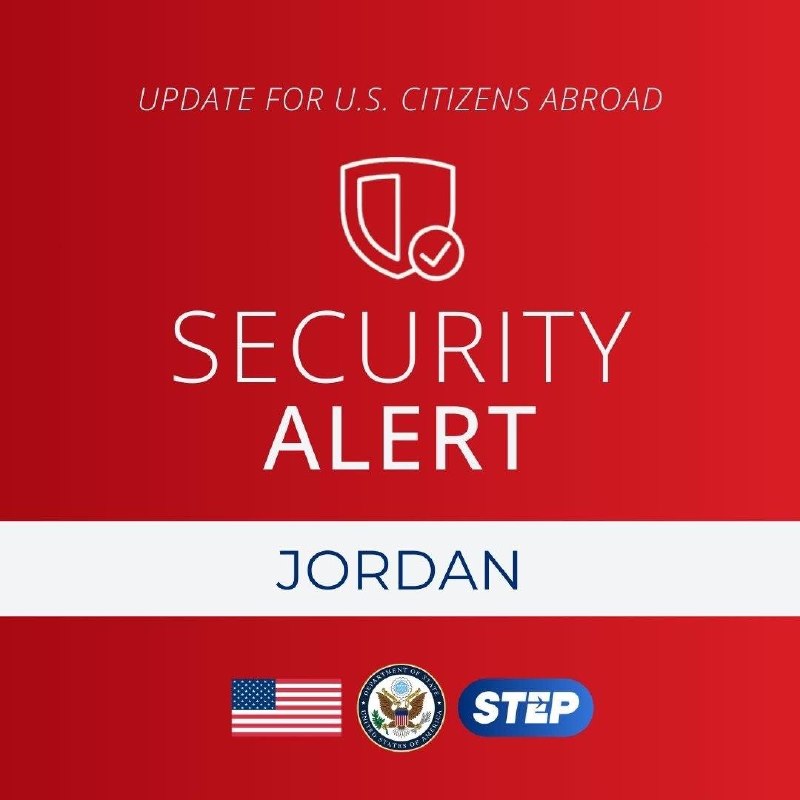
At 09:52 UTC on 19 July 2026, the US Embassy in Amman told American citizens to stay away from two of Jordan's most consequential pieces of infrastructure: Aqaba International Airport, also known as King Hussein International, and the adjacent seaport on the Red Sea. The wording was unusually direct. A "specific and credible" threat had triggered the evacuation by Jordanian authorities, the embassy said, in a security notice carried across Telegram channels including Warfield Witness, Clash Report, Redacted Intel, and OSINT Live within the hour.
The phrasing matters. American diplomatic alerts tend to soften. "Credible" is the language reserved for moments when a post has decided, internally, that the threat is not theoretical. The embassy did not say who was behind the plot, where it stood in its execution cycle, or what specific target was in scope. That reticence is itself the story: the alert is the most legible part of the day; the rest is still being withheld.
A single coast, three chokepoints
Aqaba is the only stretch of Jordanian coastline. The port and the airport sit within a few kilometres of each other, on a narrow strip wedged between Israel to the west and Saudi Arabia to the south. The southern tip of the Gulf of Aqaba opens onto the Red Sea, where the Bab el-Mandeb strait has been the year's most contested seam of maritime traffic.
Evacuating both facilities together is not a routine drill. The airport is the country's southern international gateway; the port handles the bulk of Jordanian trade not routed via the Mediterranean. A day-long closure is a logistical inconvenience. A multi-day closure begins to bite into food and energy imports. The notice did not specify a duration, and Jordanian authorities had not, as of the time of the alert, gone on the record with the same language.
What the framing leaves out
Two reads are plausible. The first is the one the cables are running with: an unspecified terror cell, perhaps Iranian-aligned, possibly tied to militia networks in Iraq or Syria, targeting US personnel and Jordanian transport nodes. The Red Sea shipping environment, the Houthi campaign against commercial vessels, and the broader regional confrontation with Tehran have produced that default interpretation in Western security commentary. It is also, by design, the only interpretation that does not require naming the threat actor.
The second read is structural. A US-flagged alert on Jordanian state infrastructure, issued without a named perpetrator and without an Iraqi or Levantine dateline, is itself a piece of signalling. It tells Tehran, and everyone watching Tehran, that American intelligence has visibility into planning that has not yet been executed. It tells Amman that Washington expects a higher operational tempo. It tells the Jordanian public, through the most public channel available, that the threat picture has shifted.
Neither reading requires the other to be wrong. Both should be on the page.
The corridor question
Jordan has spent two and a half years positioning itself as the indispensable quiet middle. It was the first Arab state to shoot down Iranian drones over its airspace after October 2023. It hosts US Central Command assets. It signs memoranda of understanding with Israel on water-for-energy swaps and quietly lets Israeli cargo transit through its territory. It also keeps a channel to Tehran and Damascus that no other Arab capital of comparable size still maintains.
Aqaba sits at the intersection of that balancing act. Closing the airport and the port for any sustained period forces a choice: route humanitarian and commercial traffic through Israeli ports and grant Haifa or Eilat a de facto monopoly on southern Levant trade, or absorb the cost and wait. There is no third option that preserves sovereignty and throughput simultaneously.
Stakes, in plain terms
If the threat materialises into an attack, Jordanian counter-terror cooperation with the US and Israel deepens overnight, and the quiet channels to Tehran narrow. If the threat fades without incident, the alert still does work: it puts Aqaba on a longer list of western-Asian transport nodes where American personnel are now treated as presumptive targets, alongside Baghdad's Green Zone and Erbil airport.
The less comfortable possibility is that the embassy does not yet know either. "Specific and credible" is a posture, not a verdict. It tells American citizens to leave; it does not tell the reader what the next forty-eight hours will look like.
What the cables are not yet saying matters as much as what they are. Jordan has not named a suspect. No militia channel has claimed a planned operation. No Iranian ministry has been put on notice through back-channel disclosure. Until one of those moves, the alert is the only fact on the table, and a single fact is not yet a story. It is, however, enough of a signal to watch the next press conference in Amman very carefully.
Monexus framed this around the alert itself rather than the speculative threat actor; the sourcing floor is the embassy notice, with the four Telegram relays as wire provenance rather than independent confirmation.
Wire provenance
This editorial synthesis draws on the following public wire/social posts:
- https://t.me/wfwitness
- https://twitter.com/Osint613/status/2078785766268760113/
- https://t.me/rnintel
- https://t.me/ClashReport
- https://t.me/thecradlemedia