A billion pairs of eyes: the logistics of a watched World Cup final
An estimated 1.5 billion viewers are expected for Sunday's World Cup final. The story is not just on the pitch; it is in the satellite uplinks, the players' next club moves, and a turf war between natural grass and artificial surfaces.
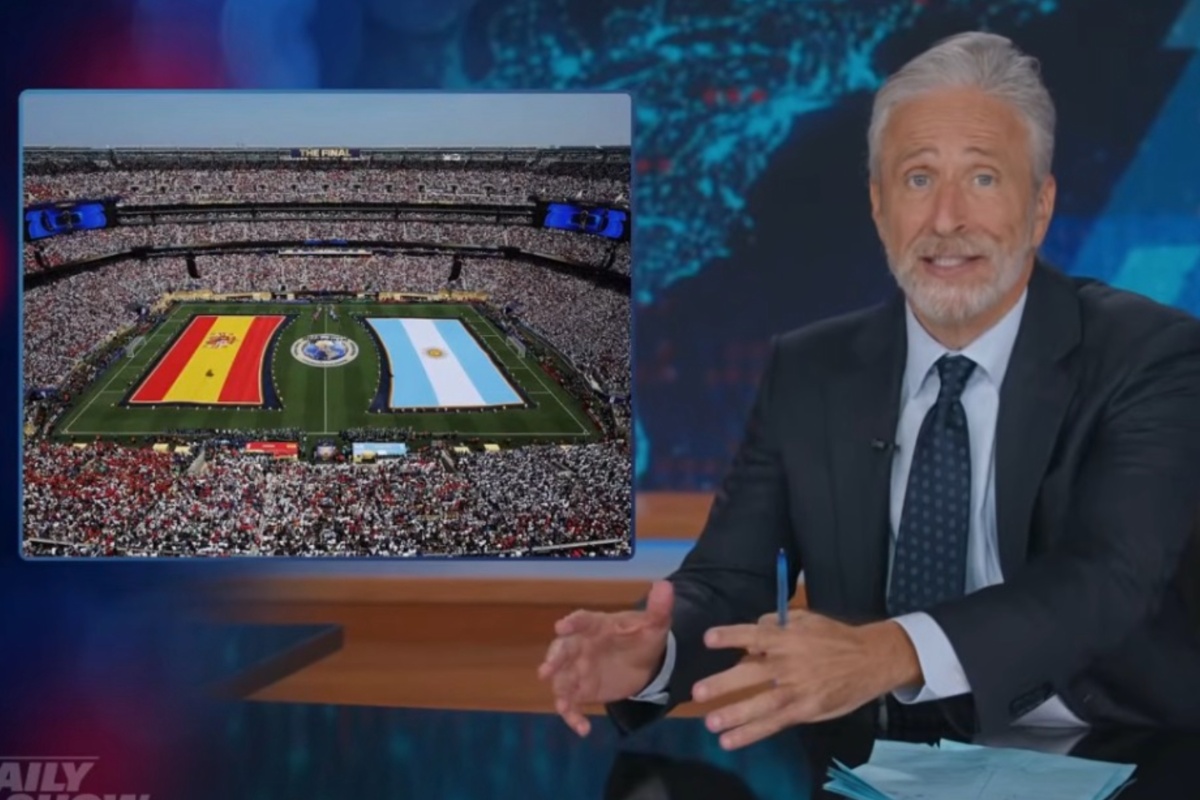
Roughly 1.5 billion people are expected to watch Sunday's World Cup final, according to ESPN's reporting on the most-remote watch parties being assembled for the match. That is not a metaphor. It is a logistics problem measured in satellite bandwidth, generator fuel, and the patience of national federations trying to beam a single kickoff into places the signal rarely reaches.
The sporting event that dominates one afternoon every four years has, by 2026, become a planetary broadcast operation. The interesting story sits at the margins: where the picture arrives, what it costs to land there, and what the tournament quietly rearranges in the weeks before and after the final whistle.
The last-mile broadcast
ESPN's dispatch on the world's most remote viewing parties treats the final less as a sporting contest than as a signal-routing exercise. Engineers, federations, and local sponsors are converging on outposts chosen less for their fan density than for their symbolic value: a researcher at a polar base, a mining crew, an offshore platform. The throughline is that FIFA's flagship product now competes with streaming-first sports properties on the one hand, and with national-broadcasters' rights packages on the other, by selling reach.
That reach carries a price tag the federations have so far absorbed. The sources do not break out per-viewer delivery cost; the picture being drawn is one of capital expenditure amortised across four-year cycles, with the World Cup brand underwriting infrastructure that lingers after the trophy is lifted.
The NFL's grass problem
The American counterweight to this story is a turf dispute that has spilled out of the World Cup and into NFL locker rooms. BBC Sport reports that NFL players have launched a social media campaign backing the players union's call for more permanent grass fields, citing the World Cup as evidence that elite football can be staged on natural surfaces at scale.
The argument is older than this tournament, but the timing matters. League owners have spent the better part of a decade installing synthetic fields to cut maintenance costs and host non-football events on the same surface; the union's counter is that injury data and the world's most-watched tournament point the other way. The sources do not specify which franchises are targeted or which matches have driven the latest complaints. The framing, however, is unmistakable: when the global game showcases a surface, the domestic league down the road gets asked why it does not.
Rings, medals, and the transfer market that opens the morning after
Two smaller threads bind the final to what follows it. ESPN reports that the winners will receive championship rings alongside the trophy and gold medals, a concession to an American sports tradition that has migrated into FIFA's presentation. The symbolism is competitive: rings are wearable, personal, photogenic. They also anchor a souvenir economy that will outlast the broadcast.
Meanwhile, BBC Sport's transfer-watch notes that scouts and sporting directors have already pivoted from tournament mode to summer-window mode, with several World Cup stars expected to move clubs before the 2026-27 season starts. The sources name no specific player; the structural point is that a strong World Cup changes a spreadsheet at a buyer's desk in Madrid, Manchester, or Munich within days of the final.
Markets, weather, and the small print
Polymarket, the prediction venue, lists a 5 percent chance of a weather delay to the final as of 17 July 2026, a thin line of risk that nonetheless reminds organisers that no broadcast plan survives the atmosphere. A storm cell over the host city would not cancel the match; it would test the same uplinks now pointed at polar camps and mining sites, in reverse.
Taken together, the threads describe a sport whose centre of gravity has moved from the stadium to the satellite, the spreadsheet, and the social-media feed. The trophy still goes to the players; the revenue lands elsewhere.
How Monexus framed this: the wire coverage treated the final as a sports story plus ancillary business notes. We pulled the four threads (broadcast reach, surface politics, memorabilia, transfer market) into a single structural read on how the tournament has been operationalised well beyond the pitch.