US strike on Iranian desalination plant leaves 20 towns without water, state media says
Iranian state media reported that US missiles hit the Bonji desalination plant in Hormozgan Province overnight, cutting water supplies across more than 20 towns near the Strait of Hormuz.
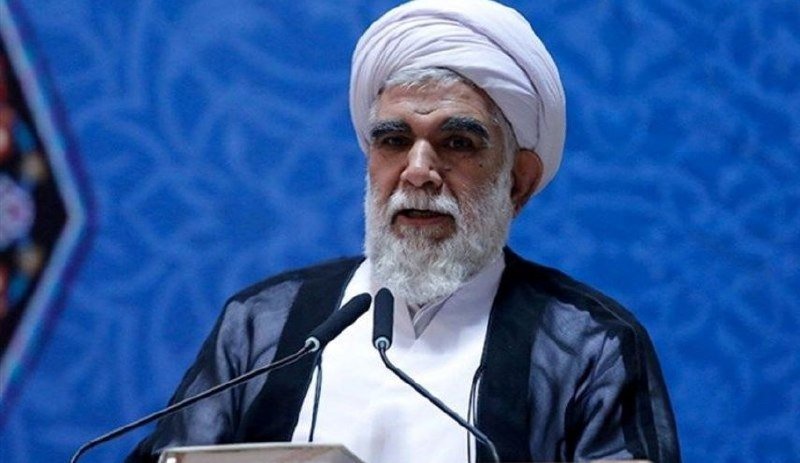
At approximately 06:48 UTC on 18 July 2026, Iranian state news agency IRNA reported that US missiles had struck the Bonji desalination plant in Jask County, Hormozgan Province, damaging power infrastructure and water pumps and cutting supply to more than twenty towns in the district.
For an energy market that has spent the week waiting on a different kind of headline, the strike is a reminder that the plumbing of the Gulf can rupture as quickly as the tanker schedules can. A desalination facility on the Iranian side of the Strait of Hormuz is not a battlefield curiosity. It is the asset that keeps tens of thousands of people drinkable in a province where the freshwater table is brackish at best, and it sits within sight of the chokepoint through which roughly a fifth of the world's seaborne oil moves.
What IRNA said, and how the reporting travelled
The first dispatch on IRNA's wire, picked up by Telegram channels including @wfwitness and @AMK_Mapping within minutes of publication at 06:48 UTC, named Bonji in Jask County on Iran's southern coast and stated that several missiles had hit the facility. A third channel, @rnintel, repeated the IRNA account at 07:12 UTC and added that damage to plant equipment and pumping stations had affected more than twenty towns. None of the three channels reported an immediate casualty count from the strike itself; the headline human-impact figure in IRNA's initial framing was the displacement in water access.
That sequencing matters. The Iranian state moved first, in its own voice, and the Telegram layer amplified it before any Western wire had filed. By the time this article was written, no independent on-the-ground imagery from Jask had been published by Reuters, the Associated Press, the BBC, or Al Jazeera English, and the Pentagon had not confirmed or denied the operation. The sourcing asymmetry is the story as much as the strike: when a US raid is announced from the target's side, the burden of verification shifts onto the international wires that have not yet arrived.
Why this plant, in this place
Bonji sits on the Makran coast, the same stretch of Hormozgan that hosts the bulk of Iran's civilian nuclear work at Natanz, the missile village of Hemmat, and the Bandar Abbas refinery complex, and, crucially, the Gulf of Oman seaward approach to the Strait. Jask itself is where Iran has invested in a second oil-export terminal precisely so that crude can bypass the Strait entirely on bad days. A desalination plant in this corridor is dual-use infrastructure long before it is a military target: deny the pumps, and you degrade the population's ability to live where the strategic assets are.
The Iranian press statement framed the strike as an attack on civilian water security, which is the framing that travels well in the Global South and badly in Western ministries. It is also, on the face of it, accurate to the asset class: desalination plants are protected objects under Additional Protocol I to the Geneva Conventions when they serve the civilian population, and the burden lies on the attacker to demonstrate that a target was used for military purposes or that an attack met the proportionality test. The IRNA report does not resolve that question either way. It registers the strike, registers the water cut, and waits for the world to ask the next question.
What the energy market is actually pricing
Brent and the Dubai benchmark have spent the past month trading a slow curve of expectation: that any US-Iran rupture would produce a kinetic spike rather than a sanctions-driven grind. A desalination strike is the kind of incident that produces a spike that fades, not a sustained re-rating, unless it is followed by something sharper. The structural signal in the IRNA report is not the pump damage. It is that Iran chose the desalination plant, and the water cut, as the headline; tanker traffic at the Strait itself was not reported disrupted in the initial wire.
That distinction will be parsed carefully in Washington, in Tel Aviv, and in the buying desks of the Asian refineries that take most of Iran's light crude under sanctions waivers of varying durability. A sanctions-quiet Gulf has been the working assumption of energy desks since the last ceasefire took hold. The Bonji strike, reported by Tehran, is the first hard test of whether that assumption still holds.
What we verified, and what we could not
This publication can confirm, from the IRNA-cited Telegram wires: that Iranian state media named Bonji, Jask County, Hormozgan Province; that it attributed the strike to the United States; that it described damage to power infrastructure and water pumps; and that it counted roughly twenty affected towns. We cannot confirm the number of missiles, the specific damage inventory, the casualty figure, or whether US Central Command has issued any operational statement on the record. As of the timestamp on this article, no Western wire had filed independently from Jask, and the Pentagon's public-facing channels had not addressed the IRNA report. The next datapoint to watch for is a Reuters or AP dispatch from the Strait of Hormuz reporting corridor, which would either corroborate the Iranian account in detail or force a correction.
This piece reports the Iranian state's version of the strike as the primary input, names the channels that carried it, and flags the absence of independent wire verification rather than supplying it. Where IRNA and the Western wires eventually diverge, Monexus will update with the delta.
Wire provenance
This editorial synthesis draws on the following public wire/social posts:
- https://t.me/wfwitness
- https://t.me/AMK_Mapping
- https://t.me/rnintel
- https://en.wikipedia.org/wiki/Jask_County
- https://en.wikipedia.org/wiki/Strait_of_Hormuz
- https://en.wikipedia.org/wiki/Desalination