Seventh night of US strikes on Iran, and a warning shot at the British economy
The US wrapped a seventh consecutive night of strikes on Iranian logistics sites on 18 July 2026, hours before a viral clip laid out a stark warning about Britain's economic trajectory.
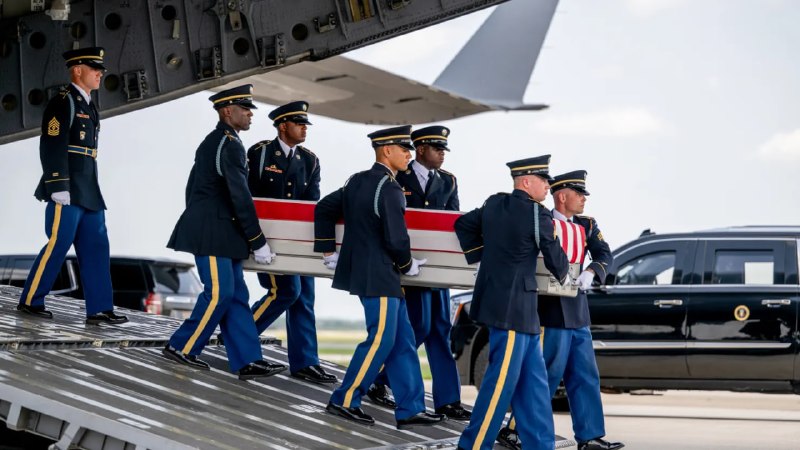
The United States wrapped a seventh consecutive night of strikes against Iran on 18 July 2026, with Reuters reporting that the targeting list had shifted decisively toward military logistics infrastructure rather than the command-and-control nodes that dominated the early phase of the campaign. The night-by-night cadence has produced a familiar rhythm: a wire tick before dawn, a Pentagon read-out by mid-morning, and a measured Iranian-state response that has so far stopped short of a direct strike on US assets in the Gulf.
Two threads crossed in the news flow on Friday. The first was kinetic: the seventh night of bombing. The second was a clip circulating on X in which the commentator Bowes lays out a deliberately inflammatory claim that, in roughly ten years, the United Kingdom will rank alongside the economies the West has long called the third world. The two stories are unrelated in subject, but they share a structural feature: each is an instance of an outside power, or an outside narrative, imposing a frame that the country in question has not yet built a vocabulary to answer.
The targets have moved
Early reporting in the campaign had emphasised nuclear and ballistic-missile facilities. Reuters's 18 July ticker named "military logistics infrastructure and other sites" as the target set for the seventh night, which is a different brief. Logistics nodes are the connective tissue: fuel depots, ammunition forwarding points, road and rail marshalling yards, communications relays that keep Iranian missile units supplied and moving. Striking them degrades the ability to fire rather than the ability to threaten, and the choice is itself a signal about US intent. A strikes package aimed at logistics is implicitly framed as a campaign to attrit an active warfighting machine, not a one-shot disarming raid.
Two caveats sharpen that reading. First, the wire did not list individual sites; reporting on Iranian targeting is partial at the best of times, and Tehran has every incentive to understate damage to logistics nodes that, unlike nuclear sites, are not subject to IAEA inspection. Second, the cadence itself is unusual. Seven consecutive nights is a sustained tempo, not a punctuation. It implies either that the initial target deck was larger than the early readouts suggested, or that planners are consciously rolling new targets as fast as the previous set is assessed.
The Iranian counterframe
Iran's state-aligned media space has not announced a reciprocal strike against US forces in the Gulf, in Iraq, or in the wider CENTCOM area. That silence is itself a fact, and it has been read two ways in the commentariat. Hawks take it as evidence that air defence and command-and-control attrition has degraded Tehran's capacity to launch. Doves take it as evidence that Iran is choosing to absorb, to preserve a stockpile it may need for a later window, and to let the political calendar in Washington do the work its missiles cannot.
Both readings are coherent. The honest answer is that we do not yet know which is correct, and the wire reporting available on 18 July does not let us adjudicate between them. What we can say with confidence is that the Iranian regime has produced no public indicator that the political ceiling on retaliation has been raised. That, too, is a signal, and a familiar one: regimes under sustained bombardment often keep their most dangerous cards back rather than playing them in the first week.
The UK clip and the vocabulary problem
If the Iran story is about ordnance, the Bowes clip is about vocabulary. The quote, in its plain form, runs: "In 10 years the UK will be the third world. Ten years? Has he actually walked around British cities lately." It is the second sentence that does the work. It refuses the apocalyptic framing of the first. It implies, instead, that the trajectory the apocalyptic frame names is already visible and does not need a ten-year horizon to be observed. That rhetorical move matters because it situates the argument inside the country it is about, rather than outside it. The viewer is not being invited to imagine a future collapse but to notice what is already there.
The clip is a single social-media post, not an economic paper. It carries no numbers, no methodology, no forecast interval. The value of treating it in this publication is not its predictive content, which cannot be evaluated, but its function as an indicator of the narrative space British economic commentary now inhabits. A decade ago, a phrase like "the UK will be the third world" lived only on the more fevered margins of social media. Its arrival in a clip formatted like serious political analysis, with a presenter of Bowes's audience weight, is a marker of how far the centre of gravity has migrated.
The thing a Monexus reader should take from this is structural rather than predictive. Mainstream Western economic coverage routinely defers to the language of official spokespeople: the Treasury, the Office for Budget Responsibility, the Bank of England, the credit-rating agencies. When mainstream voices are out of step with what readers can see on the high street, the informational gap is filled by voices the mainstream did not previously credential. That gap is not the crisis itself. It is the symptom.
Stakes, calendar, and what to watch
The next forty-eight hours will tell the Iran story. If the strikes tempo holds and the targeting list continues to drift toward logistics, the plausible Trump-administration framing is that the campaign is now in its attrition phase, not its shock phase. The plausible Iranian counterframe is that the regime is willing to absorb attrition to preserve a counterstrike capacity, and that the political cost of the operation in Washington will do the work over a longer calendar. Either reading is defensible on the present evidence, and that, by itself, is the most important data point: by the eighth night of bombing, the senior Western wire is reporting a target list whose meaning is genuinely contested.
For the UK economic framing, the calendar is longer but the test is the same. If the next twelve months deliver the kind of growth and public-services figures that the OBR and HM Treasury can stand behind without qualification, the gap between official language and high-street observation narrows, and a clip like Bowes's loses its airtime. If the figures do not close that gap, the clip is the leading edge of a vocabulary migration, not the laggard, and the work for British economic journalism is to find a register that is both honest about what voters can see and disciplined enough to be worth reading.
Wire provenance
This editorial synthesis draws on the following public wire/social posts:
- https://en.wikipedia.org/wiki/United_States_Central_Command