Strait of Hormuz Becomes the New Front Line in a US-Iran War That Has Already Spilled Into Cables
With US strikes on Iran continuing into mid-July, Tehran is signalling escalation through undersea cable threats in the Persian Gulf, exposing the digital spine of regional commerce.
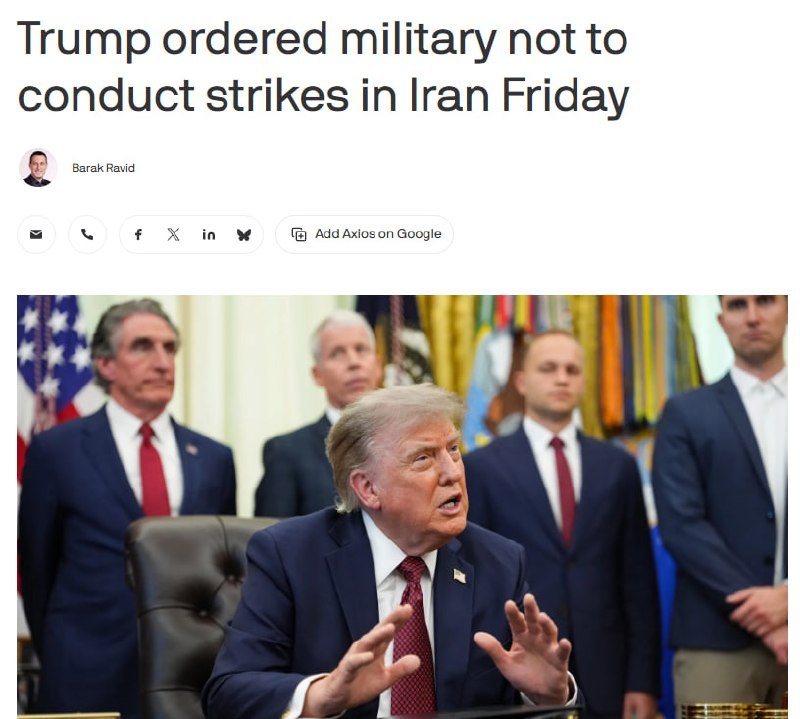
US warplanes continued striking targets in Iran through 18 July 2026, according to a brief circulated on the Unusual Whales wire at 01:31 UTC, marking an unbroken stretch of aerial operations in what is now, by any plain definition of the word, an open war between Washington and Tehran.
That framing is no longer contested inside the Gulf itself. What is contested is the next escalation. On 17 July at 10:57 UTC, Iran's Foreign Ministry called on its Persian Gulf neighbours to "prevent any use of their land, sea, and airspace by aggressors to attack Iran," a statement that amounts to a public warning to Saudi Arabia, the UAE, Oman, Qatar, Bahrain, and Kuwait: host no US basing that supports the strikes, or be treated as a co-belligerent. The phrasing is diplomatic. The intent is operational.
The headline theatre is Hormuz. The quieter theatre is what runs beneath it.
What is actually threatened in Hormuz
Roughly a fifth of the world's traded crude moves through the Strait of Hormuz. That figure has been repeated so often it has lost its force, which is exactly why it matters to repeat it again: a sustained disruption would not be a regional event. It would be a global oil shock priced in Singapore, traded in London, and felt at petrol pumps in New Jersey within seventy-two hours.
The US-Iran confrontation has now produced, per the Unusual Whales dispatch, an explicit Trump-Iran exchange over the strait, framed by Washington as a question of access and by Tehran as a question of sovereignty. The shipping calculus being priced in the Lloyd's-listed insurers is bilateral: how many tankers will transit in August, how many will pay the wartime surcharge, and which terminal operators will quietly re-route shipments to Saudi East-West Pipeline or UAE's bypassing infrastructure. The market is not waiting for a final outcome. It is pricing the tail.
The cabling underneath
Less visible, and potentially more consequential in the medium term, is what Iran has hinted at in the Persian Gulf's other infrastructure layer: undersea data cables. A Nikkei Asia note circulated at 16:31 UTC on 17 July reported that "in its conflict with the U.S., Iran has hinted at threats to undersea data cables in the Persian Gulf, underscoring the risks" faced by the regional digital backbone.
The Gulf hosts a dense concentration of subsea fibre running between Jask, Fujairah, Jeddah, and the chokepoints south of the strait. A coordinated cut, or even a credible threat of one, would not produce a war in the classic sense. It would produce a quiet blackout of latency-sensitive services between Europe and South Asia for the duration of any repair operation, with knock-on effects on regional banking, oil-tanker telemetry, and the daily routing of containerised freight. Cable ships are scarce; repairs take weeks; redundancy is partial. The threat is asymmetric in a way that a tank-versus-tank calculus cannot capture.
This is the displacement story of the conflict so far. Military planners are still thinking in terms of air defence and missile batteries. Tehran is signalling that the digital substrate is also fair game.
Tehran's diplomatic move, read plainly
The 17 July Foreign Ministry statement is the more legible play of the two. Iran is asking its neighbours to deny the United States access to staging areas. That request has historical precedent: prior Gulf wars were won or lost in no small part on questions of basing rights, airspace coordination, and overflight clearances. A neutralised Gulf is a Gulf in which any sustained US campaign is materially more expensive, logistically slower, and politically harder to sustain.
The counter-frame, which US officials have signalled through their own press channels, is that no regional capital is likely to openly side with Iran against sustained American aerial operations. The Gulf states have spent two decades inside an American security architecture. None of them want to be seen, at the United Nations General Assembly in September, as the government that broke it. The bet in Washington is that the statement is a posture. The bet in Tehran is that under enough pressure, posture becomes policy.
Both bets are live. Neither has resolved.
What the next thirty days will tell
Three markers are worth watching. First, the volume and routing of tanker traffic through Hormuz: any sustained week-on-week drop below the seasonal average would be the first hard data point that the war has crossed from strikes-on-target to strikes-on-economy. Second, the operational status of Persian Gulf cable routes, particularly FLAG and GBIs through the southern corridor, where a fault would show up first as degradation between Mumbai and Marseille. Third, the diplomatic response from Riyadh and Abu Dhabi to Iran's 17 July appeal, which will land as either a studied silence or a public reaffirmation of non-alignment, and either reading carries weight.
The 18 July reporting cycle suggests no de-escalation is imminent. US strikes continue. Tehran signals escalation. The cables sit twelve nautical miles off Fujairah, unguarded, unmapped for the public, and quietly indispensable. The war on top of the water is being watched by every wire service. The war underneath it has barely begun to register.
Desk note: this article draws primarily from the Unusual Whales wire and a Telegram-circulated Nikkei Asia dispatch; both are research inputs, not primary record. The cited Unusual Whales pieces confirm continued US strikes and the Trump-Iran Hormuz exchange; the Nikkei piece confirms Tehran's signalling on subsea cables. Where this publication extends the reporting, it does so by reading the cables-and-base-access layer back into the visible Hormuz story, not by inventing figures.
Wire provenance
This editorial synthesis draws on the following public wire/social posts:
- https://t.me/nikkeiasia