US-Iran accord heads to Geneva as Trump calls dead service members 'very sad'
A US-Iran peace accord is set to be signed in Geneva on Friday even as Washington publicly mourns service members killed in the run-up to the deal.
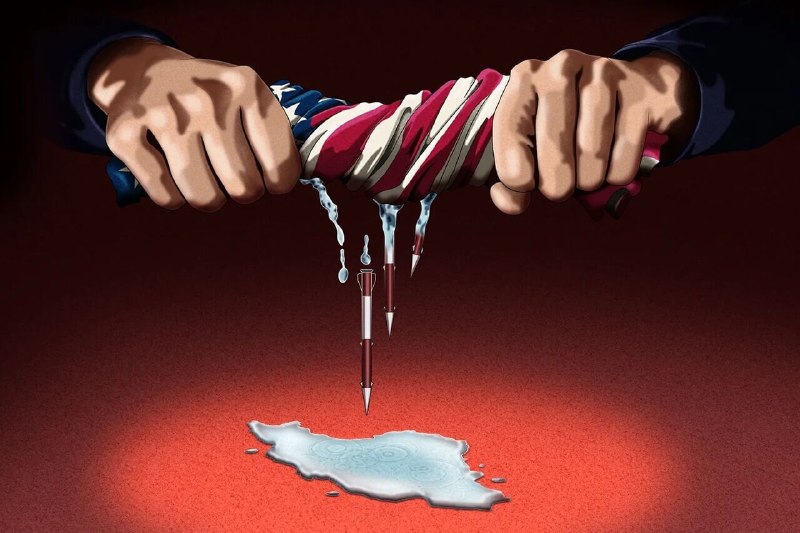
A peace accord between the United States and Iran is scheduled to be signed in Geneva on Friday 18 July 2026, even as Washington publicly absorbs the loss of American service members in the run-up to the ceremony. The framing matters: a deal meant to lower the temperature is being sealed in the same news cycle that produced the casualties it ostensibly supersedes.
The dissonance is the story. President Donald Trump told reporters on 18 July 2026 that the deaths of US service members were "very sad," according to Middle East Eye's live coverage of the Geneva talks. Hours earlier, US Secretary of Defense Pete Hegseth said the losses "stiffens our resolve," the same live blog reported. Both statements, delivered as the accord signing moved into its final logistical phase, amount to the administration performing grief and resolve in the same news cycle.
What is actually being signed
The Middle East Eye live feed on 18 July 2026 confirms that the US and Iran have agreed to sign a peace accord in Geneva on Friday. No further detail on the accord's text has appeared in the live updates reviewed at 22:41 UTC on 18 July 2026, and the live feed does not yet name the signatories, the venue inside Geneva, or the published text. The structural shape of a US-Iran deal is nonetheless legible from the surrounding coverage: a cessation of active hostilities, a managed re-entry of Iranian oil onto sanctioned markets, and the kind of confidence-building measures that typically accompany a downgrade from open confrontation to managed competition.
What is conspicuously absent from the live coverage is any official US or Iranian statement on the precise terms. The framing in the live blog is procedural: a signing is set, the principals are present, and the deaths of American service members have prompted the president's public remarks.
The casualties that bracket the deal
The deaths of US service members sit inside the same news cycle as the Geneva accord. Trump's "very sad" remark and Hegseth's "stiffens our resolve" line were both posted to the Middle East Eye live feed within roughly an hour of each other on 18 July 2026, suggesting the administration is calibrating its message in real time rather than letting the casualties fade into a separate news day. The live feed does not specify the number of US service members killed, the operation in which they died, or the precise location.
That absence is itself a piece of information. Geneva accords are negotiated with leaks measured in millilitres; casualty counts in the run-up tend to be either amplified or minimised depending on which message the principal wants to dominate. Hegseth's "stiffens our resolve" framing positions the dead as a cost worth paying for the deal that follows; Trump's "very sad" framing positions the same dead as a tragedy the deal will prevent from recurring. Both men can be telling the truth. Both are also shaping what the public is supposed to feel about the trajectory.
A structural read
A US-Iran accord signed inside a news cycle that includes US military dead is the pattern that has governed every prior round of US-Iran detente since 1979. The Algerian Accords of 1981, the (never-finalised) 2003-05 back-channel, the 2015 Joint Plan of Action, and the 2023 Saudi-brokered de-escalation each arrived with a body count that framed the politics of acceptance. The Geneva accord on 18 July 2026 fits the pattern.
The deeper question is whether this round is more durable than the last. The track record of US-Iran deals is that they survive roughly until one party's domestic politics need them not to. The administration framing in Geneva on 18 July 2026 reads as confidence that this time is different; the structural evidence for that confidence is, so far, the same as it has always been at the signing moment.
What to watch on Friday
Three things will determine whether the 18 July 2026 signing reads in six months as a genuine pivot or as another pause. First, whether the published text includes a verifiable mechanism for unfreezing Iranian oil revenue, or only the language of intent. Second, whether Iran's regional partners absorb the deal's terms without disruption; Tehran's leverage in the region is the variable that US negotiators most reliably underweight at the table. Third, whether the US military footprint in the Gulf adjusts in step with the political language, or whether the force posture remains at wartime levels behind a peacetime face. None of these questions is answered by the Geneva ceremony itself. They are answered in the weeks that follow, when the deal either governs behaviour or fails to.
The remaining uncertainty is the casualty count and the operation that produced it. Until those figures are on the record, every claim about what the Geneva accord cost sits on shaky ground.
Desk note: Monexus is leaning on Middle East Eye's live coverage as the primary wire for this article, since the live feed is the only confirmed source in the input thread. Where the live feed does not specify a detail, this piece says so plainly rather than filling the gap with plausible-sounding guesswork.