Ukraine's refinery strikes reach Moscow province, and African fuel importers are watching
Ghana, Senegal and Morocco are exposed to a new phase of Ukraine's campaign against Russian oil infrastructure, with diesel supplies and wheat shipments already under strain.
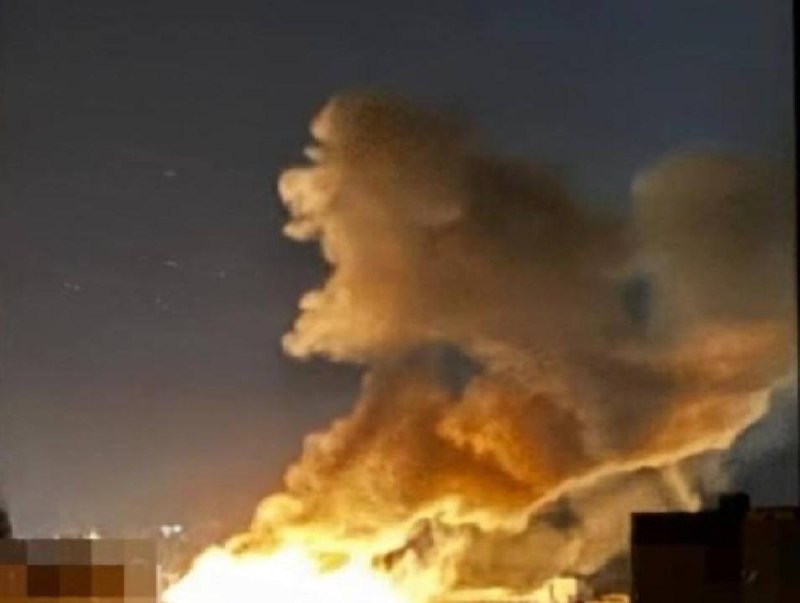
A fire broke out at an oil depot in Moscow province overnight on 18 July 2026 after what Iranian state-linked outlet Fars News described, citing Ukrainian media, as another wave of Ukrainian drone strikes on Russian energy infrastructure. The strike, reported by Fars in a Telegram post at 07:06 UTC and again at 08:11 UTC, is the latest in a campaign that Kyiv has steadily widened from Black Sea ports to refinery heartland, and now to facilities within reach of the capital region itself. The tactical target is Russian. The financial blast radius, increasingly, is not.
Three African fuel and grain importers sit in that blast radius. According to a 16 July 2026 analysis by The Africa Report's African PO desk, Ghana, Senegal and Morocco are exposed to higher diesel and wheat costs as Ukraine's expanding drone campaign disrupts Russian refinery throughput alongside Black Sea grain export routes. The mechanism is unglamorous: less Russian diesel on the market tightens Mediterranean and West African refined-product balances, while attacks on port and rail infrastructure along the grain corridor lift the wheat basis that African millers and bakers pay. Africa's exposure to a war it is not fighting is, once again, repricing in real time.
The campaign has moved up the value chain
Ukraine's early strike architecture focused on export terminals: tankers, transshipment points, the logistics of moving Russian crude and refined product out. The pivot, visible in reporting through the first half of 2026, has been upstream. Refineries in regions far from the front line, including facilities in Moscow province, have come under sustained drone attack, reducing the volume of diesel and gasoline that reaches domestic Russian markets and, by extension, export flows to buyers across the Mediterranean and West Africa. The Africa Report's framing is blunt: by targeting Russia's refineries alongside its ports and grain export routes, Kyiv is reshaping the cost of energy and food for economies thousands of kilometres from the battlefield.
Ghana and Senegal sit in the West African fuel-import complex, where diesel for transport, power generation and industry is priced off regional Platts benchmarks that incorporate Mediterranean and Northwest European cargoes, both of which compete with Russian product. Morocco, with Atlantic and Mediterranean coastlines, sits in the same pricing pool and is also a meaningful wheat importer whose 2026 sourcing pattern runs through Black Sea origins. A tighter Russian balance sheet, or a risk premium layered on top of it, transmits directly into landed cost.
The Moscow province strike and what it changes
The overnight depot fire reported by Fars News, sourced from Ukrainian media claims, does not by itself move a diesel barge bound for Tema or Dakar. What it confirms is reach. Until 2025, Ukrainian drone strikes on Russian energy infrastructure concentrated on facilities within a few hundred kilometres of the border, in Belgorod, Bryansk, Kursk and Rostov oblasts, and on refineries in the Volga region. A successful strike on infrastructure in Moscow province, claimed by Kyiv-aligned outlets and acknowledged by Russian reporting, signals that the operational ceiling has moved. Refineries in Tatarstan, Samara and the Krasnodar region are no longer the only tier-one targets; assets traditionally considered out of range are now in the target set.
The structural effect is not a single price spike. It is a slow upward shift in the floor under Russian domestic diesel and gasoline prices, with periodic reflexive jumps when a major refinery is taken offline. Russian export availability, already constrained by domestic price controls and the redirection of product to the front, narrows further. African buyers, who pay a premium to outbid European and Asian purchasers when Russian product is available, see that premium widen.
What Ankara, Algiers and the Gulf traders will do
The interesting question is not whether African importers will pay more. They will. It is who absorbs the marginal barrel. Turkish refiners, Algerian state oil company Sonatrach, and Gulf-based traders have all built 2026 business models around stepping into supply gaps left by Russian dislocations. Each of them has a different cost stack and a different relationship with African buyers. Turkish refineries, in particular, have positioned themselves as the swing supplier into the East African and Mediterranean markets that used to take Russian diesel directly. That re-routing insulates some buyers and exposes others. Ghana, with limited domestic refining and a fuel import bill that has been a chronic pressure point on the cedi, is among the more exposed. Morocco's refining base is more developed, but its pricing still tracks the Mediterranean complex.
There is also a wheat leg to the story. The Africa Report flags Black Sea grain export routes as a parallel target. Disruption there lifts the cost of wheat imports for several African states, including Morocco, where bread prices have been a politically sensitive barometer for years. Combined with higher diesel, the squeeze is on two household budget lines at once, transport and food, in countries where both are already politically charged.
The frame: African economies, non-African wars
The pattern is familiar from 2022 and 2023, when the initial sanctions architecture and the Black Sea Grain Initiative debate exposed African food and fuel importers to price moves generated by a European war. The 2026 version is different in one important respect: the supply disruption is being driven less by sanctions and more by physical destruction of Russian infrastructure. The price formation is the same. The political optics are sharper, because the disruption is now visibly kinetic, and because the targets are being chosen by Kyiv in pursuit of its own war aims rather than imposed by Western governments.
A plausible counter-read is that Russia will absorb the refinery losses through wartime mobilisation of its domestic refining sector, and that export volumes will recover within months as damaged units are repaired or bypassed. The Africa Report does not dispute the resilience of Russian refining; it notes that African exposure is the more immediate variable. What remains uncertain, and what the public sources do not resolve, is the cumulative scale of Ukrainian strikes on Russian refining capacity through the first half of 2026, and how much of that capacity is currently offline. Independent Russian-language reporting on refinery throughput has been patchy. Western think-tank assessments exist but were not available in the source material reviewed. The reader should treat specific volume figures with caution until corroborated.
What the public record does support is the directional claim: African diesel and wheat bills are moving in response to strikes on Russian infrastructure, and the operational ceiling of those strikes has just been demonstrated, again, in Moscow province. The next data point to watch is the next weekly African fuel pricing print, and the next Russian refinery outage report. Both will arrive before any diplomatic settlement does.
Desk note: Monexus treated the African-import angle as the lead because the source pool, dominated by The Africa Report's African PO piece, frames the question that way. The Moscow-province strike is the proximate trigger; the African exposure is the story.
Wire provenance
This editorial synthesis draws on the following public wire/social posts:
- https://t.me/FarsNewsInt
- https://t.me/FarsNewsInt