Trump floats a US-only World Cup, and a China co-host inside the same breath
A presidential riff on a flight to Scotland has produced two competing 2030 visions: a US-only tournament and a US-China joint hosting arrangement, both delivered to the same FIFA president.
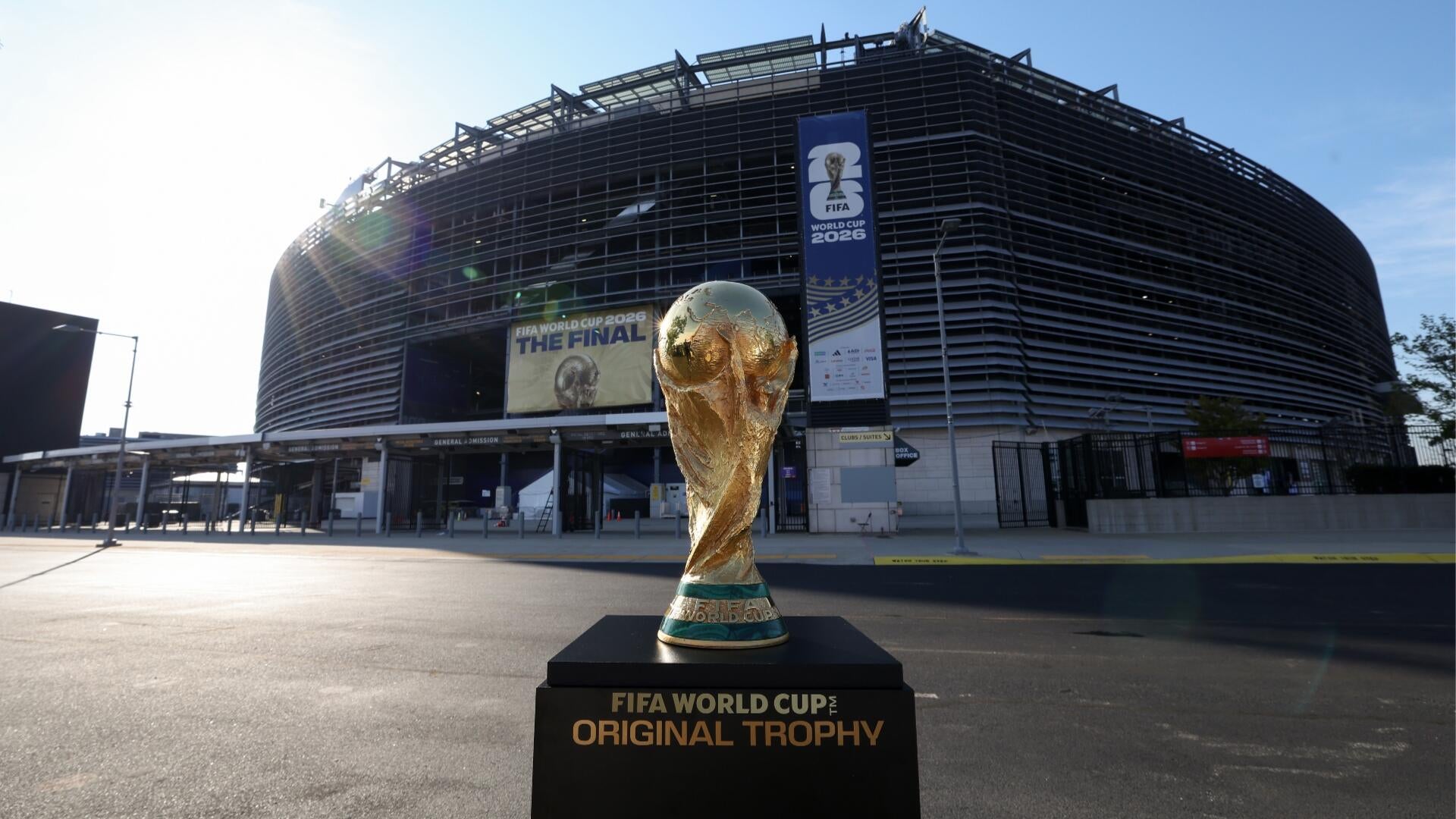
Donald Trump told reporters aboard Air Force One on 17 July 2026 that he had urged FIFA president Gianni Infantino to award the next men's World Cup to the United States alone, dropping the co-hosts already signed on for the 2026 tournament. Canada and Mexico, he said, should be "left out this time." Hours earlier, in remarks circulated by Russian state-aligned wire Ruptly, Trump described a second pitch he had made to the same FIFA chief: hold the tournament in China and the United States together, with shorter flights for the players.
The two sentences, delivered within roughly seven hours of each other, sketch a tournament politics that no longer runs through Zurich and is no longer decided by football federations. It runs through the White House, and the choices on the table are framed by who in the Pacific-rim great-power pairing the United States is willing to stand next to.
Two pitches, one room
The Polymarket-flagged version of the remark, posted at 22:53 UTC on 17 July, has Trump declaring that the US "should host the World Cup again, but 'leave Canada & Mexico out this time.'" The framing is exclusionary: the United States would carry the tournament as sole host, on American infrastructure built for the 2026 edition, with North American neighbours cut out of the revenue and the broadcasts.
The Ruptly feed, timestamped 05:36 UTC on 18 July, recasts the same conversation with Infantino into an inclusionary pitch. Trump, per the wire's English translation, said he told Infantino "to choose the USA again for the next World Cup, but without Mexico and Canada." The president then described Infantino's counter, "to hold the World Cup in China and the USA," with shorter flights as the selling point for the players.
The sequencing matters. The Polymarket-circulated line carries the political force inside the United States; the Ruptly version travels through Russian and Chinese diplomatic channels, where Beijing's appetite for hosting another global showcase is well documented. Two different audiences, two different headlines, one meeting.
Why Canada and Mexico were on the list
The 2026 men's World Cup was awarded jointly to the United States, Canada and Mexico in 2018, with the bulk of the 104 matches scheduled for US venues. Doha and Buenos Aires both tried for the 2030 edition before FIFA settled on a tripartite award for 2030: Morocco, Portugal and Spain will host the centenary tournament, with Argentina, Paraguay and Uruguay staging centenary-opening matches. The 2034 World Cup was awarded to Saudi Arabia in December 2024.
The 2038 race is technically open. No host has been named. The bidding rules, a FIFA Council vote preceded by a technical assessment, put Infantino's office at the centre of any outcome, and Infantino has spent the year shuttling between the Gulf, East Asia and Washington. A US-only 2038 bid would require a fresh candidacy, a fresh vote, and an understanding from Toronto and Mexico City that they are being cut out of a tournament their stadiums are already built to stage.
The Canada-Mexico exclusion, in other words, is not a logistical preference. It is a diplomatic one. The USMCA review window opens in 2026, with formal renegotiation scheduled to begin in mid-2026. Stripping Ottawa and Mexico City of a soft-power co-host arrangement four months into that review is a small but legible signal of how the White House reads its continental partners right now.
What the China co-host pitch actually does
The China framing is the more strategically loaded of the two. Beijing has spent three decades building the inventory for a World Cup: stadium capacity in Shanghai, Guangzhou and Beijing; rail links that can move 80,000 spectators a day; a hotel stock that has tripled in tier-one cities since 2018. Chinese state media has run semi-regular features speculating about a future Chinese bid since the 2022 Qatar tournament closed.
A US-China co-host would, in practical terms, be a 32- or 48-team tournament split across two continents, with charter flights across the Pacific for every knockout round. The Ruptly transcript has Trump pitching this on its merits, shorter flights for the players, which is at best an aspiration and at worst a parody of the actual travel arithmetic involved. Beijing has the stadiums and the visa machinery. It does not yet have a FIFA Council vote it can lock in by itself.
The structural frame here is plain. The United States under the current administration has spent 2026 treating the global sports calendar as an extension of trade and security policy. The Riyadh-hosted 2034 vote was a Saudi prize; the 2025 Club World Cup was played in the United States as a Trump-branded showcase; the 2028 Los Angeles Olympics is being framed by the White House as a domestic-jobs project. In that sequence, a US-China World Cup co-host would be the largest single piece of soft-power choreography between Washington and Beijing since the 2018 Mar-a-Lago détente talks, with football's calendar substituting for the kind of state visit that has not been scheduled.
What we don't yet know
The Ruptly pool video is short and the Infantino counter-pitch is paraphrased inside Trump's reported remarks, not stated directly by the FIFA president. There is no FIFA press release as of 18 July 2026 confirming a US bid, a China bid, or a co-hosted arrangement. The US Soccer Federation, the Canadian Soccer Association and the Mexican Football Federation have not commented on the Polymarket-circulated line. Polymarket's own market for 2038 World Cup hosting has not been published in the threads referenced.
What the sources do establish is the outline of a conversation in which a sitting US president treats FIFA's most valuable product as a foreign-policy lever, and where two structurally incompatible outcomes, a US-only tournament and a US-China joint tournament, were both raised in the same sitting. The diplomatic cost of the Canada-Mexico exclusion, and the industrial-policy implications of a Chinese co-host, will play out in trade-channel conversations that have not yet started.
The next marker to watch is the FIFA Council meeting on the calendar for late 2026. Any 2038 bid framework will surface there.
How Monexus framed this vs the wire: the wires ran two separate stories from one Air Force One gaggle. Monexus treated them as a single diplomatic signal, with the USMCA review window and the FIFA Council calendar as the structural hooks the wire copy did not carry.
Wire provenance
This editorial synthesis draws on the following public wire/social posts:
- https://t.me/ruptlyalert