Spain drift to World Cup favourite as market odds diverge from Mbappé's workload
A Polymarket contract put Spain at a 60% chance of lifting the trophy on 18 July 2026, even as Mbappé logged 666 minutes of tournament football for France.
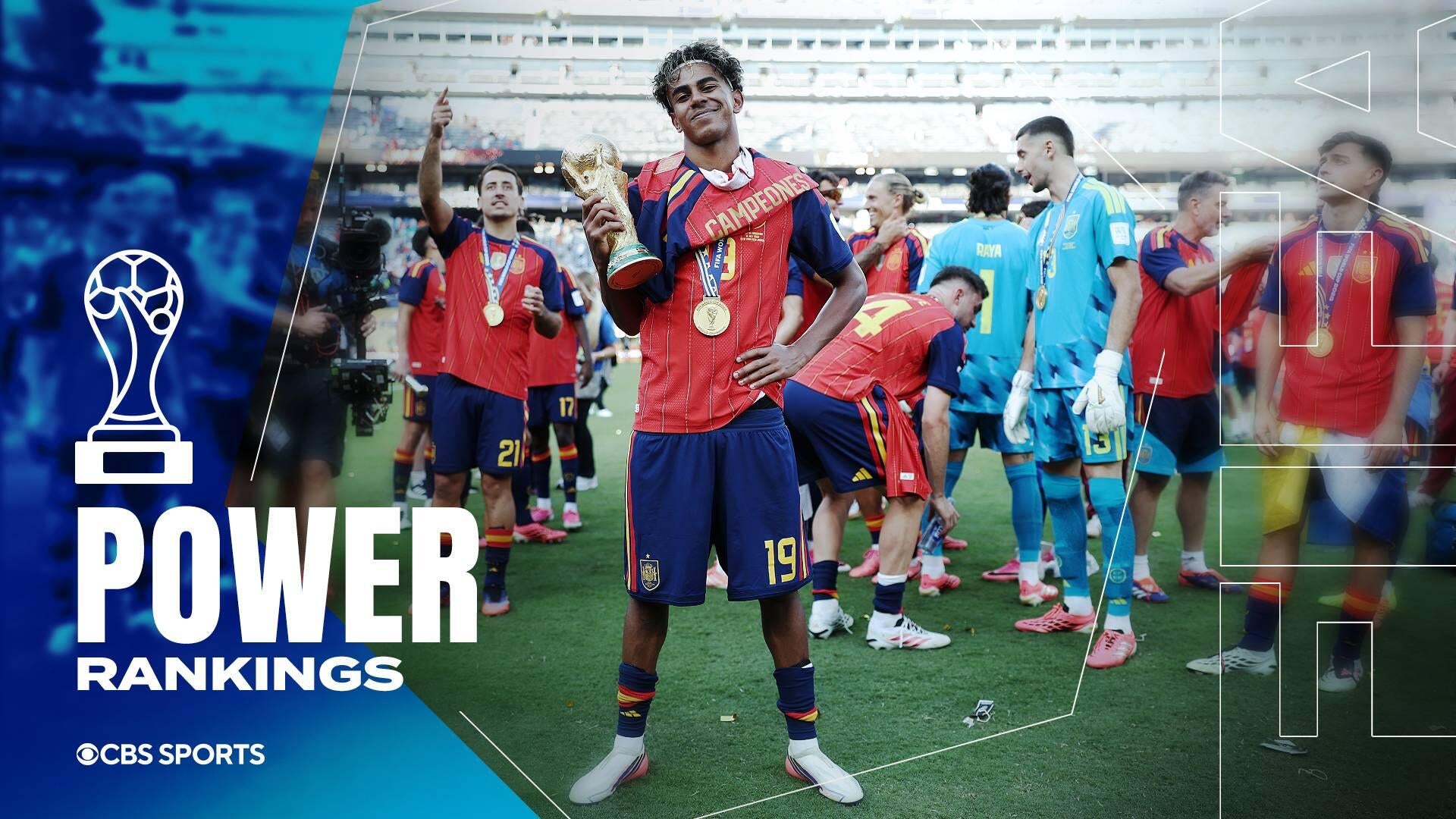
Spain entered 18 July 2026 as the clear favourite of the prediction market for the men's World Cup, even as France's marquee forward Kylian Mbappé accumulated a tournament workload that, in purely numerical terms, has run longer than the calendar alone would suggest. At 02:29 UTC on Friday, a Polymarket contract covering the 2026 World Cup winner priced Spain at a 60% implied probability of lifting the trophy. Hours later, Iran's Tasnim News agency circulated the official FIFA poster for the final, confirming the tournament's marketing end-point was already locked in place. A separate statistics feed then logged that Mbappé, the French captain, had played 666 minutes of football across the competition to date.
Taken together, the three data points sketch a picture that is partly sporting and partly structural. The betting market is pricing the tournament as a Spain procession. The governing body is already selling the final. And the player most associated with France's title hopes is racking up minutes at a rate that, if it holds, leaves little room for rotation through the knockout rounds. The market is not betting on the French superstar; it is betting past him.
The market's verdict
The Polymarket contract, snapshot at 02:29 UTC, gave Spain a six-in-ten chance of winning the tournament, with the remaining 40% spread across the field of surviving contenders. Prediction markets are not polls; they are positions held with money, and prices reflect the marginal trader's view of who holds the strongest route through the bracket. A 60% reading on the eve of the final stages is not a coin-flip dressed up as analysis; it is a market expressing a directional conviction that one team has separated from the rest.
What the market cannot tell a reader is why it has separated. Sources do not specify the underlying game-by-game probabilities the contract is decomposing, nor the liquidity behind any individual trade. But the headline number carries weight because it has been allowed to settle through continuous two-sided trading rather than a one-off survey.
The poster, and what FIFA is selling
By 05:12 UTC, Tasnim News had reposted the official FIFA poster for the 2026 World Cup final, the visual artefact that, in any major tournament cycle, signals that the governing body's commercial apparatus has already moved past the semi-finals. The poster is not analysis; it is merchandise. But the timing matters. Governing bodies do not release final-weekend artwork until the bracket has narrowed enough that the match being advertised is plausible. Its circulation through Tasnim, a state-aligned Iranian outlet with limited prior involvement in global football coverage, also suggests how widely the official visual has been distributed through wire and aggregator channels on the morning of the final.
That Spain features prominently in the visual framing of the closing weekend is consistent with the market's read, but it is also, in a sense, made consistent with it. FIFA's commercial operation tends to amplify the teams that have moved furthest in the tournament's narrative economy, and the prediction market prices that narrative economy in real time.
Mbappé's 666 minutes
At 05:15 UTC, a statistics feed posted that Kylian Mbappé had played 666 minutes in the tournament to date. The figure is striking less for any single round and more for what it implies about France's path: the captain has not been rested through the group stage, has not been rotated off in routine fixtures, and has carried his side deep into the knockout rounds without obvious minutes management. Six hundred and sixty-six minutes across the tournament, at the pace the thread implies, is the workload of a player whose team has had to keep him on the pitch.
The structural counterpoint sits here. Markets price Spain as favourite because Spain's route has looked the more complete; but a favourite that has had to lean on a single forward for the bulk of its minutes is a different proposition from one whose depth has carried the load. France, the sources suggest, has not had that depth absorb the minutes. Mbappé's workload is the visible symptom.
What remains uncertain
Three caveats attach to the picture. First, prediction-market prices move: the 60% reading captured at 02:29 UTC is a snapshot, not a forecast, and the contract's price will continue to respond to the next set of results. Second, the thread material does not specify the source feed's methodology for the 666-minute figure, nor whether it includes stoppage time or extra time; readers should treat the number as indicative rather than audited. Third, neither the Polymarket contract nor the stats feed addresses what happens if Spain or France exits before the final; the favourite's price is contingent on the favourite still being in the tournament when the market next reprices.
The structural pattern, though, is consistent. A market that prices one team at 60%, a governing body that has already visualised the final, and a marquee forward whose minutes keep climbing are the three signals that converge when a tournament has, in the market's view, become a single-team procession. Spain is that team today. The match-by-match verification, as always, sits with the pitch.
Desk note: Monexus treats Polymarket prints as price, not prediction, and Tasnim-sourced FIFA imagery as branding signal rather than editorial endorsement. The Mbappé minute figure is presented with its sourcing caveat intact.
Wire provenance
This editorial synthesis draws on the following public wire/social posts:
- https://t.me/tasnimnews_en