Spain, Argentina and a World Cup final marinated in weather, markets and ritual
Hours before kickoff in the World Cup final, Spain lost its last training session to a New York thunderstorm, Polymarket priced La Roja at 59%, and Peruvian shamans blessed Argentina's jerseys. The match-day weather report now doubles as a market signal.
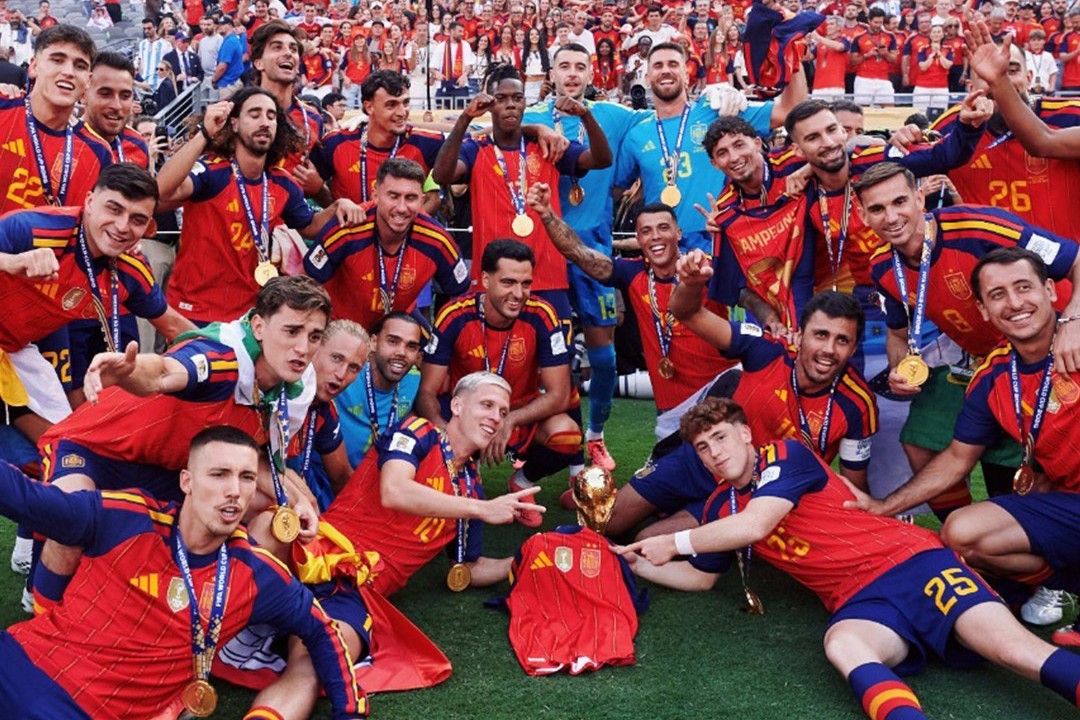
Spain's final training session before the World Cup final was scrapped on the evening of 18 July 2026 after severe thunderstorms rolled across New York and New Jersey, hours before La Roja were due to face Argentina for the trophy. The cancellation was confirmed at 19:38 UTC, leaving Luis de la Fuente's squad a single light session lighter on the eve of the game's biggest fixture, and turning the metropolitan weather report into a tactical variable.
What once would have been filed as a sports oddity has, by 2026, become something else: a story that the prediction markets price, that ritual specialists try to move, and that broadcasters frame as a geopolitical mood read. The Al Jazeera English preview pegged the tie as Spain versus Argentina, the two sides most neutrals had circled since the bracket was drawn. The Polymarket contract for the title, captured at 19:39 UTC, gave Spain a 59% chance of lifting the trophy, with Argentina the implied underdog at the implied 41%. The split tracked the betting exchanges, where La Roja's younger squad has been a slight favourite through the knockout rounds. By kickoff, no public market was offering a separate line on whether the New York storm would clear in time for a full pre-match walk-through.
Weather as a tactical variable
A cancelled training session, in any other tournament, would merit a paragraph in the pre-match notebook. In a final, it merits more. Spain had been scheduled to take the pitch in the New York/New Jersey metropolitan area on the evening of 18 July; the storms that prompted the cancellation were part of the same convective system that had swept the Eastern Seaboard through the day, with lightning protocols standard at any modern training ground. The squad's last on-pitch work had therefore taken place a day earlier, with any final adjustments handed over to set-piece coaches and video analysts operating indoors.
The practical effect is small but real: missed reps on the training pitch, a disrupted body clock for players expecting a familiar late-evening routine, and a flight of data points for analysts modelling rest and readiness. None of it is decisive on its own. Aggregated, it is the kind of marginal edge that the market is built to price, and Polymarket's 59% line suggests traders are not yet penalising Spain for the lost session. Whether the line moves before kickoff will depend on confirmation of squad availability, not on the radar.
The market and the ritual
The more revealing signal sits in the two pieces of auxiliary data running alongside the weather report. Polymarket's contract on the World Cup winner, with Spain at 59% and Argentina at 41%, is the cleanest numerical read on how informed money is positioning the final. Prediction markets have, over the past two tournaments, become a wire service in their own right, used by broadcasters, sportsbooks and political desks as a real-time read on probability. The 18-point gap is wide enough to reflect Spain's deeper run through the bracket and Argentina's reliance on individual brilliance, and narrow enough to suggest that traders respect Lionel Scaloni's capacity to spring a final from a single match.
Parallel to the market, a separate current has been running through the build-up. Peruvian shamans, captured on video and circulated via Sprinter Press on 20:29 UTC, performed a ritual on 18 July aimed at "sending as much power as possible to the Argentina national team players" ahead of the final, using team jerseys and flowers as ceremonial objects. The ritual belongs to a long lineage of pre-match spiritual appeals common to Latin American football culture, where the boundary between fan devotion, folk Catholicism and Andean cosmovision is deliberately porous. Argentine sides have historically been receptive to the framing; Spanish sides, more secular in their public rituals, tend to treat such ceremonies as colour rather than signal.
What the juxtaposition makes plain is that a modern World Cup final is no longer mediated only by managers and broadcast trucks. It is mediated, in parallel, by an order book that prices probability in five-cent increments and by a ritual economy that prices meaning in offerings to the mountains. Neither system is more rational than the other in the strict sense; both are attempts to compress an unknowable future into a usable present tense.
The structural frame, in plain prose
Two things are happening in international sport, and they are running into each other at this final. The first is the financialisation of fandom: prediction markets, prop bets and micro-derivative contracts have turned the run-up to a match into a tradable event, with the contract for the winner behaving like a thinly traded equity. The second is the persistence of pre-modern ritual in a sport that is otherwise a vehicle for nation branding, sponsorship inventory and diplomatic soft power. The two are not contradictory. They are complementary ways of dealing with the same problem: how to act, individually and collectively, when the outcome is fundamentally uncertain.
This is also where the geopolitics of the final sits, even though the match itself is between two western-aligned, middle-income democracies with no active territorial dispute. Argentina's run to the final has been read, in Buenos Aires and in parts of the Global South press, as a national-revival story after a decade of austerity politics. Spain's run has been read in Madrid as vindication of La Roja's post-2010 academy pipeline, with Pedri, Lamine Yamal and Nico Williams as its public face. The market's 59/41 split, in that light, is not just a probability call. It is a vote of confidence on which national story the trading public finds more legible.
Stakes and the kicker
The stakes for the squads are obvious: a World Cup winners' medal, the most expensive line in any player's CV, and, for the losing manager, four years of second-guessing. The stakes for the wider football economy are subtler. A Spanish win would consolidate the post-tiki-taka identity under De la Fuente and lock in commercial momentum around the Yamal generation through to the next tournament cycle. An Argentine win would re-validate Scaloni's 2022 template and extend the Messi-era narrative arc into a third major tournament, with all the merchandising and broadcast rights uplift that implies.
The kicker sits outside the stadium. Watch the Polymarket contract at kickoff: if the Spain line holds above 55% despite the lost training session, the market is telling you the weather was, as the traders suspect, a marginal variable and not a structural one. If the Peruvian ritual shops open a counter-market on Argentine blessing efficacy by the quarter-final of the next Copa América, the ritual economy is itself becoming a tradable asset class. Neither outcome is certain. Both are now, structurally, on the table.
Wire provenance
This editorial synthesis draws on the following public wire/social posts:
- https://x.com/polymarket/status/2078565296604930049
- https://x.com/sprinterpress/status/2078577862563491840
- https://t.me/aljazeeraglobal