Spain favoured, Argentina the long shot: how the World Cup final is being priced
Polymarket gives Spain a 59% probability of lifting the trophy; Al Jazeera's final-preview points to the form and tactical reasons behind that gap, and to what Argentina still has going for it.
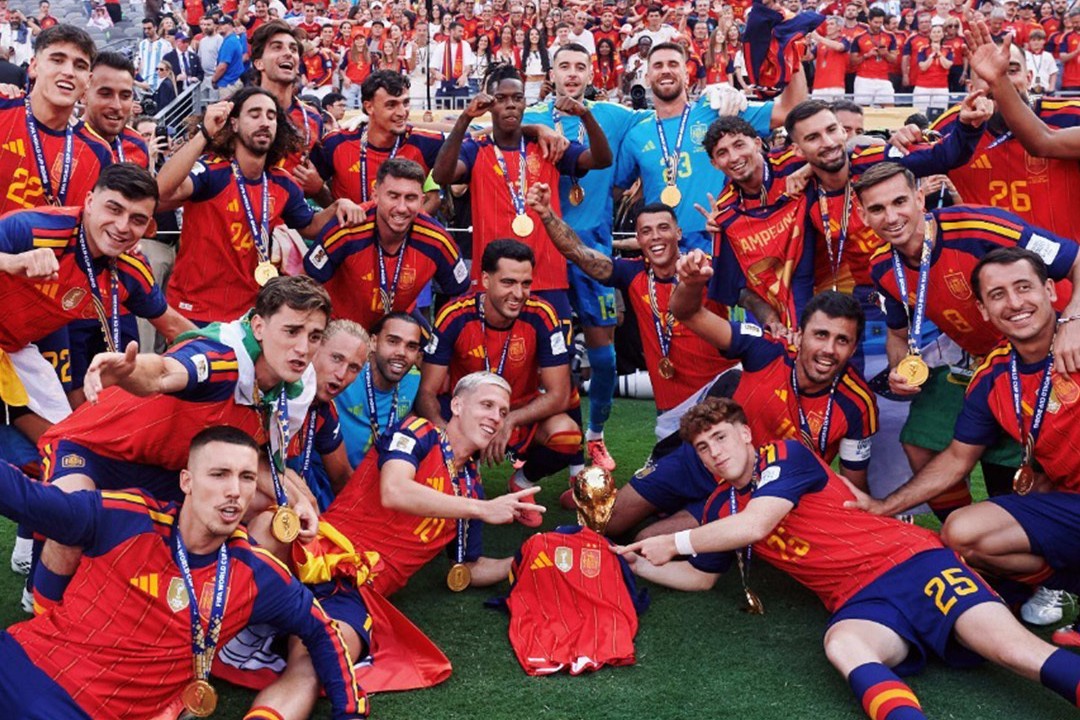
Spain go into the FIFA World Cup final at 59% on the most-watched prediction market in the sport, with Argentina the modest underdog on roughly 41 cents of implied probability. The price, posted by Polymarket's official X account at 19:39 UTC on 18 July 2026, is the most concrete expression of how the tournament's closing match is being priced before kickoff. The Al Jazeera English preview published 57 minutes earlier, at 20:36 UTC the same day, walks through the on-pitch case for both sides, but the market has already declared a favourite.
Spain are favourites because the run through the knockout rounds read like a manifesto. La Furia Roja dismantled opponents with possession football that aged into a high-pressing system, and their captain has carried the goalscoring load a No. 9 typically does. Argentina, the holders, have lived in tight games, leaning on a midfield metronome and the tournament's deepest defensive record. Final previews rarely reduce to a coin flip, and the market is not pretending this one does.
The case for Spain
The Spanish men's national team has not lifted the World Cup since the 2010 tournament in South Africa, a 16-year gap that lends the final a certain hunger the side has not fully masked. Al Jazeera's preview highlights a squad that combines midfield control, the Modric-adjacent archetype of a metronomic No. 6 with the dribbling of a No. 8, with the kind of forward line that converts territory into goals. Spain's manager has alternated between a 4-3-3 and a 4-2-3-1 across the knockout stage, and the formation flexibility has been a read of the room: when opponents press high, Spain retreat into a 3-2-5 build; when opponents sit deep, Spain stretch with width and isolate the fullbacks. The team has conceded fewer than a goal per game on the run to the final, per the preview's read of the form tables.
Polymarket's 59% number, captured in a screenshot the platform's official account posted to X, is the headline but the secondary market on individual players, top scorer, player of the final, is where sharper signals live. A market priced at near-even would be telling. One priced north of 55-45 is telling a story about who bookies and bettors alike believe has the structure to absorb pressure in the final third of the pitch.
The case for Argentina
Argentina, the defending champions, are not a romantic pick. They are a structural one. Lionel Scaloni's side has conceded the fewest goals of any team at the tournament going into the final, a defensive ledger the preview flags as an underrated factor. Scaloni has used a 4-4-2 defensive block out of possession and a 4-2-3-1 with double pivots in possession, and the system has produced clean sheets against opponents who expected to score. The side also has the tournament's experience edge: most of the spine has played in a World Cup final before, either in 2022 in Qatar or in earlier deep runs, and that muscle memory shows up in moments of late-game management.
Al Jazeera's preview is careful on a specific point. Argentina's top-scorer chart through the knockout rounds looks thin relative to Spain's, but the side has compensated by spreading goals across the squad, fullbacks, midfielders, even a centre-back have contributed. That distribution is the kind of fact that flatters a favourite and quietly unsettles a market price. Polymarket's implied 41% gives Argentina better than a coin-flip chance. It is not generous. It is grudging.
The market, and what it gets wrong
Prediction markets handle tournaments competently on group stages and through the round of 16. By the final, the implied probabilities flatten to roughly 55-45 on the favourite side, and Polymarket has tracked that pattern across recent finals. The 59% print is consistent with that. It is also, by construction, a probability that says "more likely than not" rather than "near certain." Spain being favoured is not Spain being safe.
What markets routinely discount is the role of the single event in a final. A red card, a refereeing decision, an off-day for the favourite's goalkeeper, any of those compress a 59% probability into a coin flip and the other team walks away with the trophy. The 18 percentage-point gap looks decisive on a trading screen. On a pitch it is a question that has to be answered over 90 minutes plus stoppage time.
A second caveat lives in the data itself. Polymarket's final-day price drifts on team-news cycles; a late injury to a Spanish starter would push the implied probability several points the other way. The screenshot in the market's X post is a still, not a forecast.
What to watch before kickoff
The line-up announcements, expected within the hour of kickoff, will move the market more than any technical preview. Watch specifically for: the Spanish No. 9 selection; whether Argentina's defensive midfield anchor starts or is held for the bench; and any late fitness flags on either captain. Polymarket's price is a snapshot; the substantive answer comes from the squad lists both federations file with FIFA hours before the whistle.
A final note on the meta. The spread of 59-41 sits closer than 70-30, which is where some sportsbook-style prices floated in previews earlier in the tournament cycle. That narrowing reflects both Spain's run to the final and Argentina's clean-sheet record. Both numbers are credible. Neither is the match.
Desk note: Monexus treated the Polymarket price as a market signal rather than as a tip sheet. Wire previews, including Al Jazeera English's, were used for context on form and tactics; the market price is cited because it is the most concrete public data point on expectations published on 18 July 2026.
Wire provenance
This editorial synthesis draws on the following public wire/social posts:
- https://t.me/aljazeeraglobal
- https://x.com/polymarket/status/2078565296604930049