Seven Nights Over the Gulf: What Boeing's Steady Hand Hides About a War That Won't Sit Still
As US warplanes hit Iranian targets for a seventh consecutive night, Boeing is telling investors the jet market will look the same in 2045 as it did last quarter. The gap between the two stories is the story.
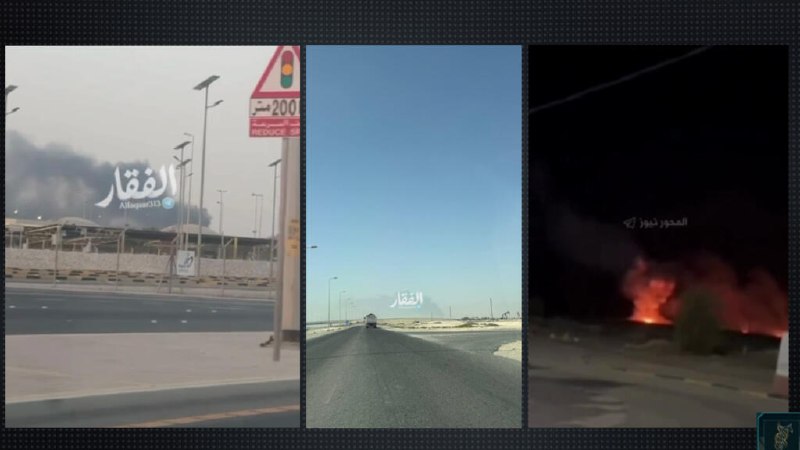
On 18 July 2026, in a boardroom call that lasted just long enough to be news, Boeing did something unusual for a company operating at the edge of a live shooting war. It left its forecast alone. The 20-year commercial-jet demand outlook was unchanged, the Iran war was waved off as a manageable variable, and the executives moved on to the next quarter. Within hours, Reuters reported from the Gulf that the United States had wrapped a seventh consecutive night of strikes against Iran, and that Iran had renewed attacks on neighbouring Gulf states.
Two facts, both dated 18 July, both true, neither willing to talk to the other. That is the story worth holding.
The aviation industry's flagship forecasting exercise, Boeing's annual market outlook, is not a survey of opinion. It is the price at which airlines, lessors, and export-credit agencies borrow against the next two decades of fleet planning. To leave it untouched while a war runs over the airspace that most of those planes will transit is not conservatism. It is a statement about how the industry's risk officers are choosing to read the present moment. Their read is that the war is loud, visible, and structurally contained to a corridor that the global fleet can route around.
The strike rhythm that the wires are learning to write
The pattern is by now familiar. On 18 July 2026 at 03:50 UTC, Reuters reported that the US military had completed its latest strikes on Iran, marking a seventh consecutive night of attacks. Reuters followed at 04:10 UTC with a separate dispatch noting that Iran had renewed attacks on Gulf states after another night of US operations. The sequence tells its own story: a steady nightly cadence from one side, retaliatory signals from the other, and a regional audience of monarchies whose territory, waters, and airspace are being used as launch pads.
On 17 July 2026 at 10:57 UTC, Iran's Foreign Ministry put the legal frame on its own terms: it called on neighbouring nations in the Persian Gulf to prevent any use of their land, sea, and airspace by aggressors to attack Iran. The statement, distributed via the Unusual Whales wire feed, is the regime's way of asking Gulf capitals to pick a side. So far, the publicly reported answer is that the strikes are still being staged, which means at least some of those capitals have not picked.
What the strikes have not done, in the public reporting available on 18 July, is produce a clear accounting of casualties, a named Iranian target of strategic significance struck on a specific night, or a negotiated off-ramp. Reuters's coverage is operationally precise and politically cautious: the strikes happened, they continued, Iran answered. The why of any individual night's target list is held back inside US Central Command briefings that have not, in the material this publication has reviewed, been quoted in full.
The Boeing call, and what it actually said
Boeing's 18 July communication, as reported by Reuters at 06:15 UTC, did three things. It reaffirmed a 20-year forecast for jet demand. It declined to attribute a war-driven haircut to that forecast. And it framed the Iran conflict as a manageable input rather than a regime change for global aviation math.
Read against the strikes wire, the move is harder than it sounds. The Persian Gulf sits on the spine of east-west air corridors, hosts a substantial share of the world's widebody maintenance and layover capacity, and is the home turf of two of the three largest Middle Eastern carriers by international seat capacity. If sustained conflict were priced into the forecast, the right move would be a downward revision in the widebody-heavy middle of the curve and a regional rerating on Gulf hubs. Boeing did neither.
There are two ways to read the choice. The bullish one is that Boeing's commercial team genuinely believes the war is a routing problem rather than a demand problem, and that, on a 20-year horizon, fleet replacement cycles dominate geopolitical shocks. The bearish one is that the company cannot afford to revise in the middle of a live crisis because airlines and lessors need a stable benchmark against which to contract, and revising mid-conflict would itself become the news. Both can be true. Neither requires Boeing's leadership to be wrong about the war; both require the company to treat its forecast as a market-stabilising instrument rather than a forecast.
The cable layer nobody is talking about
On 17 July 2026 at 16:31 UTC, Nikkei Asia flagged a vulnerability that does not usually make the front pages but does, in a war of this geometry, matter more than another oil-tanker headline: undersea data cables in the Persian Gulf. According to Nikkei Asia, Iran has hinted at threats to undersea data cables in the conflict with the United States, underscoring the risks faced by internet and financial infrastructure that crosses the same water as the oil.
The under-appreciated point is that the Gulf's cable density is not incidental. The subsea systems running through the Persian Gulf and the Strait of Hormuz carry a disproportionate share of regional financial messaging, cloud-onramp traffic, and the synchronisation chatter that keeps Gulf-based exchanges and clearing houses legible to the rest of the world. Damage to a small number of cables would not bring down the global internet, but it would degrade the regional financial plumbing of every Gulf capital in the coalition of the attacked and the attackers alike. That is a constraint on escalation that nobody has yet priced.
Iran's hints, in this reading, are not idle. They are a signal to the Gulf monarchies, the same audience the Foreign Ministry statement was aimed at, that the cost of hosting US strikes is not limited to bullets and ballistic missiles. A rerouted cable, a delayed SWIFT message, a degraded latency profile between a Gulf exchange and its European clearing counterparty, is a quieter kind of pressure. It is also the kind of pressure that a 20-year jet forecast is not built to capture.
What the Gulf monarchies are actually being asked
The 17 July Iranian Foreign Ministry statement is the cleanest articulation yet of what Tehran wants the war to look like from a Gulf-state perspective: do not let your land, sea, and airspace be used to attack us, and we have a route to de-escalation. The publicly reported answer, in the form of continued US strike staging, is that the request has not been granted.
This puts the Gulf capitals in the precise position that the cable discussion makes worse, not better. They are being asked to absorb the visible cost of being co-belligerent without the visible benefit of the strikes producing a quick Iranian climb-down. The longer the cadence runs at one strike package per night, the more the political economy of Gulf capitals tilts toward asking the United States, publicly or privately, what the end-state is. The cable threat sharpens that question by raising the price of continued hosting.
It is worth pausing on what the sources do not say. None of the wire items reviewed for this article name a specific Gulf state's government as having formally responded to the Iranian request. None provide casualty figures from Iranian territory attributable to the seventh night's strikes. None identify the specific targets struck in the latest US package. That absence is itself a signal: the public reporting is keeping the operational picture thin, which is what governments on all sides prefer while the shooting continues.
The forecast as a casualty of the war it ignores
If Boeing is right that the war is a routing problem, the cost shows up in airline economics but not in the long-run demand curve. Fuel surcharges tick up, insurers reprice Gulf overflight, a small number of carriers pull frequency on certain routings, and the industry absorbs it. If Boeing is wrong, and the war becomes a regional restructuring of who is willing to base widebody capacity in the Gulf for a multi-year horizon, then the 20-year forecast will eventually have to bend, and the bending will happen in a quarter where the company is also reporting the shock.
The structural frame, stripped of theory, is straightforward. Global aviation planning runs on two clocks: the airline-planning clock, which operates on fuel, slots, and aircraft delivery slots, and the geopolitical clock, which operates on sanctions, overflight rights, and the willingness of hub states to keep hosting the world's connectors. The two clocks have been visibly out of sync since the strikes began. Boeing's 18 July call is an attempt to pretend they are not.
The audience for that pretence is not retail investors. It is the airlines, lessors, and export-credit agencies whose contract pipeline over the next two years depends on a stable reference curve. Boeing is, in effect, backstopping that curve with its own credibility for the duration of the conflict. Whether that credibility is well-placed is the question the next quarterly call will answer, not this one.
What to watch before the eighth night
Three dates anchor the next phase of this story. First, the next Boeing investor communication or trade-show appearance, which will be the first opportunity for the commercial team to either reaffirm or quietly soften the 20-year outlook under direct questioning. Second, the next Iranian public statement about cables or critical infrastructure, which would convert the 17 July hint into a kinetic question. Third, the first Gulf capital to publicly demand a clear US end-state, which would mark the point at which the coalition of the attacked starts to exert political cost on the coalition of the attackers.
A clean end to the strikes would render this analysis moot. Nothing in the publicly available reporting on 18 July suggests one is imminent. What Boeing is signalling, in the absence of that end, is that the industry's planning machine has decided to keep running as if the war is a footnote. The Gulf, the cables, and the monarchies are reminding the planning machine, in their own quieter voices, that footnotes have been known to grow.
This publication read Boeing's 18 July forecast call against the same day's strike wire, and against Nikkei's 17 July cable analysis, to surface the gap between a 20-year demand curve that did not move and a 7-day operational picture that will not sit still.
Wire provenance
This editorial synthesis draws on the following public wire/social posts:
- https://t.me/NikkeiAsia
- https://t.me/unusual_whales
- https://t.me/FirstpostIndia
- https://x.com/reuters/status/4fkhov1
- https://x.com/reuters/status/4wPreMC
- https://x.com/reuters/status/3Tau3t5