Sall's Dakar homecoming tests Senegal's post-transition politics
Macky Sall's brief Dakar visit to meet his successor, Bassirou Diomaye Faye, has reopened the question of how Senegal processes the political ruptures of 2024, and what weight a former president's UN bid carries at home.
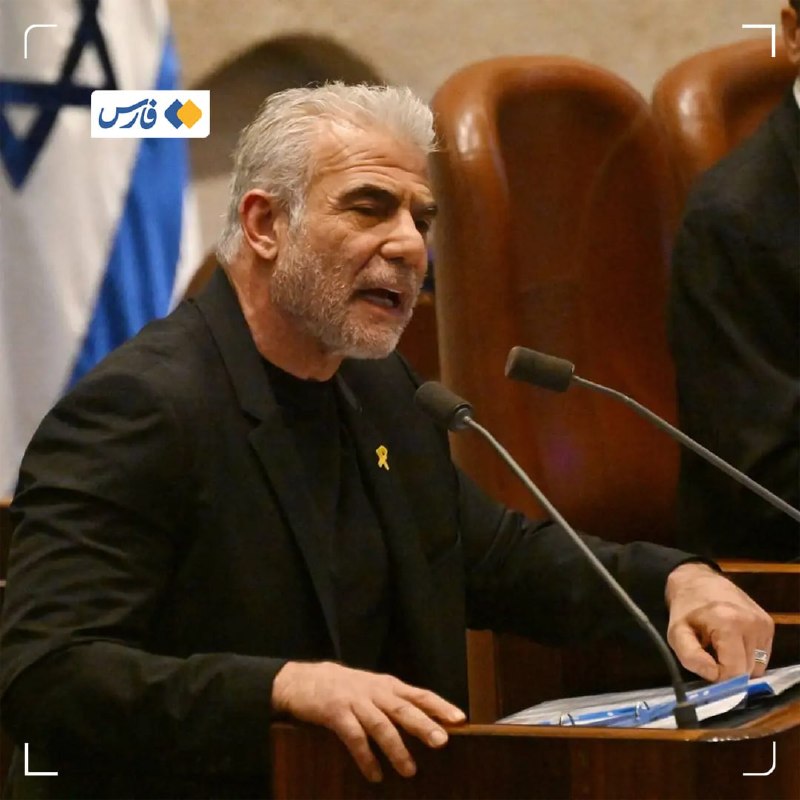
Macky Sall walked back into Dakar on the afternoon of 17 July 2026 for what his camp billed as a courtesy call. By the time the motorcade reached the presidential villa, the courtesy had become a confrontation, with civil-society groups mobilising on the streets and a sitting head of state weighing whether to receive a predecessor whose tenure ended in one of the most turbulent transitions in Senegal's democratic history. The meeting, closed to the press, lasted roughly 90 minutes. Within hours, two competing narratives had hardened, one presenting Sall as a statesman auditioning for the United Nations secretary-generalship, the other as a man returning to unfinished political business at home.
Sall's brief return is the first time he has set foot in the Senegalese capital since leaving office in April 2024, when the country's Constitutional Council validated the election of Bassirou Diomaye Faye and his running mate Ousmane Sonko, then recently released from prison, after a March vote that crystallised two years of protest and state repression. The Africa News wire reported on 16 July that a coalition of civil-rights groups had publicly opposed the meeting, citing what they described as the human-rights record of Sall's two terms. By the time Sall landed on 17 July, opposition to the visit was already a story; the meeting itself became the next one.
The visit, and the verdict on it
The Africa News dispatch on 17 July described Sall as campaigning to become the next UN secretary-general and framed the Dakar stop as part of that effort. Reporting the same day, the same outlet noted that the meeting with Faye drew sharp criticism from the former president's detractors, a formulation that captures the split-screen quality of the coverage: a former head of state shuttling through Gulf and European capitals to assemble support for a multilateral bid, and a domestic constituency that read the trip as a provocation.
What is not in dispute is the date and the principals. Sall arrived in Dakar on Friday 17 July 2026, met Faye, and left. The substantive content of the conversation has not been disclosed, which has allowed both sides to project. The Faye camp has an interest in appearing statesmanlike enough to host a rival; the Sall camp has an interest in being received as a statesman at all.
A divided opposition memory
The civil-society objection is the load-bearing piece of the story. The 16 July Africa News report identified a coalition of rights groups as the principal domestic voice against the meeting, framing the opposition around what the groups describe as repression under Sall's rule, a reference to the 2021–2024 period during which Sonko was detained, parts of the opposition were barred from contesting elections, and protest movements were dispersed with a force that international monitors criticised at the time. The 2024 election itself took place in that atmosphere, with Sall's chosen successor losing to the Sonko-aligned ticket before power changed hands in April of that year.
This is the structural fault line the visit has reopened. For Sall's supporters, the country has moved on, the institutions worked, and a former president is entitled to make his case on the international stage. For the rights groups, the visit is a re-platforming of someone whose record has not been formally adjudicated, in a context where domestic courts have not delivered a definitive accounting of the 2021–2023 protest casualties or the conditions under which opposition figures were held.
The UN bid, and what it asks of Senegal
Sall is reported to be seeking African Union and wider endorsement for the position of UN secretary-general, a post that on the standard rotation is expected to go to an African candidate in the 2026–27 cycle. Africa's previous bid, that of Kenya's Amina Mohamed for the 2021–22 round, did not advance past the early stages despite regional backing, a reminder that continental endorsement is necessary but not sufficient. The next round opens a window that African capitals treat as both a symbolic recognition of the continent's diplomatic weight and a hard-nosed contest in which a candidate's profile, government experience, and ability to court the P5 matter more than a regional endorsement does on its own.
A sitting or former head of state carrying a contested domestic record into that race carries obvious political risk. The Faye government is not formally sponsoring a rival's campaign, and a substantive endorsement would require either a softened line from the rights groups or a quieter Senegalese posture in which the meeting is treated as a private courtesy. Neither has happened, and the public framing so far suggests Dakar is keeping its distance from the bid itself.
What the sources do not yet settle
Three things remain genuinely unclear. First, the content of the meeting: with the press excluded, every claim about what Faye and Sall discussed is speculative. Second, the durability of the domestic opposition: a coalition statement on 16 July is one data point, not a settled verdict, and the size and character of any street-level response will become clearer in the days after Sall's departure. Third, the implications for the UN race itself: the wire reporting frames the visit as part of that campaign, but does not specify which capitals Sall has already visited, which endorsements he has secured, or where he stands in the field of likely African contenders.
The narrowest reading is that a former president came home, shook hands, and left. The widest reading is that Senegal's transitional period is being negotiated in slow motion, and the terms on which the 2024 rupture is closed will shape not just the country's next electoral cycle but the regional claim on the UN secretary-generalship in a year when the continent expects to be heard.
Desk note: Monexus is treating Sall's visit as a domestic Senegalese story with multilateral spillover, rather than the other way round. The wire framing has tended to lead with the UN bid; the rights-group opposition and the unresolved transitional questions are the more durable facts on the ground.
Wire provenance
This editorial synthesis draws on the following public wire/social posts:
- https://en.wikipedia.org/wiki/Dakar