Laporte fires early shot in World Cup final week: Argentina 'like to leave a mark'
Spain defender Aymeric Laporte frames Sunday's World Cup final as a collision of styles, calling Argentina a side that 'likes to leave a mark on their opponents' days before the trophy is lifted.
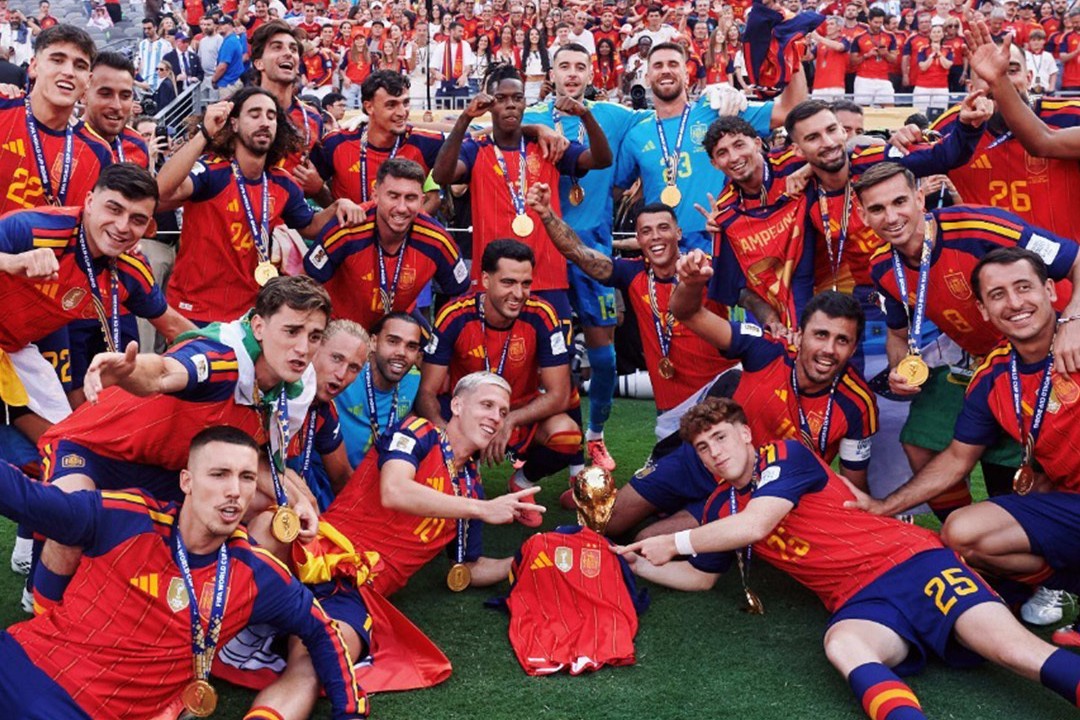
Aymeric Laporte did not wait for the trophy lift to start the final. On 18 July 2026, three days before Spain meet Argentina in the 2026 World Cup decider, the Spanish defender told BBC Sport that the defending champions are "a team that likes to leave a mark on their opponents", framing the showpiece as a collision of styles rather than a friendly summit between two of the game's storied programmes. (BBC Sport, 18 July 2026, 00:38 UTC)
Laporte's barb landed in the same window CBS Sports used to package the week as the sport's mid-summer peak. The network's 17 July 2026 Footy Fix round-up billed the Argentina-Spain final as the headline of a packed North American slate, with the National Women's Soccer League, Major League Soccer and the USL Championship all running fixtures across U.S. venues while the world turns its attention to the trophy match. (CBS Sports Headlines, 17 July 2026, 13:26 UTC)
The pattern is familiar. A World Cup final rarely arrives without a referee complaint, a tactical fingerprint argument, or both. Laporte's remark slots into a long lineage of pre-final provocation, the kind of quote that buys oxygen in a tournament compressed into a single American summer.
A language of physicality
Laporte's choice of phrase, that Argentina "likes to leave a mark", is doing more work than it looks. Spain's recent tournament identity has been built on possession, territorial control and the kind of positional defending that turns midfield zones into no-go areas. Argentina, by contrast, have built knockout-stage runs on transitions, set-piece threat and a willingness to make contact in central areas, particularly through the spine that has defined their play across the cycle.
The comment is also a defensive cue. By labelling the opposition as a contact team before a ball is kicked, Spain's back line repositions the refereeing conversation in their favour. Officials travelling with the tournament carry memories of physical quarter-finals and semi-finals, and the early framing nudges the threshold of what counts as a foul. It is a familiar move in the sport's rhetoric, less cynical than the dark arts it implies and more strategic than a simple press conference answer.
The North American backdrop
The final is being played in a host country whose domestic calendar does not stop for it. CBS's 17 July round-up listed NWSL, MLS and USL fixtures running concurrently, a reminder that the men's international showpiece sits on top of an active club ecosystem rather than beside it. For Spanish and Argentine players, that is a scheduling reality; for U.S.-based viewers, it is a marketing luxury the league structure rarely permits.
The split-screen matters. The host federation's domestic footprint keeps the tournament's commercial centre of gravity inside the United States even when the finalists are from Europe and South America, and the broadcast schedule reflects that: marquee international fixtures, women's league games and the men's domestic competition all sit inside the same seven-day window, each treated as a discrete product rather than a single sporting calendar.
What the wire says, and what it does not
The two source items in circulation on 18 July 2026 say a great deal about tone and relatively little about specifics. BBC Sport carries Laporte's characterisation of Argentina as a physical side and little else: no injury update, no lineup read, no tactical detail on how Spain plan to neutralise the threat. CBS Sports lists the surrounding fixtures and frames the final as the headline of the week without contributing new tactical reporting of its own.
That is the wire's job at this stage of the cycle. The week between semi-final and final is built for atmosphere, not analysis. Press conferences are open-ended, training-ground footage is rationed, and the dominant story is whether either squad will break the script before kick-off. Laporte obliged on Friday morning, and the coverage will follow the line he drew.
What to watch between now and Sunday
Three concrete signals will tell the reader whether Laporte's framing holds. First, the lineups, when they drop, will reveal how Spain's manager plans to handle Argentina's central spine, and whether a holder is preferred to an additional midfielder. Second, the refereeing appointment, normally announced 48 hours before kick-off, will indicate whether world football's governing body wants a permissive or a strict contest; Laporte's remarks are a quiet bid for the latter. Third, the first 20 minutes of the match will tell us whether Argentina open with the controlled aggression Laporte described or with the patient possession that has defined their play against deeper sides.
There is a broader question the wire has not yet asked. Spain have been the tournament's most consistent side across the cycle, but their best performances have come against opponents willing to play the same game. Argentina, the defending champions, are comfortable in either register. Laporte's comment reads as an attempt to drag the final into a fight Spain believe they can win. Whether the holders accept the invitation is the story the next 72 hours will tell.
Desk note: Monexus has framed this as a pre-final tactical story, foregrounding the language of the contest rather than the result, on the principle that finals are won in the days before kick-off as much as on the pitch.