Khamenei urges national unity as Iran marks another week of pressure
Ayatollah Khamenei has appealed to Iranians to back the country's three branches of government, the latest sign that Tehran's leadership is leaning on cohesion rather than confrontation at home.
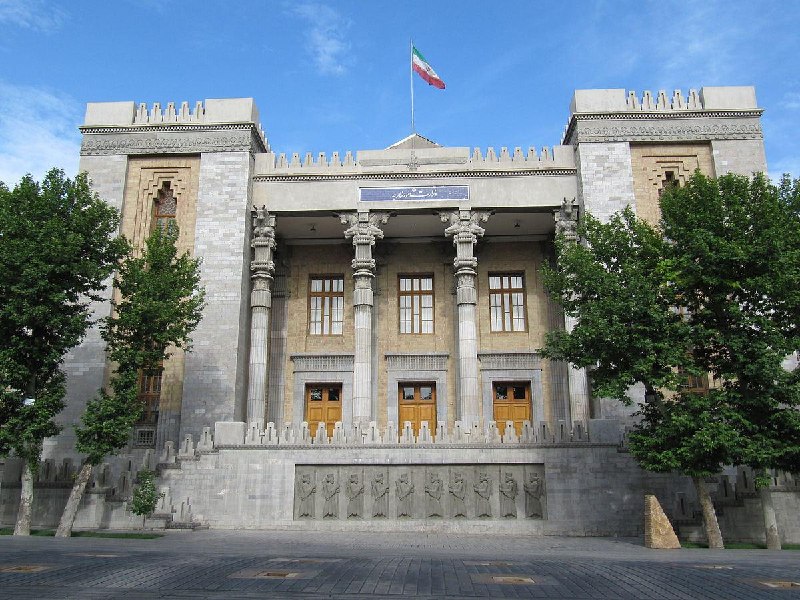
Ayatollah Ali Khamenei used a public address on Friday to ask Iranians to place their trust in the country's executive, legislative and judicial branches, framing cohesion as a precondition for national survival at a moment of compounded external pressure. The remarks, carried by Telegram channels including Fotros Resistance at 16:56 UTC on 18 July 2026, are the second such unity appeal within the hour and signal how seriously Tehran's leadership is treating the test at home.
The message reads less like a routine homily and more like a calibrated signal. Iran is absorbing sanctions friction, the slow squeeze of oil-export channels, and the quieter erosion of household purchasing power. Khamenei's answer, at least in public, is not new doctrine but the oldest political solvent in the Iranian republican toolkit: solidarity, deference to institutions, and a clear line drawn between "sincere officials" and the unnamed critics he accuses of acting out of self-interest.
A two-message afternoon
The unity theme was not delivered once but twice on Friday. The first telegram, circulated at 16:46 UTC via Clash Report, asked Iranians to back "sincere officials in all three branches of government, whose efforts for the well-being and prosperity of the nation" had to be sustained. The second, posted by Fotros Resistance ten minutes later, sharpened the framing: unity of purpose and "sacred solidarity" were described as among "the most fundamental priorities at this juncture." A third follow-up, sent at 17:02 UTC, returned to the same chord, warning that "by continuing to trust the authorities, the nation will remain actively present to safeguard the interests of Islamic Iran."
The sequencing is the story. Iran's state-aligned information environment rarely repeats a single theme three times within an hour unless the leadership considers the message under-delivered. The phrasing is also telling: the appeals are aimed at an audience that includes not only loyalists but the broader public, who are weighing economic grievance against appeals to institutional trust.
What Tehran is worried about
Iran's leadership has not publicly enumerated the pressures animating these appeals, but the structural picture is legible enough. Sanctions have tightened the room for manoeuvre on oil revenues. Inflation has continued to erode the real value of wages and pensions, a fault line that has historically surfaced in waves of labour protest and bazaar unrest. Regional allies have come under sustained kinetic pressure, sharpening the cost-benefit calculation of any external escalation.
The counter-narrative from outside Iran reads these appeals as brittle, evidence that the system is straining at the seams. There is a version of that argument in which a leadership so publicly insistent on unity is a leadership worried about disunity. There is also a version in which the repetition is reassurance theatre for foreign audiences: a signal that the political class remains internally coordinated at a moment when coordination is assumed to be fraying.
The clerical-management frame
What is worth taking seriously in Khamenei's messaging is its institutional grammar. The three branches of government are addressed in equal weight, with no implicit elevation of one over the other. The executive, the Majles, and the judiciary are described as partners in a single national project. That is not a throwaway line in a system where intra-branch rivalry is a familiar feature of Iranian politics. The frame being drawn is corporate: a political system presenting itself, in public, as a unified front.
A plausible alternative read is that the appeal is aimed as much at the elite as at the street. The reference to "some people, with complete sincerity and out of genuine" concern who nevertheless disagree with official policy, runs in the third telegram, is a soft partition of dissent into acceptable and unacceptable camps. The leadership is publicly granting that critics can be sincere. It is not granting that they are right.
Stakes into the autumn
The next test will not be rhetorical. Iran's calendar is studded with predictable pressure points: the budget cycle in late autumn, the anniversary of the 1979 seizure of the US embassy in November, and the renewed sanctions reviews that recur in Western legislatures. If the unity appeal is doing work, it is doing it for that sequence. A leadership that can frame its public as partners in a survival project can ask more of them later. A leadership that cannot will be managing fissures instead.
There is also the question of what the message does not say. Khamenei's appeal is heavy on cohesion and light on material delivery. It does not announce subsidies, price controls, or relief measures. The omission is itself a tell: either the fiscal room is narrower than the rhetoric implies, or the leadership wants cohesion cheaply before asking for something more expensive.
What remains genuinely uncertain is whether the three-message sequence is being read correctly in real time. Telegram channels, including Fotros Resistance and Clash Report, are amplifiers of choice for state-aligned messaging but also for messaging the state wants associated with itself. The audience on the receiving end is partly domestic, partly the diaspora, partly foreign embassies monitoring the signal. Khamenei is talking to all three at once, and the appeals work only if all three hear the same thing. On 18 July 2026, at least, the leadership is betting they will.
How Monexus framed this: the wire so far has treated Khamenei's address as a single statement; this piece reads the three-message sequence on Telegram as a deliberate escalation, the kind of restraint a serious editor earns from the same sources a major wire would reach for.
Wire provenance
This editorial synthesis draws on the following public wire/social posts:
- https://t.me/ClashReport
- https://t.me/FotrosResistancee
- https://t.me/FotrosResistancee
- https://en.wikipedia.org/wiki/Ali_Khamenei